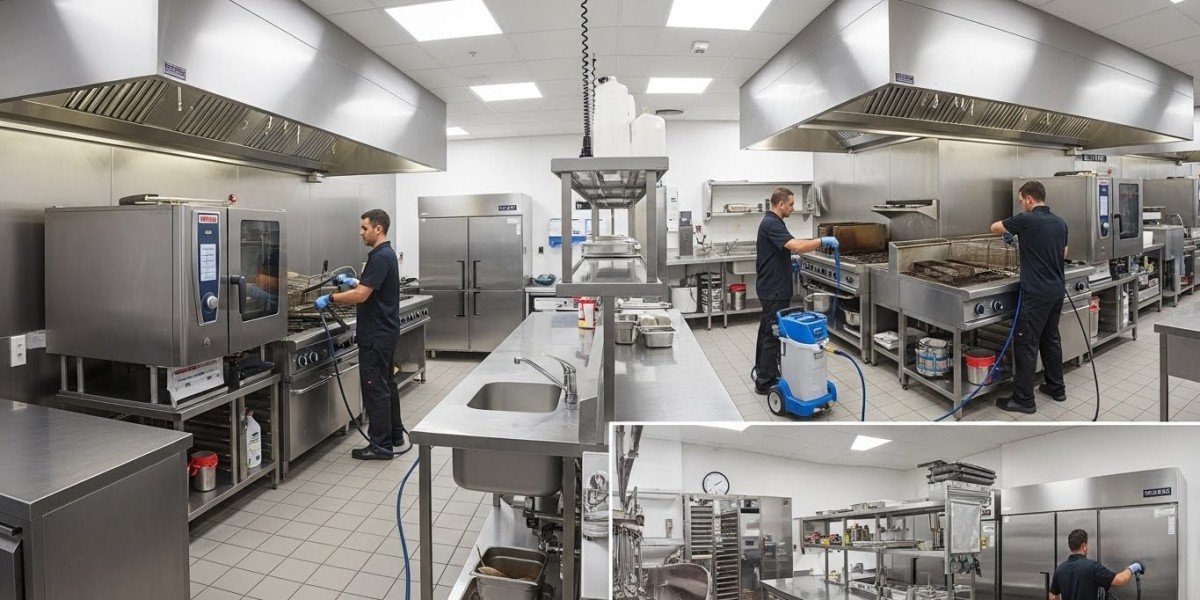

What Does Professional Commercial Kitchen Cleaning Include?
If you run a restaurant, café, catering facility, or food production kitchen, you already know that hygiene is non-negotiable. While daily staff cleaning helps maintain basic order, it cannot compare to the depth, precision, and compliance-focused standards of professional commercial kitchen cleaning. These specialised services are designed to remove built-up grease, eliminate harmful bacteria, restore shine to stainless steel, and ensure you meet food safety regulations all in a single comprehensive process.
In this article, we’ll break down exactly what’s included, why it matters, and how it keeps your kitchen efficient, safe, and inspection-ready.
Understanding the Importance of Professional Commercial Kitchen Cleaning
Professional commercial kitchen cleaning goes far beyond the typical wipe-and-mop routine. It uses commercial-grade tools, food-safe chemicals, and detailed processes to clean every part of the kitchen from exhaust systems to flooring.
Cleanliness impacts:
Food safety compliance
Ensuring the kitchen meets health regulations by keeping all surfaces, equipment, and prep areas clean and sanitized.
Fire hazard reduction
Removing grease from hoods, ducts, and cooking equipment to prevent dangerous grease fires.
Operational efficiency
A clean, organized kitchen helps staff work faster, safer, and with fewer interruptions.
Equipment lifespan
Regular deep cleaning prevents grease and grime buildup, helping appliances last longer and work more efficiently.
Customer satisfaction
A cleaner kitchen results in better food quality, safer meals, and a more positive dining experience.
With strict standards set by food authorities, regular deep cleaning is not optional—it’s essential for keeping your business legally compliant and safe.
Why Regular Cleaning Isn’t Enough for Commercial Kitchens
Even the best kitchen staff can only do so much during fast-paced shifts.
Daily cleaning usually covers:
Countertops
Surfaces where food is prepared; need regular wiping to stay clean and hygienic.
Visible appliances
Easily seen items like microwaves, fridges, and ovens that require basic daily cleaning.
Floors
High-traffic areas that collect spills, grease, and dirt and must be cleaned to prevent slips and maintain hygiene.
Basic sanitizing
Quick disinfection of major touchpoints to reduce germs and maintain daily cleanliness.
But it does not address:
Grease buildup inside canopy hoods
Thick layers of grease accumulate inside exhaust hoods, reducing airflow and increasing fire risk.
Carbon deposits on appliances
Burnt-on black residue forms on ovens, grills, and stovetops, affecting performance and cleanliness.
Hidden bacteria in prep areas
Germs and contaminants settle in cracks, corners, and seams where regular cleaning often misses.
Oil-soaked tiles
Floor and wall tiles absorb grease over time, becoming slippery, stained, and difficult to clean.
Clogged grease filters
Filters in kitchen exhaust systems fill with grease, blocking ventilation and trapping odors and smoke.
Contaminated ductwork
Grease, dust, and bacteria accumulate inside ducts, harming air quality and creating fire hazards.
This is where professional commercial kitchen cleaning services shine; they target the deep problems that create health and safety risks.
What’s Included in a Professional Commercial Kitchen Cleaning Service
Let’s break down exactly what you get when hiring certified kitchen cleaning professionals.
Full Kitchen Surface Degreasing & Sanitization
This is the foundation of any cleaning package. Professionals use food-safe degreasers and advanced techniques to remove:
Oil residue
A thin, sticky layer of grease left on surfaces after cooking.
Food splatters
Small droplets of sauce, oil, or ingredients that land on walls, appliances, and benches.
Bacteria
Harmful microorganisms that grow on unclean surfaces and can cause foodborne illness.
Stains
Discoloration on tiles, benches, or appliances caused by spills, grease, or heat.
Built-up grime
A mix of dirt, grease, and food particles that hardens over time and becomes difficult to remove.
Stainless Steel Equipment Polishing
Stainless steel surfaces are restored to a bright, reflective finish using industrial polishes. This includes:
Benches
Work surfaces used for preparing and assembling food that require regular cleaning for hygiene.
Sinks
Washing areas that collect food residue and grease, needing frequent sanitizing to prevent bacteria buildup.
Prep tables
Dedicated food preparation stations that must stay clean to avoid cross-contamination.
Splashbacks
Wall panels behind cooking or sink areas that catch grease, water, and food splashes.
Shelving
Storage areas for utensils and ingredients that gather dust and residue if not cleaned regularly.
Shiny stainless steel instantly improves kitchen appearance and hygiene.
Exhaust Hood, Canopy & Duct Cleaning
One of the most critical components of professional commercial kitchen cleaning is exhaust system servicing.
This includes:
Removing grease filters
Taking out the kitchen exhaust filters to clean them thoroughly and remove built-up grease.
Degreasing and pressure-cleaning filters
Using strong degreasers and high-pressure water to clear thick grease trapped inside the filters.
Scrubbing canopy surfaces
Manually cleaning the inside and outside of the canopy hood to remove grease, stains, and residue.
Ductwork degreasing
Cleaning the inside of exhaust ducts to remove grease buildup that affects airflow and increases fire risk.
Exhaust fan cleaning
Removing grease and debris from the exhaust fan to improve ventilation and prevent overheating.
Clean duct systems reduce fire hazards, improve ventilation, and prevent smoke and odors.
Grease Filter Removal & Deep Cleaning
Filters are soaked, degreased, scrubbed, and dried to restore airflow and reduce energy usage.
Commercial Appliance Deep Cleaning
Appliances collect carbon, grease, and burnt material that cannot be removed with daily wiping.
Areas covered include:
Fryers
Cooking equipment that builds up thick oil residue and requires deep cleaning for safety and efficiency.
Grills
Surfaces that accumulate burnt food and carbon, needing thorough scrubbing to maintain performance.
Cooktops
Stovetop burners and surfaces that collect spills, grease, and grime during cooking.
Ovens
Enclosed cooking units that develop burnt-on grease, carbon, and food residue over time.
Pizza ovens
High-heat ovens that gather ash, flour, and carbon deposits, requiring periodic deep cleaning.
Charcoal grills
Grills that build up soot and ash from charcoal, affecting flavor and airflow if not cleaned.
Microwaves
Interior surfaces collect splatters and odors that need regular wiping and sanitizing.
Toasters
Units that accumulate crumbs and burnt particles, which can become fire hazards if not cleaned.
Salamanders
High-heat broilers that develop grease and carbon buildup on racks and heating elements.
Deep cleaning improves performance and extends equipment lifespan.
Floor Degreasing & High-Pressure Cleaning
Commercial kitchen floors face heavy foot traffic, oil spills, and food waste. Professionals use:
Hot water pressure cleaning
Uses high-pressure hot water to break down grease, grime, and stains on floors and hard surfaces.
Industrial degreasers
Powerful cleaning agents designed to dissolve thick, stubborn grease that regular cleaners can’t remove.
Grout brushing
Scrubbing the grout lines between tiles to remove dirt, grease, and discoloration.
Anti-slip treatments
Surface coatings or treatments applied to floors to improve traction and reduce slip hazards in busy kitchens.
This removes long-standing grease and prevents slips.
Cold Room & Storage Area Sanitization
Cold rooms harbor bacteria if not cleaned properly. Professionals clean:
Shelving
Storage racks that collect dust, grease, and food particles and must be kept clean to maintain hygiene.
Door seals
Rubber seals around fridge and freezer doors that trap moisture, crumbs, and bacteria if not cleaned.
Floors
High-traffic areas that accumulate spills, grease, and dirt and require regular deep cleaning for safety.
Corners
Hard-to-reach spots where grime, food debris, and grease tend to build up unnoticed.
Condensation areas
Moisture-prone spots where steam collects, creating a risk of mold, bacteria, and slippery surfaces.
This helps maintain safe food storage conditions.
Waste & Grease Trap Cleaning
A commonly overlooked area, grease trap cleaning helps:
Reduce foul odors
Cleaning removes trapped food, grease, and bacteria that cause unpleasant smells.
Maintain drainage efficiency
Clearing grease and debris ensures sinks and drains flow smoothly without backups.
Prevent plumbing blockages
Regular cleaning stops grease, food particles, and other waste from clogging pipes.
This is essential for food business compliance.
Additional Services That Enhance Kitchen Safety & Appearance
Professional cleaners often add specialized solutions to improve hygiene further.
Steam Cleaning for Hard-to-Reach Areas
Steam kills bacteria instantly while removing stubborn grime.
Food-Safe Disinfection & Compliance Cleaning
Essential for meeting audit and inspection standards.
Fire Hazard Reduction Through Proper Grease Removal
Removing grease from canopy hoods and ductwork is one of the most important fire-prevention strategies.
How Often Should You Schedule Professional Commercial Kitchen Cleaning?
Most commercial kitchens should schedule:
Monthly cleaning for high-volume kitchens
Quarterly cleaning for cafes and medium-use kitchens
Annual deep cleaning for low-use or specialty spaces
Exhaust systems typically require cleaning every 3-6 months per safety regulations.
Benefits of Hiring Certified Commercial Kitchen Cleaning Experts
Cost Savings
Cleaner equipment lasts longer, reducing repair and replacement costs.
Improved Health & Safety
Removes bacteria, grease, and fire hazards.
Compliance With Food Standards
You’ll pass inspections easily without last-minute stress.
FAQs
1. How long does professional commercial kitchen cleaning take?
Most kitchens take 3-8 hours depending on size and condition.
2. Do cleaners work after business hours?
Yes, most cleaning companies schedule after-hours to avoid disruption.
3. Are chemicals safe for food environments?
Certified cleaners only use food-safe, HACCP-approved products.
4. Does it include exhaust and duct cleaning?
Yes this is a core part of the service.
5. Is deep cleaning different from regular cleaning?
Absolutely. Deep cleaning targets hidden areas and built-up grease.
6. Do I need to empty the kitchen before cleaning?
Most companies help with basic preparation, depending on your setup.
Conclusion
Professional commercial kitchen cleaning is essential for maintaining food safety, improving efficiency, and keeping your business inspection-ready. From canopy hoods to appliances, floors, cold rooms, and grease traps, every part of your kitchen benefits from expert handling. Investing in these services ensures a hygienic, safe, and high-performing kitchen that reflects the professionalism of your brand.