
HPSPCB Explained: How The Board Regulates Pollution Across Himachal Pradesh
Himachal Pradesh's rapid industrialization and urban spread have raised the bar for environmental regulation. The Himachal Pradesh State Pollution Control Board (HPSPCB) is instrumental in ensuring that the state's economic growth is not at the environment's expense. HPSPCB, the local pollution control board, works in tandem with the Central Pollution Control Board (CPCB); thus it is a vital supervisory authority that actively prevents and controls pollution in the area.
What Is The Himachal Pradesh State Pollution Control Board (HPSPCB)?
The Himachal Pradesh State Pollution Control Board is a statutory body established under the Water (Prevention and Control of Pollution) Act, 1974, and subsequently authorized by the Air (Prevention and Control of Pollution) Act, 1981, and the Environment (Protection) Act, 1986.
The board is mainly concerned with maintain and improve the environment through the regulation of pollution caused by the industrial, commercial, and municipal sectors. While the board guarantees respect of environmental laws, Himachal Pradesh is allowed to see a rise in the industrial sector in a sustainable way.
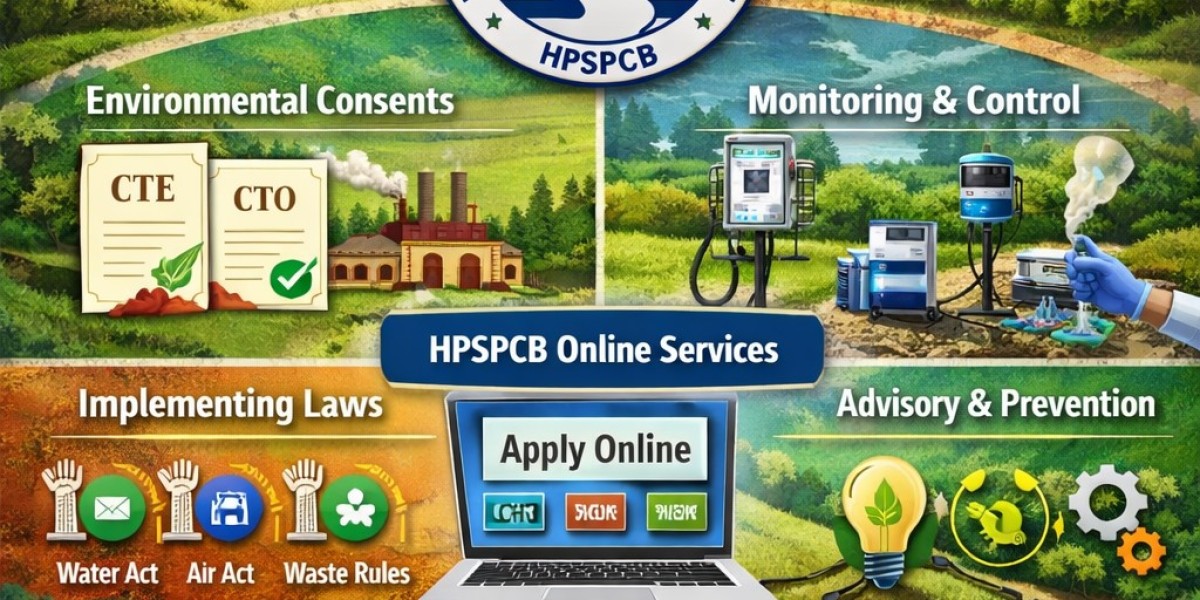
The Principal Functions of the HP State Pollution Control Board
The HP State Pollution Control Board is taking considerable regulatory, monitoring, and advisory measures, among others:
1. Granting of Environmental Consents
HPSPCB releases:
Consent to Establish (CTE) - an industry should obtain this prior to setting up a factory or the commencement of business activities
Consent to Operate (CTO) - an enterprise should secure this permission before starting its operations
Such licenses or permits are strictly required for industrial manufacturing units, service-based businesses, MSMEs, and infrastructure projects.
2. Pollution Monitoring & Control
The board keeps a watch on:
Air, water, and noise quality
The disposal of hazardous, biomedical, and municipal solid wastes is also overseen by the authorities.
Inspections of various emission and effluent standards are carried out regularly in different industrial units to ensure that they are strictly followed.
3. Implementation of Environmental Laws
HPSPCB implements major environmental laws and performs integration activities for compliance with:
Water Act
Air Act
Environment Protection Rules
Waste Management Rules (Plastic, E-waste, Hazardous Waste, etc.)
4. Advisory & Preventive Role
The board works as a pollution advisor to the state government and takes various initiatives like promoting cleaner production technologies, waste reduction, and the use of sustainable practices.
Role of HPSPCB Online Services
In order to strengthen transparency and make the board's tasks more convenient, the board has developed HPSPCB online services that are applicable to industries and stakeholders. These online portals are a step forward in reducing the paper works and expediting the processing of applications.
Top HPSPCB Services Available Online
Online CTE and CTO applications
Consent renewal
Compliance report submission
Fee payment for consent
Request status
The HPSPCB online platform facilitates the industries to be in conformity with the environmental regulations which do not require them to make physical visits thus, the procedure becomes efficient and business-friendly.
How HPSPCB Controls Industrial Pollution
Industry Categorization
Industries in Himachal Pradesh are classified according to their pollution potential:
Red Category - The most polluting industries
Orange Category - The moderately polluting ones
Green Category - Those producing low pollution
White Category - Almost non-polluting
The regulatory prerequisites, the interval between inspections, and the duration for which the consent is valid are determined by this categorization.
Emission & Effluent Standards
HPSPCB imposes very stringent limits on:
Emissions into the air (PM, SO₂, NOx, etc.)
Effluents discharged into water bodies
Solid and hazardous waste generation
Any violation of the regulations may result in fine, revocation of a license, or legal action.
Why It Is Necessary for a Business to Have HPSPCB Approval
The action of seeking approval from the Himachal Pradesh State Pollution Control Board is definitely not voluntary—it is mandated by law.
No valid consent means:
Businesses are barred from beginning their operations
Power and water connections may not be granted
Monetary fine may be charged
Businesses may be closed down by regulatory authorities
The early implementation of the law ensures trouble-free operations, legal protection, and environmental accountability.
The HP State Pollution Control Board’s Role in Sustaible Development
The HP State Pollution Control Board, besides its regulatory function, is also a major advocate of sustainable development. It facilitates:
Green technologies
The usage of renewable energy
The recycling and reuse of waste material
Environmental awareness initiatives
By harmonizing industrial expansion with nature preservation, the board is contributing to the conservation of the delicate ecosystem of the Himalayas.
Conclusion
The Himachal Pradesh State Pollution Control Board (HPSPCB) is essentially the major environmental management agency in the state. The board by its stringent enforcement, incessant monitoring, and efficient HPSPCB services in the digital form (online services) ensures that industries run their businesses in a socially responsible manner with minimum harm to air, water, and land resources.
Complying with HP State Pollution Control Board regulations on time is a must for any business that wants to set up and operate in Himachal Pradesh. The compliance is not only interpreted as a legal prerequisite but also a pre-condition for sustainable and future-oriented growth.