
Education has always been the backbone of human progress. From blackboards to smart classrooms, from textbooks to tablets, learning has continuously evolved with time. But as we move toward 2026, education is facing its most powerful transformation yet — the rise of Artificial Intelligence. AI is no longer a distant future concept; it is already shaping careers, industries, and even how students learn. In this rapidly changing world, the real value of education is being redefined. It is no longer only about marks, degrees, or certificates. It is about adaptability, critical thinking, digital literacy, and lifelong learning.
For both students and parents, understanding the true importance of education in the age of AI is essential to prepare for a future that is fast, competitive, and technology-driven.
How AI Is Changing the Meaning of Education
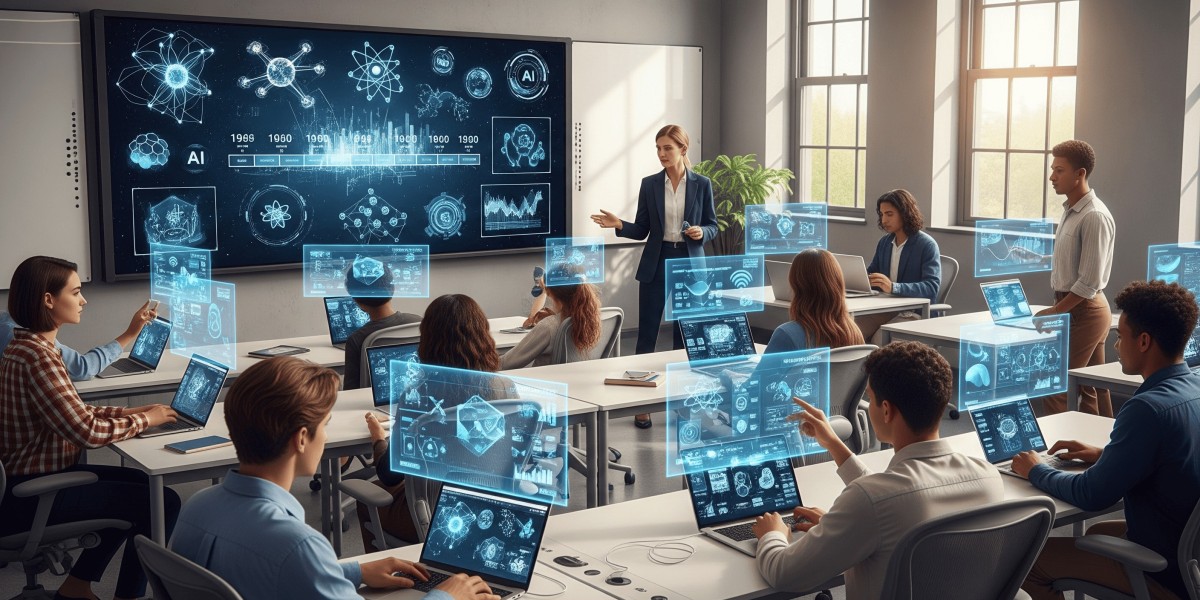
Artificial Intelligence has entered classrooms in many forms — smart learning apps, automated assessments, personalized learning systems, and even AI tutors. By 2026, most students will interact with AI in their daily studies, whether they realize it or not.
Earlier, education focused mainly on:
Memorization
Fixed syllabus learning
Exam-oriented preparation
Now, the focus is shifting to:
Problem-solving
Creative thinking
Analytical reasoning
Practical skill development
AI can provide information instantly, but it cannot replace human judgment, ethics, creativity, and emotional intelligence. This is where the true value of education becomes more important than ever.
Why Education Still Matters More Than Ever in 2026
Many people assume that since AI can do many tasks, traditional education may lose its importance. In reality, the opposite is happening — education is becoming even more critical.
1. AI Creates Competition, Not Comfort
With automation increasing, routine jobs are disappearing. Only those with strong educational foundations and adaptable skills will stay relevant. Education equips students with the ability to learn, unlearn, and relearn — the most important survival skill in 2026.
2. Education Builds Critical Thinking
AI can provide answers, but it cannot always judge what is right or wrong. Education teaches students how to:
Analyze information
Question data
Take logical decisions
These human skills cannot be automated.
3. Education Develops Ethical Responsibility
As AI grows stronger, ethical use of technology becomes essential. Education teaches responsibility, values, and social awareness — things no machine can teach effectively.
The Shift from Degree-Centered to Skill-Centered Learning
In 2026, having only a degree will not be enough. Employers now seek:
Practical skills
Real-world problem-solving ability
Communication and collaboration skills
Digital and AI literacy
Education today is not only about “what you know” but also about “what you can do.”
This is why modern education blends:
Academic knowledge
Skill-based learning
Project-based education
Internships and real-world exposure
Parents must also understand that marks alone will not define their child’s future success anymore.
The Role of Parents in the AI-Era Education System
Parents play a critical role in shaping a child’s attitude toward learning. In the age of AI, their role becomes even more important.
Parents should:
Encourage curiosity, not just exam preparation
Support digital learning tools
Avoid comparing children only on grades
Focus on skills, creativity, and emotional development
A child who feels supported will learn faster and adapt better to future changes.
Education as Protection Against Job Uncertainty
By 2026, many current job roles may vanish due to automation. New jobs will emerge in fields like:
Artificial Intelligence
Data Science
Cybersecurity
Digital Marketing
Robotics
Healthcare Technology
Education acts as career insurance. A well-educated student can switch fields, upgrade skills, and stay employable across industries. Without continuous learning, job security will become extremely fragile.
Mental Growth and Emotional Intelligence Still Depend on Education
While AI can teach subjects, it cannot teach:
Empathy
Leadership
Teamwork
Self-discipline
Emotional control
Schools and educational environments provide social exposure, emotional learning, and personality development. These human values are becoming more important as machines become smarter.
Digital Education and Self-Learning in 2026
The future of education is hybrid. Traditional classroom learning is now supported by digital platforms that allow students to:
Learn at their own pace
Revise difficult topics anytime
Access expert guidance remotely
Self-learning has become a powerful habit. Students who develop the habit of independent learning will always stay ahead.
Helpful Learning Platforms Supporting Modern Education
Although education is not dependent on platforms alone, the right tools can strongly support students. Here are two helpful learning platforms that assist modern students without replacing traditional education:
Study Karado
Study Karado is a student-focused learning platform designed to support:
Concept-based learning
Exam preparation
Personalized study guidance
Skill development alongside academic subjects
It helps students strengthen fundamentals while preparing for competitive and academic exams in a flexible digital environment.
General Online Learning Platforms
Other online learning platforms also help students improve concepts, access recorded lessons, practice tests, and improve weak subjects. These platforms act as educational support systems, not replacements for formal education.
The Real Value of Education Beyond Jobs
Education is not only about earning money. Its real value is much deeper:
It shapes a student’s character
It strengthens decision-making ability
It builds confidence and independence
It creates responsible citizens
It improves quality of life
In the age of AI, where machines handle tasks, educated humans will handle ideas, leadership, innovation, and social development.
Challenges Students Will Face in 2026
Even with advanced education systems, students will face several challenges:
Information overload due to AI
Distractions from digital devices
High competition
Mental health pressure
Constant need to upgrade skills
Education must evolve not just in content but also in mental support, career guidance, and emotional development.
How Students Can Prepare for Future Education Success
Students preparing for 2026 and beyond should focus on:
Strong foundation in core subjects
Basic understanding of AI and technology
Communication and presentation skills
Problem-solving mindset
Time management and self-discipline
Continuous self-learning habits
Success will belong to those who treat education as a lifelong journey, not a short-term goal.
Why Education Will Never Lose Its Value, Even with AI
AI can calculate faster than humans. It can analyze data in seconds. It can even generate content. But it cannot replace human wisdom, ethics, imagination, and emotional understanding. Education nurtures all of these qualities.
The real value of education in the age of AI lies in:
Making humans smarter than machines
Teaching how to use technology responsibly
Developing leadership and creativity
Building a future-ready mindset
Conclusion: Education Is the Strongest Future Investment
As we move into 2026, one truth becomes clearer than ever — education is not losing its power; it is gaining new importance. In the age of AI, education is no longer just about books and exams. It is about survival, relevance, identity, and growth.
For students, education is the gateway to opportunity.
For parents, education is the strongest protection for their child’s future.
The real value of education in the age of AI is that it transforms students from passive learners into active thinkers, creators, and leaders. And no machine can ever replace that.