
Introduction
Industrial hemp uses are expanding rapidly across the USA, reshaping industries from construction to textiles and wellness. Hempcrete, hemp fiber, and hemp hurd are proving to be versatile, eco-friendly materials. With Dakota Hemp leading wholesale hemp fiber solutions, industrial hemp uses now extend into sustainable animal bedding, highlighting hemp’s role in agriculture and wellness.
What is Industrial Hemp?
Industrial hemp is a variety of the Cannabis sativa plant cultivated for non-psychoactive purposes. Unlike cannabis grown for THC, industrial hemp is valued for its fiber, hurd, and seeds. These components are processed into hempcrete, textiles, paper, bioplastics, and bedding.
Benefits of Industrial Hemp Uses
- Eco-friendly: Hemp requires less water and fewer pesticides compared to traditional crops.
- Versatility: Hemp fiber and hurd are used in construction, textiles, paper, and animal bedding.
- Carbon-negative: Hemp absorbs carbon dioxide during growth and curing.
- Durability: Hemp fiber is stronger than cotton and resistant to wear.
- Renewable resource: Hemp grows quickly and replenishes soil health.
- Market expansion: Industrial hemp uses support multiple industries, from fashion to agriculture.
Industrial Hemp Uses in Construction
- Hempcrete: Lightweight, breathable, and carbon-negative insulation.
- Hemp boards: Compressed hemp materials for walls and furniture.
- Hemp insulation: Panels and batts made from hemp fiber regulate temperature and moisture.
These innovations highlight industrial hemp’s role in sustainable building practices.
Hempcrete vs Concrete
- Concrete: Strong, load-bearing, but has a high carbon footprint.
- Hempcrete: Lightweight, sustainable, and carbon-negative, ideal for insulation and wall systems.
Hempcrete demonstrates how industrial hemp uses are reshaping construction.
How is Industrial Hemp Processed?
- Harvesting: Hemp stalks are cut and dried.
- Retting: Pectins binding the fibers are broken down naturally or through water/chemical methods.
- Decortication: The stalk is separated into fiber and hurd.
- Processing: Fiber is spun into textiles, hurd is used for hempcrete and bedding.
- Application: Hemp products are distributed across construction, textiles, and wellness industries.
Hemp Fiber Uses
- Textiles: Durable fabrics blended with cotton or silk.
- Construction: Strengthens composites and insulation.
- Paper: Hemp pulp reduces deforestation.
- Bioplastics: Provides biodegradable alternatives to petroleum-based plastics.
Hemp vs Cotton
- Hemp: Durable, eco-friendly, requires less water, and is naturally pest-resistant.
- Cotton: Softer but resource-intensive, requiring pesticides and large amounts of water.
Hemp is increasingly favored in sustainable fashion and wellness industries.
Hemp Hurd and Animal Bedding
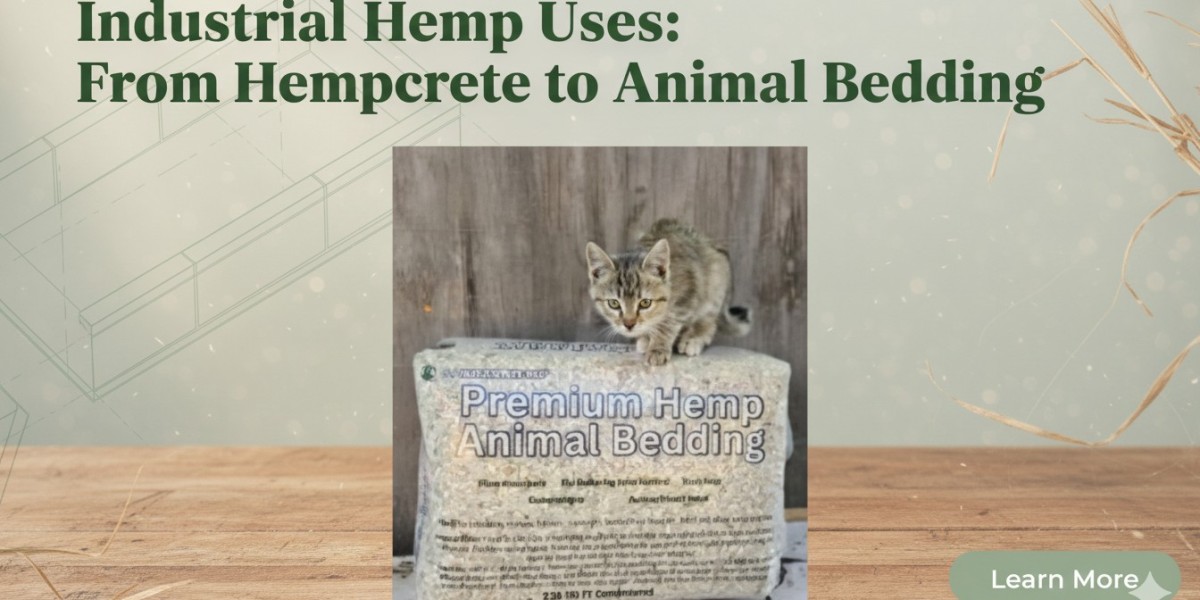
Hemp hurd, the woody core of the hemp stalk, is a vital part of industrial hemp uses. Beyond hempcrete, hemp hurd is widely used for animal bedding. Its absorbent nature, dust-free quality, and odor control make it superior to straw or wood shavings. Hemp hurd bedding is biodegradable and eco-friendly, supporting sustainable agriculture.
How Hemp Fiber is Used in Textiles
Hemp fiber is processed into yarn and woven into fabrics. It is blended with cotton or silk for softness while maintaining durability. Hemp textiles are breathable, antimicrobial, and sustainable, making them ideal for wellness-focused consumers.
Hemp Sustainable Materials
Industrial hemp uses drive the development of hemp sustainable materials. From construction to fashion to animal bedding, hemp offers eco-friendly alternatives that reduce environmental impact and support wellness-focused lifestyles.
Conclusion
Industrial hemp uses are redefining industries by offering eco-friendly, durable, and versatile materials. From hempcrete in construction to hemp textiles in fashion, hemp is proving to be a cornerstone of sustainability. Hemp hurd, in particular, is revolutionizing animal bedding with its absorbent and biodegradable qualities. As industrial hemp uses expand, hemp products will continue to shape the future of construction, textiles, and agriculture. For premium hemp products and wholesale solutions, trust Animal Bedding your partner in sustainable hemp innovation.
FAQs
What are industrial hemp uses?
They include construction, textiles, paper, bioplastics, and animal bedding.
How is industrial hemp processed?
Through harvesting, retting, decortication, and processing into fiber and hurd.
Why is hemp better than cotton?
Hemp is more durable, eco-friendly, and requires fewer resources compared to cotton.
What are the benefits of hemp hurd for animal bedding?
It is absorbent, dust-free, biodegradable, and provides superior odor control.
Where can I buy hemp hurd for animal bedding?
Trusted retailers like Dakota Hemp offer wholesale hemp hurd and sustainable bedding materials.