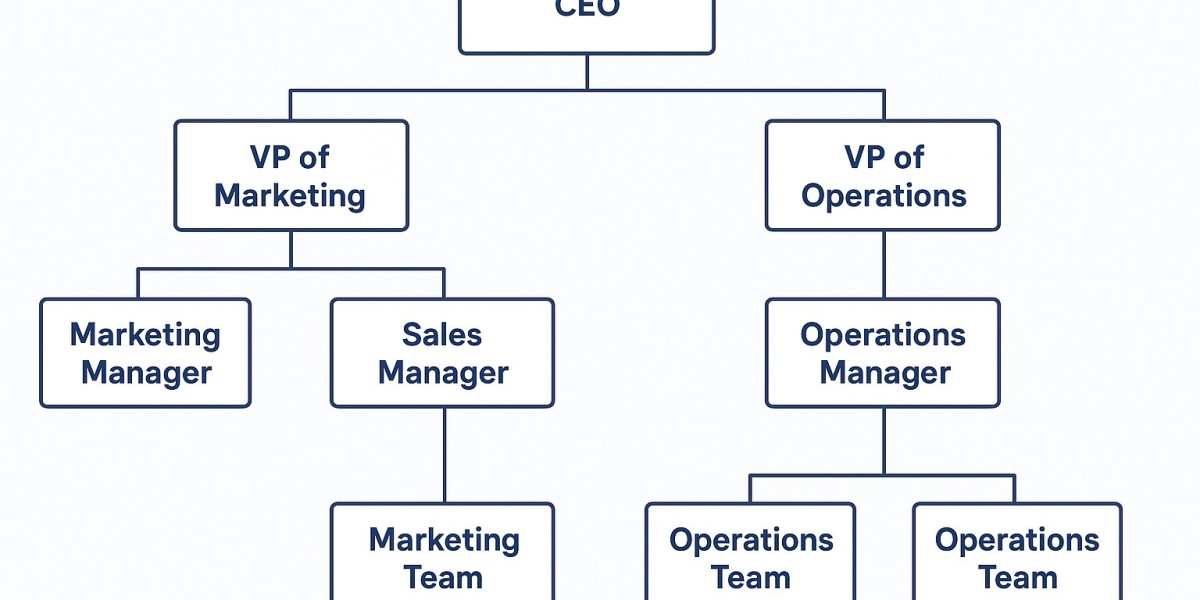

Organizational charts—commonly referred to as org charts—are essential tools for visualizing how a company operates, who reports to whom, and how different teams work together. When it comes to large and complex enterprises, few examples are as fascinating as amazon org charts. Amazon’s scale, pace of innovation, and global footprint make its organizational design worth examining from both an operational and strategic perspective.
Although Amazon’s structure has evolved significantly over the years, the company consistently follows principles that emphasize autonomy, scalability, customer focus, and data-driven decision-making. Understanding how these principles show up in amazon org charts can provide valuable insights for leaders, managers, and anyone interested in corporate strategy or organizational behavior.
This article explores the nature of Amazon’s organizational structure, how its teams are commonly arranged, why its model is different from traditional hierarchies, and what other businesses can take away from Amazon’s approach.
1. Why Amazon’s Org Charts Matter
Amazon is one of the world’s largest companies, spanning e-commerce, cloud computing, logistics, digital media, and hardware. With hundreds of thousands of employees globally, clarity in structure is critical. This is where amazon org charts come into play.
Org charts help illustrate:
Decision-making flows – who is responsible for strategy, operations, and execution.
Team relationships – how engineering teams connect with product, operations, and marketing.
Functional divisions – how a large company breaks down its operations into manageable units.
Leadership layers – showing how leaders oversee teams without creating unnecessary bureaucracy.
In Amazon’s case, its org charts reveal a unique blend of decentralized team design combined with overarching principles that unify the entire corporation. As Amazon grows into new industries, clear structural visualization helps maintain consistency and strategic alignment.
2. Amazon’s Organizational Philosophy
To understand amazon org charts, it’s important to understand the company’s overarching philosophy. Amazon is known for several guiding principles that directly influence its structure:
Customer Obsession
Every team, no matter how small, is ultimately focused on customer needs. This impacts organizational design by giving teams autonomy to pursue customer-driven improvements without heavy executive oversight.
Two-Pizza Teams
Amazon famously uses small, cross-functional teams—large enough to feed with two pizzas. These teams are given significant ownership over specific products or services. In an org chart, this can make Amazon appear “flat” in certain divisions, even while the overall company remains large.
Single-Threaded Leadership
A single-threaded leader (STL) is responsible for one major initiative or product, with full ownership. This removes shared responsibilities that often cause slowdowns in traditional structures.
Decentralized Innovation
Teams can innovate independently without waiting for multiple layers of approval. This autonomy is reflected in the modular, network-like appearance of many amazon org charts.
3. Key Components Commonly Seen in Amazon Org Charts
Though Amazon does not publicly publish detailed org charts, certain patterns are well-known across the company. These often include:
a. Functional Divisions
Major high-level segments often include:
Amazon Retail & Marketplace
Amazon Web Services (AWS)
Operations & Logistics
Prime Video & Studios
Devices & Alexa
Human Resources (People Experience & Technology)
Finance & Legal
Global Corporate Affairs
Each of these functions typically has its own leadership hierarchy, supported by various specialized teams.
b. Product-Centric Subdivisions
Within AWS, for example, organizational structures are frequently broken into product-specific teams:
Compute services
Storage
Databases
AI/ML services
Security tools
This product-based approach ensures each area receives focused attention.
c. Independent Business Units
Amazon often treats major arms like separate companies internally. For instance, AWS, Prime Video, and Amazon Logistics have their own leadership, product roadmaps, and technical roadmaps. This reduces internal dependencies and speeds up innovation.
d. Cross-Functional Collaboration Lines
Amazon org charts usually show collaboration between:
Engineering
Product management
Data science
Finance
Customer support
Operations
These collaboration pathways help diverse teams align on customer needs.
4. The Role of Leadership in Amazon Org Charts
Leadership plays an important part in Amazon’s structure. While the company has a traditional CEO and executive team, the layers beneath them follow unique patterns.
Leadership Principles as a Structural Anchor
Amazon’s Leadership Principles guide daily decision-making and help teams operate with consistency across decentralized groups. This alignment allows leaders at all levels to act independently while maintaining shared standards.
High Bar for Ownership
Managers and leaders are expected to act as owners rather than overseers. This means each leader has a clear domain reflected visibly in org charts—no shared accountability that leads to confusion.
Rapid Adjustment
Amazon frequently adjusts org chart structures in response to market changes—tightening or expanding teams as needed. Flexibility is a built-in feature of the design.
5. How Amazon Uses Org Charts for Innovation and Speed
One of Amazon’s biggest advantages is speed. Its org chart structure contributes to this in several ways:
Small, Independent Teams
The two-pizza team model allows quick experimentation without waiting for layers of approvals.
Minimal Interdependencies
Teams are encouraged to create APIs and tools that allow others to self-serve information instead of requesting help. This reduces bottlenecks.
Accountability-Based Structures
Clear ownership means teams understand what they're responsible for and can iterate quickly.
Scalable Team Design
Because Amazon’s org structure is modular, new services or business units can be added without disrupting existing ones.
6. What Other Organizations Can Learn from Amazon Org Charts
Even companies that are nowhere near Amazon’s size can apply lessons from amazon org charts. Here are a few takeaways:
a. Reduce Bottlenecks by Clarifying Ownership
Clear reporting lines and single-threaded leaders make it easier for teams to move forward without confusion.
b. Encourage Small, Cross-Functional Teams
Cross-functional groups reduce dependencies and help teams take products from idea to implementation.
c. Maintain Customer-Centric Structures
Organizational design should revolve around customer needs. Whether you have a few teams or many, orienting structure around the customer creates alignment.
d. Document Collaborations Clearly
Even if your org chart doesn’t show dotted lines, documenting how teams interact promotes smoother operations.
e. Allow Flexibility
Static org charts can slow companies down. Allowing teams to reorganize or pivot when necessary keeps the business adaptable.
7. Challenges of Amazon’s Org Chart Model
While the Amazon way offers many benefits, it's not without challenges:
Complex cross-team communication can occur when different teams operate independently.
High expectations for ownership may not suit all employees.
Frequent restructuring can create temporary confusion.
Autonomy requires discipline, which Amazon reinforces through cultural mechanisms.
Recognizing these challenges helps other organizations apply Amazon’s methods thoughtfully rather than copying them outright.
8. The Future of Amazon’s Org Charts
As Amazon moves further into AI, robotics, and international expansion, its org charts will continue to evolve. We can expect increased emphasis on:
AI-driven decision systems
Automation-heavy operational teams
Integration between hardware and software divisions
Global coordination across regions
Streamlined executive oversight
But the core will likely remain: decentralized teams driven by customer focus and empowered leaders.
FAQ: Amazon Org Charts
1. What are amazon org charts?
Amazon org charts are visual representations of Amazon’s internal structure, showing how teams, leaders, and departments are organized. They reflect Amazon’s decentralized and customer-focused organizational style.
2. Why is Amazon known for “two-pizza teams”?
The concept refers to team size—small enough to be fed with two pizzas. These teams function independently, allowing Amazon to innovate quickly without excess bureaucracy.
3. How does Amazon maintain coordination across so many teams?
Amazon uses clearly defined ownership, APIs for communication between technical teams, leadership principles, and modular organizational design to maintain consistency across decentralized units.
4. Can smaller businesses benefit from Amazon’s org chart strategies?
Yes. Even small companies can apply principles such as small cross-functional teams, clear ownership, and customer-focused structures.
5. Does Amazon frequently change or restructure its org chart?
Amazon regularly adjusts its organizational structure to support new business goals, industry changes, or emerging innovation opportunities. Flexibility is a built-in part of its design philosophy.