
In today’s competitive business world, organizations need more than skilled teams and advanced technologies to stay ahead—they need clarity. One of the simplest yet most powerful tools that provides this clarity is an org chart. Whether you are running a small startup or managing a multinational enterprise, an org chart offers structure, accountability, and visibility across your entire organization.
This article explores the deeper purpose of an org chart, its benefits, types, and how modern companies use it to streamline operations and drive performance.
What is an Org Chart?
An org chart, short for organizational chart, is a visual representation of the internal structure of a company. It maps out how roles, responsibilities, and relationships flow within the organization. With an org chart, everyone—from entry-level employees to senior executives—has a clear understanding of where they fit and how they contribute to the company’s success.
At its core, an org chart answers three fundamental questions:
Who reports to whom?
How is the company structured?
What responsibilities belong to each role or team?
Despite its simple appearance, an org chart serves as a strategic tool that supports communication, efficiency, and decision-making.
Why an Org Chart Matters in Today’s Business Environment
Modern businesses operate in dynamic environments where roles evolve quickly, teams expand, and priorities shift. Without clarity, confusion spreads—leading to duplicated efforts, miscommunication, and slowed execution.
Here’s why an org chart has become indispensable:
1. Clear Reporting Structure
One of the biggest challenges in large organizations is understanding the hierarchy. An org chart instantly clarifies who reports to whom. This helps employees navigate the organization confidently, without wasting time trying to identify the right point of contact.
2. Better Collaboration Across Departments
Departments often work in silos. An org chart breaks these barriers by visually presenting how teams are connected. When people understand the structure, cross-functional collaboration becomes easier and more effective.
3. Improved Employee Onboarding
New hires often feel overwhelmed trying to understand a company’s structure. A well-designed org chart simplifies the onboarding process by giving them a complete view of the hierarchy, teams, leadership levels, and key stakeholders. This helps them integrate quickly and reduces confusion during the first few weeks.
4. Enhanced Decision-Making
Leaders rely on accurate information to make strategic decisions. An org chart provides a clear snapshot of the organization’s staffing, leadership gaps, and departmental needs. This helps executives make informed decisions about promotions, restructuring, and resource allocation.
5. Increased Accountability
When job roles and reporting relationships are visually documented, accountability naturally improves. Managers know who is responsible for what, and employees understand their own scope and responsibilities.
6. Workforce Planning and Scalability
Growing organizations must plan for the future. An org chart gives HR teams and executives the clarity they need to plan new roles, restructure teams, or realign resources without disrupting operations.
Different Types of Org Charts
Not all organizations are structured the same, which means the type of org chart you choose should reflect your company’s needs and working style.
1. Hierarchical Org Chart
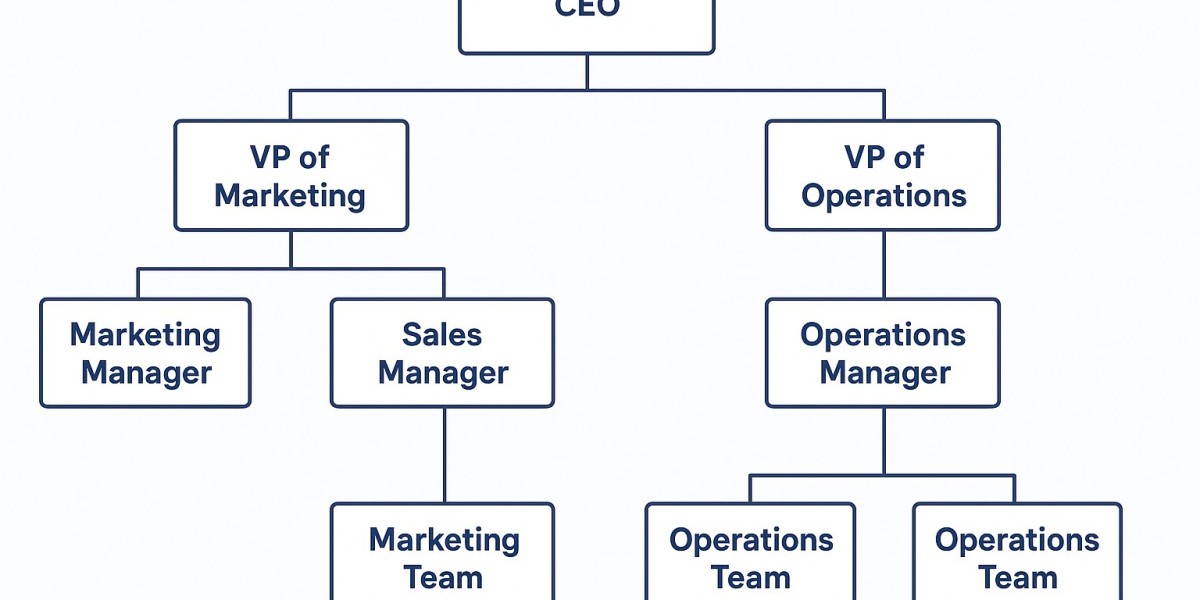
This is the most common type. It shows a top-down chain of command with clear levels of authority. The CEO is at the top, followed by executives, managers, and team members. This type of org chart works best for organizations with well-defined departments.
2. Matrix Org Chart
In a matrix structure, employees report to more than one manager—typically a functional manager and a project manager. This type of org chart is popular in companies with multiple ongoing projects or cross-functional teams.
3. Flat (Horizontal) Org Chart
Flat org charts are common in startups and creative industries where collaboration and flexibility matter more than strict hierarchy. With fewer management layers, employees enjoy more autonomy.
4. Divisional Org Chart
Large companies with multiple products or geographic locations often use divisional org charts. Each division operates like a mini-company with its own leadership and teams.
5. Network Org Chart
For companies with freelancers, remote teams, or external partners, a network org chart helps illustrate how internal and external contributors are connected.
Key Elements of an Effective Org Chart
A useful org chart is more than just names in boxes. It should include:
Roles and titles
Reporting relationships
Department names
Headcount and team size (optional)
Visual hierarchy
Clear lines or connectors showing relationships
To ensure clarity, the design must be simple, easy to interpret, and kept up to date.
How to Create a Professional Org Chart
Creating an effective org chart requires planning and attention to detail. Here are the steps to follow:
1. Identify Organizational Structure
Start by defining your company’s structure. List all departments, teams, and positions. Identify who reports to whom and how departments are interconnected.
2. Gather Accurate Employee Data
Collect the names, job titles, and reporting lines for every employee. Accuracy is essential to avoid confusion and misrepresentation.
3. Choose a Layout
Select the type of org chart that best represents your structure—hierarchical, matrix, flat, or divisional.
4. Use Visualization Tools
Modern software tools allow companies to create attractive, easy-to-update org charts. These tools also support features like drag-and-drop editing, multi-layered views, and automated updates.
5. Keep the Org Chart Updated
An outdated org chart can cause more confusion than clarity. Assign a team or individual to keep it regularly updated whenever employees join, leave, or change roles.
How Org Charts Support Organizational Growth
As businesses scale, growth brings both opportunities and complexities. Here’s how an org chart supports sustainable expansion:
1. Easier Role Realignment
When new projects or functions arise, an org chart helps identify where the gaps are and how to realign responsibilities.
2. Smooth Leadership Transitions
Leadership changes impact how teams operate. An updated org chart ensures employees understand new leadership structures right away.
3. Better Communication During Change
During mergers, expansions, or restructuring, an org chart becomes an important communication tool. It guides employees through change and maintains organizational stability.
4. Supports Succession Planning
Companies preparing future leaders rely on org charts to identify potential successors and design development plans.
Org Chart in the Age of Data-Driven Organizations
Modern companies don’t just use org charts as static diagrams—they integrate them with data. Data-driven org charts can show:
Skills distribution
Team performance
Department workload
Upcoming hiring needs
Reporting spans and management bandwidth
This data helps leaders make proactive decisions to strengthen the organization.
Org Chart as a Strategic Asset
An org chart is more than a visual representation of who reports to whom. It is a strategic asset that supports every aspect of business operations—from communication and culture to planning and growth. Companies that maintain clear and updated org charts reap benefits such as streamlined communication, enhanced productivity, and reduced organizational friction.
To explore how organizational intelligence tools can optimize your business structure, you can learn more at https://fortune500konnect.bizkonnect.com/.