
Internet lingo evolves rapidly, and one of the words that children and teens use today is cap. It could be found in written materials, social media remarks, in-game chatrooms, or in brief video clips. Although this might sound innocent, parents tend to be concerned with the meaning of cap and whether it is safe to allow kids to use or listen to them on the internet.
This guide will deconstruct cap meaning in slang, its use by children, examples, and what parents need to know to protect children on the internet.
What Does “Cap” Mean in Slang?
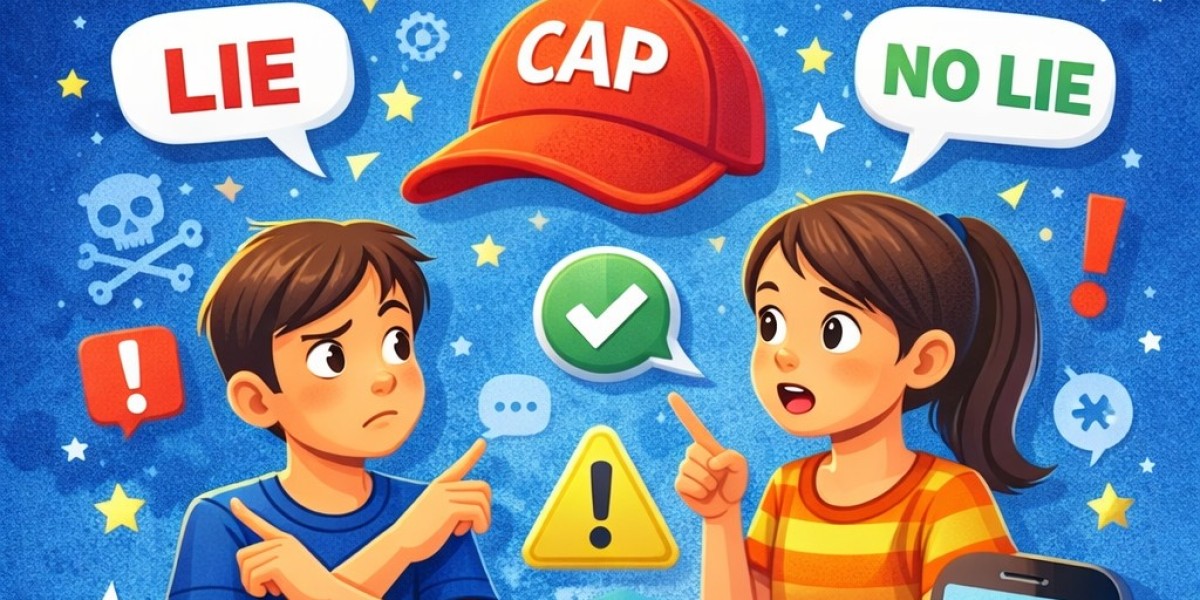
In the language of the internet today, cap refers to a lie.
“That’s cap” = That’s not true
No cap = I tell the truth/ no lie.
This word gained popularity in hip-hop culture and then further disseminated on such platforms as Tik Tok, Instagram, Snapchat and Game Chat.
Popular Cap Usages among Kids on the Internet.
Children and teens can use the term cap without care:
Calling out exaggeration:
“You beat the boss in one try? That’s cap.”
Emphasizing honesty:
“This game is hard, no cap.”
Playful teasing:
“You say you woke up early—cap!”
It is mostly employed as a joke or a casual thing rather than being aggressive.
Is “Cap” Safe for Kids?
Cap is not a dangerous slang.
However, context matters.
It may even be applied to make fun of or to accuse an individual of lying.
In heated debates, it can be disrespectful or offensive.
Several accusations may lead to fights or bullying.
The word itself is not offensive, but its application may cause changes in tone and feelings.
Teaching Kids about Cap: How Parents should talk to them.
Rather than prohibiting the use of slang, educating children about proper communication is a good idea.
Tips for Parents
Enquire when and where they have heard the word and in what way they make use of it.
Discuss how a person can call something a cap and offend someone when used too many times.
Teach children to be courteous when they disagree with each other online.
Encourage them to remember that tone is misinterpreted when used in a textual message.
Free-flowing discussions make kids gain knowledge of digital etiquette, and not only vocabulary.
Yes--but not being overreactive. Normal development of digital language uses slang such as cap. Parents should focus more on:
Who kids are talking to
The tone of conversations
Symptoms of peer pressure or bullying.
Overall online behavior
Parental control tools with frequent communication are the best.
Final Thoughts
Learning the slang such as cap can make a parent keep in touch with the online world of their children. Although the word itself is not very harmful, educating kids on the timing and manner in which to use it in a respectful way is the main principle in facilitating healthy digital interactions.
The only way parents can keep kids safe is not through fear but awareness of the internet slang and trust.