


Everything You Need to Know About How Long Kitchen Cabinets Last
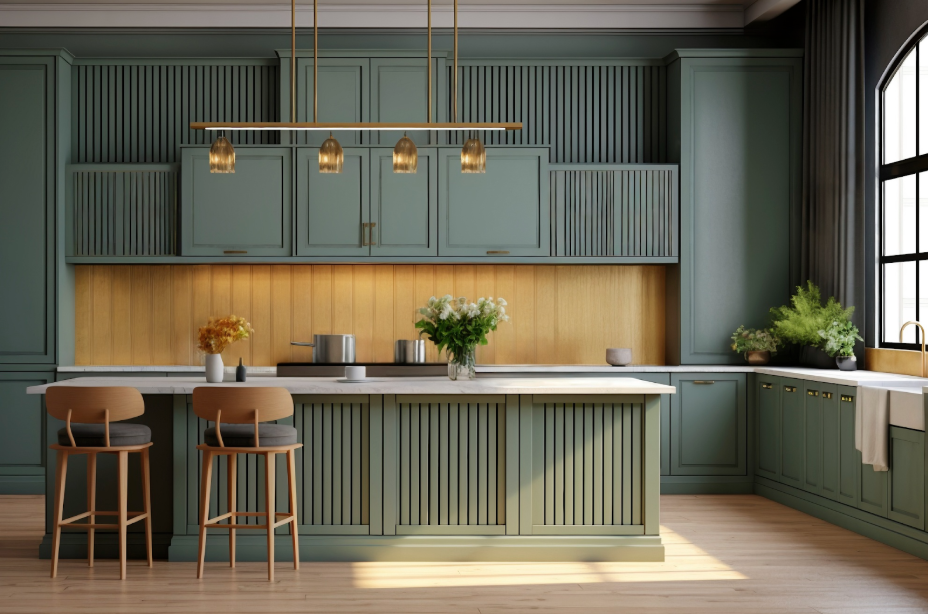
When you invest in a kitchen remodel, one of the first practical questions that comes up is how long do kitchen cabinets last. It is a fair question and the answer is not a simple number. Cabinet lifespan depends on the material they are made from, how they are constructed, how much daily use they handle and how consistently they are maintained. Understanding these factors helps you make smarter decisions whether you are shopping for new cabinets or trying to extend the life of the ones you already have.
This guide breaks down everything that affects cabinet longevity so you can plan your kitchen investment with realistic expectations.
The Average Lifespan of Kitchen Cabinets
As a general benchmark, well-made and properly maintained kitchen cabinets can last anywhere from 15 to 50 years. That is an enormous range, and it reflects just how significantly material quality and daily care affect outcomes.
Stock cabinets made from lower-grade particle board with a thin laminate surface typically last 10 to 15 years under normal use. Semi-custom and custom cabinets made from plywood or solid wood, particularly those assembled with quality hardware and protective finishes, commonly last 25 to 50 years. Some solid wood cabinets in well-maintained homes last even longer.
The 50-year mark is not a myth. It represents what is achievable when quality materials, proper installation and consistent maintenance work together. On the other hand, cabinets that are exposed to excessive moisture, fitted with poor hardware or made from low-quality materials can deteriorate in under a decade regardless of how carefully the homeowner treats them.
How Cabinet Material Affects Lifespan
Material choice is the single most important factor in determining how long do kitchen cabinets last. Each material has a different structural profile, moisture tolerance and finishing durability.
Solid Wood
Solid wood is the benchmark for longevity in cabinetry. Species like maple, oak, cherry and hickory are commonly used for cabinet construction because of their hardness and resistance to everyday wear. Solid wood expands and contracts slightly with humidity changes, which is a natural characteristic rather than a flaw. Properly sealed and finished solid wood cabinets that are maintained well can genuinely last 30 to 50 years or more.
The key advantage of solid wood is repairability. Surface scratches can be sanded and refinished. Dents can be steamed out. Finishes can be stripped and reapplied. This ability to be restored rather than replaced is what gives solid wood its exceptional value over time. Solid wood is among the most durable kitchen cabinets available when it comes to long-term performance.
Plywood
Plywood is the next tier down from solid wood in terms of durability, though it performs significantly better than either MDF or particle board. Cabinet-grade plywood uses multiple cross-laminated layers of wood veneer, which gives it structural stability and resistance to warping. Plywood cabinets typically last 20 to 30 years and handle humidity considerably better than engineered wood products.
Plywood is the preferred material for cabinet boxes in most quality semi-custom and custom cabinet lines, even when the door faces are made from solid wood. Its dimensional stability makes it an excellent choice for base cabinets that support heavy countertops and upper cabinets that carry the load of dishes and appliances. For more on material selection, the guide on the importance of choosing durable and sustainable cabinet materials offers a helpful comparison.
MDF (Medium Density Fiberboard)
MDF is a popular material for painted cabinet doors because it takes paint exceptionally well and holds a smooth, even finish. However, as a structural material for cabinet boxes, it has clear limitations. MDF is denser than particle board but far more susceptible to moisture than plywood or solid wood. When the edges of MDF absorb water, the material swells and the damage cannot be undone.
MDF cabinets in kitchens with good ventilation and careful moisture management can last 15 to 20 years. In environments with frequent steam, spills or high humidity, the lifespan may be considerably shorter. Cabinet maintenance around sinks and dishwashers is especially critical for MDF cabinetry.
Particle Board
Particle board is the most affordable cabinet material and also the least durable. It is made from compressed wood chips and resin, which gives it a uniform density but poor structural strength and very low moisture resistance. Particle board cabinets in budget stock lines typically have a lifespan of 10 to 15 years under normal conditions, and far less in moisture-prone areas.
The laminate or thermofoil surface applied to particle board can help protect it from surface moisture but does not prevent damage at joints and edges where water can penetrate. If you already have particle board cabinets, keeping spills away from joints and sealing any exposed edges goes a long way toward extending their life.
Laminate and Thermofoil
These are surface finishes rather than structural materials, but they significantly affect how long cabinets look good and hold up to daily contact. High-pressure laminate is quite durable and resists scratching, staining and fading well. Thermofoil, which is a vinyl film applied over MDF, is easier to clean but can peel or bubble when exposed to high heat over time. Cabinets near the stove are particularly vulnerable to thermofoil degradation.
How Construction Quality Affects Durability
Even the best materials perform poorly if the construction is substandard. The way a cabinet is assembled determines how it holds up under daily mechanical stress, which includes opening and closing doors and drawers hundreds of times every year.
Dovetail joints in drawer boxes are a mark of quality construction. They are stronger than stapled or glued joints and hold up far better over the long term. Cabinet boxes assembled with wood screws and glue are more structurally sound than those held together with staples alone. The thickness of the cabinet panels matters too. Thicker panels resist flexing and warping better than thin ones.
Pre-assembled cabinets built in controlled factory environments generally offer better construction consistency than ready-to-assemble options. Factory conditions allow for precision alignment, proper curing of finishes and quality control checks that are difficult to replicate at home. This directly translates to durable cabinets that perform reliably for more years. You can read more on this in the guide on why homeowners prefer the best pre-assembled kitchen cabinets.
Hardware quality also plays a meaningful role. Hinges, drawer slides and pulls that are built to commercial-grade specifications handle daily wear far better than lightweight alternatives. Soft-close mechanisms reduce impact stress on both the hardware and the cabinet box each time a door or drawer is closed, and this accumulates into a real difference in structural longevity over the years.
How Usage and Environment Affect Cabinet Life
A cabinet in a household that cooks daily experiences far more mechanical and environmental stress than one in a lightly used kitchen. This is not a reason to choose inferior cabinets but rather a reason to be realistic about what level of quality your lifestyle demands.
Steam from cooking, heat from the oven, grease from the stovetop and moisture from the sink are the primary environmental threats to kitchen cabinets. Kitchens without adequate ventilation trap humidity, which gradually degrades finishes and weakens the structural integrity of cabinet materials, especially around joints.
Households with young children who swing on cabinet doors or pull on handles with significant force create additional mechanical stress that can loosen hinges and strip screw holes prematurely. Choosing cabinets with thicker panels and commercial-grade hardware provides a meaningful buffer against this kind of accelerated wear.
Geographic climate also matters. In humid climates, even well-sealed solid wood cabinets are more prone to expansion and swelling. In very dry climates, wood can contract and develop small cracks over time. Managing indoor humidity with a ventilation system or a dehumidifier helps stabilize the environment and extends cabinet lifespan regardless of the material.
The Role of Cabinet Maintenance in Longevity
Cabinet maintenance is the variable that homeowners have the most direct control over, and it has a substantial impact on how long durable kitchen cabinets actually remain durable. Cabinets that are never cleaned accumulate grease and moisture that break down finishes and accelerate material degradation. Cabinets that are maintained consistently look and function well for significantly longer.
Regular cleaning removes the surface buildup that dulls finishes and traps moisture against the cabinet material. Prompt attention to spills prevents water from reaching joints and seams where it does the most damage. Lubricating hinges and drawer slides reduces wear on the mechanisms and prevents the loosening that leads to misaligned doors and sticky drawers. The guide on simple kitchen cabinet maintenance tips for a fresh and functional kitchen provides a complete routine you can follow to maximize the life of your cabinetry.
Re-finishing is another form of maintenance that effectively resets the clock on cabinet appearance without requiring a full replacement. Solid wood and plywood cabinets can be sanded, stained or painted to refresh their look when the original finish wears. This is far less expensive than replacement and can extend a cabinet's useful life by another decade or more.
Signs That Your Cabinets Are Nearing the End of Their Lifespan
Even the best cabinets eventually show signs of wear that go beyond what maintenance can address. Knowing what to look for helps you plan a replacement before problems affect the functionality of your kitchen.
Structural warping in the cabinet box is one of the clearest signs that moisture damage has progressed to a point that cannot be repaired. When the box itself is warped, doors and drawers can no longer align properly no matter how the hinges are adjusted. Swollen panels that no longer fit their frame, delaminating surfaces that are bubbling or peeling extensively and soft spots caused by water damage all indicate that the material has reached the end of its serviceable life.
Doors that consistently drop or shift out of alignment despite hardware adjustments may indicate that the hinge mounting points in the cabinet face frame have become worn beyond what screws can grip effectively. Stripped screw holes in particle boards are particularly common and often signal that replacement is more practical than continued repair.
Persistent odors from inside the cabinet, especially musty or sour smells, can indicate mold growth within the cabinet box. This is both a health concern and a structural one, as mold weakens organic materials over time.
When Refacing Is a Better Option Than Full Replacement
If your cabinet boxes are structurally sound but the door faces and finishes look dated or worn, cabinet refacing is worth considering before committing to a full replacement. Refacing involves replacing the door fronts and drawer fronts while keeping the existing cabinet boxes in place. The boxes are then wrapped with a veneer or laminate that matches the new doors.
This approach works well when the underlying box structure is plywood or solid wood and has not suffered moisture damage. It is far less expensive than a full replacement and can transform the appearance of your kitchen dramatically. If the boxes are particle board and are beginning to show signs of wear, full replacement is typically the better long-term investment.
Choosing Cabinets That Last
If you are in the process of selecting new cabinets, the decision you make now determines the trajectory of every question related to how long do kitchen cabinets last for your specific home. Prioritizing plywood or solid wood construction over particle board, choosing soft-close hardware and selecting a finish that suits your kitchen's humidity level are the most impactful decisions you can make.
The guide on how to pick the perfect kitchen cabinets for your space walks through selection criteria in detail, including what to look for in construction quality, finish options and sizing. If sustainability matters to you alongside durability, exploring materials that are both long-lasting and responsibly sourced adds another dimension to your decision.
Investing in durable cabinets from the outset costs more upfront but pays back in lower maintenance demands and a longer replacement cycle.
Conclusion
So how long do kitchen cabinets last? With the right materials, solid construction and consistent cabinet maintenance, the answer can be several decades. Durable kitchen cabinets are not just about the price tag at the point of purchase. They reflect the combined result of smart material selection, quality assembly and the care you put into them over the years.
Whether you are evaluating your current cabinets or planning a new installation, understanding what drives longevity helps you make choices that serve your kitchen well for the long term. For expert guidance on selecting and maintaining high-quality kitchen cabinets built for lasting performance, explore the full range at FMD Cabinets and schedule a free consultation to discuss your specific needs.
FAQs
Q: How long do solid wood kitchen cabinets typically last?
A: Solid wood kitchen cabinets can last 30 to 50 years or more with proper care. Their longevity comes from their structural strength and the fact that they can be sanded and refinished multiple times, effectively refreshing their appearance without requiring full replacement.
Q: Does cabinet construction quality really affect how long they last?
A: Yes, significantly. Cabinets built with plywood boxes, dovetail drawer joints and commercial-grade hardware outlast those made with particle board and staple-and-glue construction by many years. Factory assembly adds additional consistency in alignment and finish quality that extends the overall lifespan.
Q: What causes kitchen cabinets to deteriorate faster than expected?
A: Moisture exposure is the leading cause of premature cabinet failure, especially for MDF and particle board materials. Poor ventilation, unaddressed spills and steam from cooking without a range hood all accelerate deterioration. Low-quality hardware that fails mechanically is another common cause.
Q: Can I extend the life of older cabinets without replacing them?
A: In many cases, yes. Refinishing or repainting worn surfaces, replacing damaged hardware and addressing any moisture issues can add years to older cabinets. If the cabinet boxes are still structurally sound, refacing the doors and drawer fronts is an affordable way to refresh the look completely.
Q: How do I know when it is time to replace rather than repair my cabinets?
A: If the cabinet boxes show warping, persistent moisture damage, mold growth or stripped screw holes that cannot hold hardware, replacement is usually more practical than continued repair. Surface wear and dated aesthetics alone are often better addressed with refinishing or refacing rather than full replacement.

 English
 Arabic
 French
 Spanish
 Portuguese
 Deutsch
 Dutch
Dutch
 Italiano
 Russian
 Romaian
 Portuguese (Brazil)
 Greek
Greek