


Complete Guide to Improving Local Ranking on Google Search and Maps
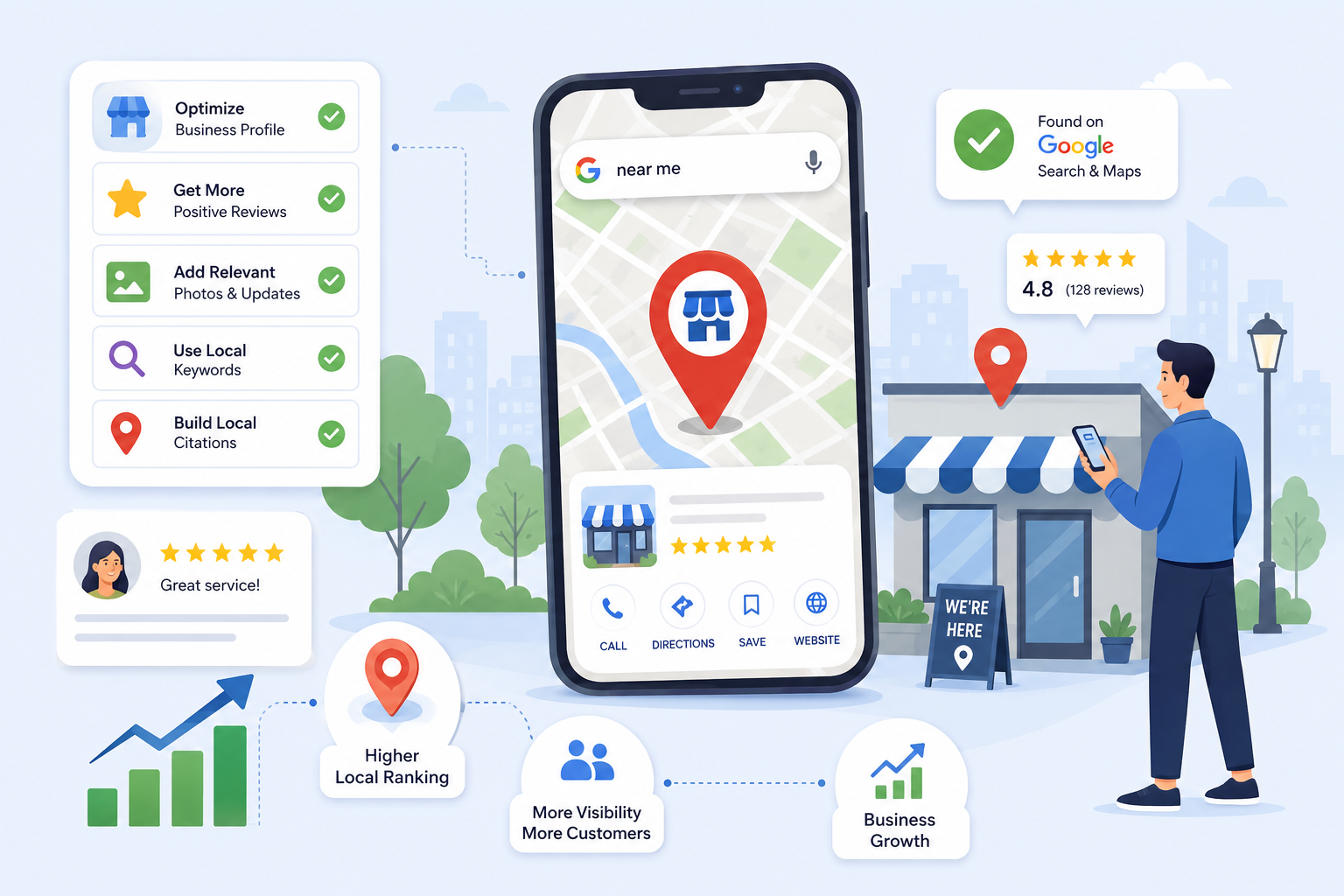
Appearing prominently on Google Search and Google Maps has become one of the most effective ways for local businesses to attract customers. Consumers regularly use search engines to discover nearby products and services, compare businesses, read reviews, and make purchasing decisions. Businesses with stronger local ranking often gain greater visibility, increased customer engagement, and more opportunities for growth.
Improving local ranking requires a strategic approach that combines profile optimisation, website improvements, customer engagement, content creation, and local authority building. Businesses that consistently strengthen these areas can improve their visibility across local search results and create a sustainable source of customer acquisition.
This guide explores the most important elements that contribute to a stronger local ranking on Google Search and Maps.
Understanding How Local Ranking Works
Google evaluates several signals when determining local ranking.
These signals help search engines understand:
- Business relevance
- Geographic proximity
- Online authority
- Customer engagement
- Information accuracy
The goal is to deliver the most useful and trustworthy results to users searching within a specific location.
Businesses that provide clear, accurate, and valuable information often achieve stronger visibility in local search results.
Optimise Your Google Business Profile
Google Business Profile remains one of the most important factors influencing local ranking.
A complete profile should include:
- Accurate business name
- Address information
- Phone number
- Website URL
- Business categories
- Operating hours
- Service descriptions
- High-quality images
Regular updates help maintain relevance and improve engagement.
An active profile signals that a business is trustworthy and responsive to customer needs.
Choose the Right Business Categories
Business categories help Google understand what services a company provides.
Selecting accurate categories improves the likelihood of appearing in relevant searches.
For example:
- Dental clinic
- Real estate agency
- Marketing consultant
- Home renovation contractor
Primary and secondary categories should align closely with actual services.
Proper category selection improves search relevance and visibility.
Strengthen Your Google Maps Presence
Google Maps plays a major role in local customer discovery.
Many users rely on Maps to:
- Find nearby businesses
- Request directions
- Compare providers
- Contact companies
Improving map visibility helps increase:
- Profile views
- Customer interactions
- Direction requests
- Business enquiries
Strong map performance often contributes to improved overall local ranking.
Maintain Accurate Business Information
Consistency helps search engines verify business legitimacy.
Important details include:
- Business name
- Address
- Phone number
- Website information
Accurate information across all platforms strengthens trust and improves visibility.
Consistency also helps customers find reliable information quickly.
Encourage Customer Reviews
Customer reviews influence both ranking performance and customer decisions.
Benefits of positive reviews include:
- Improved credibility
- Increased customer confidence
- Greater engagement
- Enhanced online reputation
Businesses that actively collect reviews often experience stronger local visibility and customer acquisition opportunities.
Responding professionally to customer feedback also contributes to trust and engagement.
Optimize Website Content for Local Searches
Your website remains an important component of local ranking success.
Key optimisation opportunities include:
- Location-focused service pages
- Relevant page titles
- Meta descriptions
- Local keywords
- Clear service information
Search engines use website content to understand relevance and geographic focus.
A well-optimised website supports stronger local search performance.
Create Valuable Local Content
Content marketing helps strengthen local authority and search relevance.
Examples include:
- Community-focused articles
- Local industry insights
- Service area guides
- Customer success stories
- Educational resources
Relevant content helps businesses engage local audiences while improving search visibility.
Consistent publishing supports long-term growth.
Build High-Quality Local Citations
Local citations are mentions of business information on external websites.
Common sources include:
- Business directories
- Industry platforms
- Community websites
- Local business listings
Consistent citations help:
- Improve search engine trust
- Strengthen online credibility
- Increase local visibility
- Support ranking growth
Accurate citations create a stronger digital footprint.
Improve Mobile User Experience
A large percentage of local searches occur on mobile devices.
Customers often search while:
- Traveling
- Shopping
- Exploring nearby services
A mobile-friendly website should provide:
- Fast loading speeds
- Easy navigation
- Click-to-call functionality
- Responsive design
A positive mobile experience improves engagement and supports stronger ranking performance.
Strengthen Local Authority Through Backlinks
Local backlinks help establish credibility and authority.
Potential backlink sources include:
- Local organizations
- Industry associations
- Community publications
- Business partnerships
Quality backlinks signal trust and relevance to search engines.
Businesses with strong local authority often perform better in competitive search environments.
Monitor Customer Engagement Signals
Customer engagement provides valuable insights into local search performance.
Important signals include:
- Profile views
- Website visits
- Phone calls
- Direction requests
- Customer reviews
High engagement demonstrates relevance and helps strengthen local visibility.
Monitoring these metrics supports ongoing optimization efforts.
Avoid Common Local Ranking Challenges
Several issues can limit visibility.
Examples include:
- Incomplete business profiles
- Outdated information
- Weak review activity
- Poor mobile experiences
- Inconsistent citations
Addressing these issues helps strengthen search performance and improve customer experience.
Future Trends Influencing Local Ranking
AI-Powered Search
Artificial intelligence continues improving search result relevance and personalization.
Voice Search Growth
Voice-enabled devices are influencing how consumers discover local businesses.
Hyperlocal Search Targeting
Search engines increasingly prioritize highly location-specific results.
Customer Experience Signals
User satisfaction, engagement, and website performance continue influencing visibility.
Businesses that adapt to these developments can strengthen future search performance.
Evaluate Your Google Business Profile Performance
Improving local ranking begins with understanding your current visibility and identifying opportunities for growth. Monitoring profile performance helps businesses strengthen search presence, attract customers, and improve engagement across Google Search and Maps.
👉 Check your real-time Google Business performance and discover improvement opportunities instantly here:
https://www.fly-social.com/tools/gmb-audit
Conclusion
Improving local ranking on Google Search and Maps requires a combination of profile optimization, accurate business information, customer reviews, local content, citation consistency, mobile usability, and authority building. Each element contributes to stronger visibility and improved customer discovery.
Businesses that invest in these strategies can increase customer engagement, generate qualified leads, strengthen brand authority, and create sustainable growth opportunities. As local search continues evolving, a strong local ranking remains one of the most valuable assets for long-term business success.

 English
 Arabic
 French
 Spanish
 Portuguese
 Deutsch
 Dutch
Dutch
 Italiano
 Russian
 Romaian
 Portuguese (Brazil)
 Greek
Greek