


Battery Waste Authorization in India: Complete Guide
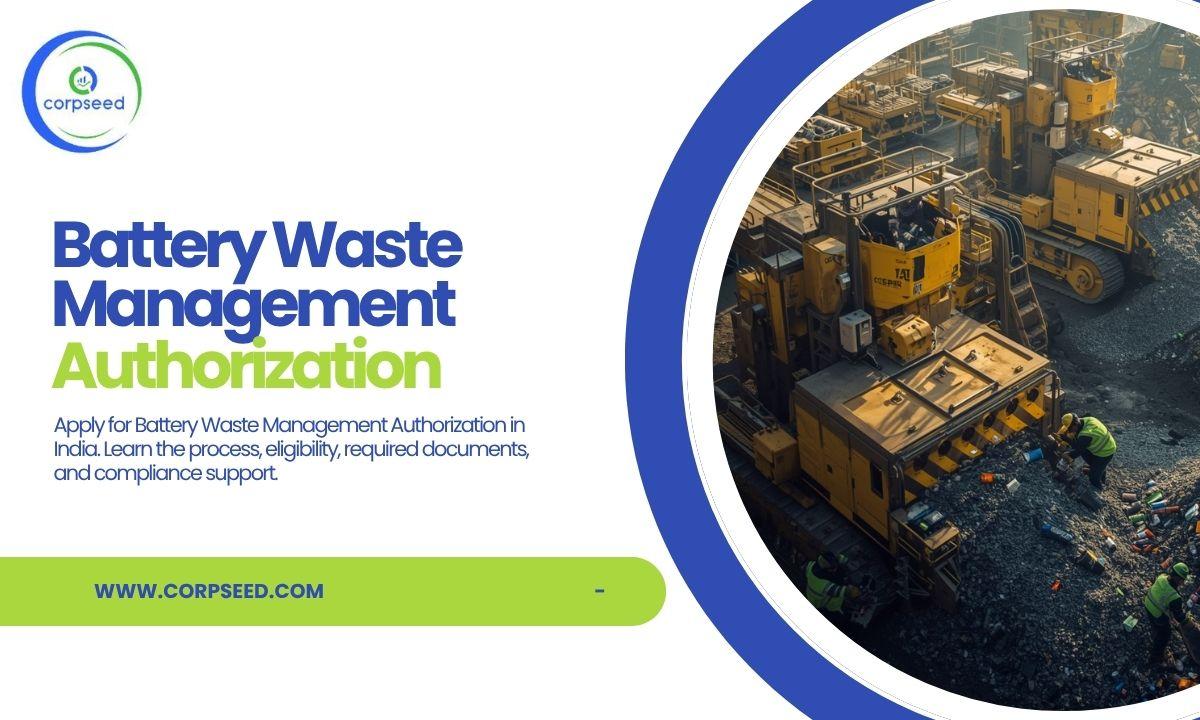
As India rapidly embraces electric vehicles, renewable energy storage systems, and electronic devices, the volume of battery waste generated across industries is increasing significantly. While batteries are essential for powering modern technologies, improper disposal can release hazardous substances into the environment, causing serious risks to human health and natural ecosystems.
To address these concerns, the government has introduced strict regulations for battery waste management. One of the most important compliance requirements under this framework is obtaining battery waste authorization. This authorization ensures that businesses involved in battery-related activities manage waste batteries responsibly and in accordance with environmental laws.
Whether you are a manufacturer, importer, recycler, refurbisher, or collection center, understanding the battery waste authorization process is essential for maintaining compliance and supporting sustainable waste management practices. This guide explains everything businesses need to know about battery waste authorization and the requirements associated with a battery waste license India.
What is Battery Waste Authorization?
Battery waste authorization is an official approval granted by the concerned State Pollution Control Board (SPCB) or Pollution Control Committee (PCC) to organizations involved in the collection, storage, transportation, recycling, refurbishing, and disposal of battery waste.
The authorization confirms that the organization follows approved environmental practices and complies with the Battery Waste Management Rules and other applicable environmental regulations.
Objectives of Battery Waste Authorization
The key objectives include:
- Ensuring environmentally sound management of battery waste
- Preventing soil and water contamination from hazardous battery materials
- Promoting recycling and recovery of valuable resources
- Supporting the circular economy
- Reducing landfill disposal of batteries
- Encouraging responsible waste collection and treatment
Battery Waste Management Framework in India
India has established a comprehensive framework for managing battery waste through various environmental regulations and compliance mechanisms.
Key Regulations Governing Battery Waste
The primary regulations include:
- Battery Waste Management Rules, 2022
- Environment (Protection) Act, 1986
- Hazardous and Other Wastes (Management and Transboundary Movement) Rules
- Central Pollution Control Board (CPCB) Guidelines
- State Pollution Control Board requirements
The Battery Waste Management Rules, 2022 introduced a robust Extended Producer Responsibility (EPR) framework, making producers responsible for the collection and recycling of waste batteries generated from their products.
Types of Batteries Covered
Battery waste regulations apply to:
- Portable batteries
- Automotive batteries
- Industrial batteries
- Electric vehicle batteries
- Lithium-ion batteries
- Lead-acid batteries
- Nickel-cadmium batteries
- Energy storage batteries
Who Needs Battery Waste Authorization?
Several stakeholders in the battery lifecycle may require battery waste authorization depending on their operations.
Battery Manufacturers
Manufacturers generating battery waste during production must ensure proper collection, storage, and disposal practices.
Importers
Importers of batteries and battery-operated products are responsible for meeting regulatory and EPR obligations.
Recyclers
Battery recyclers require authorization to process waste batteries and recover reusable materials safely.
Refurbishers
Businesses involved in refurbishing used batteries must comply with waste management requirements.
Collection Centers
Collection centers that receive and store waste batteries need authorization for safe handling and temporary storage.
Bulk Consumers
Organizations generating large quantities of battery waste may be required to follow specific authorization and disposal requirements.
Battery Waste Authorization vs Battery Waste License India
Many businesses use the terms battery waste authorization and battery waste license India interchangeably. Although they are closely related, understanding the distinction can help organizations navigate compliance requirements more effectively.
Battery Waste Authorization
- Official approval issued by the State Pollution Control Board (SPCB) or Pollution Control Committee (PCC).
- Required for entities involved in collecting, storing, transporting, recycling, refurbishing, or disposing of battery waste.
- Ensures compliance with environmental regulations and waste management standards.
- Demonstrates responsible handling and disposal of battery waste.
- Mandatory for eligible organizations engaged in battery waste management activities.
Battery Waste License India
- Commonly used industry term rather than a specific legal classification.
- Often refers to the overall regulatory approvals required for battery waste management.
- May include authorizations, registrations, consents, and other environmental clearances.
- Widely used by businesses and compliance professionals when discussing battery waste regulations.
- Helps organizations demonstrate regulatory compliance and environmental responsibility.
Key Takeaway
- Battery Waste Authorization is the official regulatory approval required by environmental authorities.
- Battery Waste License India is a broader term commonly used to describe the authorization and related compliance requirements.
- Businesses should obtain all necessary approvals to ensure legal compliance and operational continuity.
Benefits of Obtaining Battery Waste Authorization
Obtaining battery waste authorization offers several operational, environmental, and business advantages.
Regulatory Compliance
Authorization helps organizations comply with environmental laws and avoid penalties or enforcement actions.
Environmental Protection
Proper management of battery waste prevents harmful substances from contaminating soil, water, and air.
Enhanced Corporate Reputation
Demonstrating environmental responsibility strengthens stakeholder trust and brand credibility.
Resource Recovery
Authorized recycling enables the recovery of valuable materials such as:
- Lithium
- Cobalt
- Nickel
- Lead
- Copper
- Aluminum
Business Continuity
Compliance minimizes operational disruptions caused by regulatory investigations or violations.
Support for Sustainability Goals
Battery waste management contributes to ESG objectives and sustainable business practices.
Documents Required for Battery Waste Authorization
The exact documentation requirements may vary between states, but commonly requested documents include:
Business Documents
- Certificate of Incorporation
- PAN Card
- GST Registration Certificate
- Factory License (if applicable)
- MSME Registration (if available)
Technical Documents
- Manufacturing or process flow chart
- Site layout plan
- Details of battery waste generation
- Storage facility information
- Waste handling procedures
Environmental Documents
- Consent to Establish (CTE)
- Consent to Operate (CTO)
- Pollution control measures
- Environmental management plan
Additional Documents
- Authorized signatory details
- Employee safety procedures
- Emergency response plan
- Agreements with authorized recyclers
Step-by-Step Process for Obtaining Battery Waste Authorization
Step 1: Assess Applicability
Determine whether your organization falls under categories requiring authorization.
Step 2: Prepare Documentation
Compile all business, operational, and environmental documents.
Step 3: Submit Application
File the authorization application with the relevant SPCB or PCC.
Step 4: Verification of Documents
Authorities review the submitted information and request additional details if required.
Step 5: Site Inspection
Regulatory officials may inspect the facility to assess compliance and storage arrangements.
Step 6: Technical Evaluation
The authority evaluates waste management systems, safety measures, and environmental controls.
Step 7: Grant of Authorization
Upon successful evaluation, the authorization certificate is issued.
Step 8: Ongoing Compliance
Organizations must maintain records and comply with reporting requirements after receiving authorization.
Post-Authorization Compliance Requirements
Obtaining authorization is not a one-time obligation. Businesses must continuously meet compliance requirements.
Record Keeping
Maintain records related to:
- Battery waste generated
- Waste collection activities
- Transportation records
- Recycling and disposal details
- Compliance reports
Reporting Obligations
Submit periodic reports as required by regulatory authorities.
Safe Storage
Store waste batteries in designated areas with appropriate safety measures.
Authorized Transportation
Ensure battery waste is transported only through authorized handlers.
Employee Training
Train employees on:
- Safe battery handling
- Emergency response procedures
- Environmental compliance requirements
Common Challenges in Battery Waste Compliance
Businesses often face several challenges while implementing battery waste management systems.
Key Challenges
- Understanding evolving regulations
- Managing extensive documentation
- Tracking EPR obligations
- Coordinating with recyclers
- Maintaining compliance records
- Meeting reporting requirements
Professional compliance support can help organizations streamline these processes and reduce compliance risks.
Battery Waste Management and Extended Producer Responsibility (EPR)
Extended Producer Responsibility (EPR) is a central component of India's battery waste management framework.
Under EPR, producers are responsible for ensuring the collection, recycling, and environmentally sound disposal of batteries introduced into the market.
Major EPR Responsibilities
- Registration with relevant authorities
- Meeting collection and recycling targets
- Maintaining compliance records
- Filing periodic reports
- Working with authorized recyclers
EPR encourages producers to take responsibility for the entire lifecycle of batteries and supports the transition toward a circular economy.
Why Battery Waste Authorization is Important for the Circular Economy
Battery recycling plays a vital role in resource conservation and sustainable industrial development.
Contribution to Sustainability
Battery waste authorization supports:
- Recovery of valuable raw materials
- Reduced dependence on virgin resources
- Lower environmental impact
- Increased recycling efficiency
- Sustainable manufacturing practices
As battery demand continues to grow, responsible waste management will become increasingly important for India's environmental and economic future.
Key Stakeholders in Battery Waste Management
Effective battery waste management requires collaboration among multiple stakeholders.
Producers and Manufacturers
- Fulfill EPR obligations
- Establish collection systems
- Meet recycling targets
Importers
- Ensure compliance for imported batteries
- Maintain records and reporting systems
Collection Centers
- Collect waste batteries
- Store batteries safely
- Transfer waste to authorized recyclers
Recyclers
- Recover reusable materials
- Process waste batteries responsibly
- Support circular economy initiatives
Consumers and Bulk Users
- Dispose of batteries responsibly
- Participate in collection programs
Regulatory Authorities
- Issue authorizations
- Monitor compliance
- Conduct inspections
- Enforce environmental regulations
Frequently Asked Questions:
What is battery waste authorization?
Battery waste authorization is an approval issued by environmental authorities that allows organizations to manage battery waste in compliance with applicable regulations.
Who requires battery waste authorization?
Manufacturers, importers, recyclers, refurbishers, collection centers, and certain bulk consumers handling battery waste may require authorization.
Is battery waste authorization mandatory in India?
Yes. Eligible entities involved in battery waste management activities must obtain authorization from the appropriate regulatory authority.
How long does it take to obtain battery waste authorization?
The approval timeline varies depending on the state, documentation quality, and inspection requirements.
What is meant by battery waste license India?
Battery waste license India is a commonly used industry term that generally refers to battery waste authorization and related environmental compliance approvals.
What are the consequences of non-compliance?
Non-compliance may result in penalties, legal action, operational restrictions, and environmental liabilities.
Conclusion
The growing use of batteries across industries has made effective battery waste management a critical environmental priority. Obtaining battery waste authorization helps businesses comply with regulatory requirements, minimize environmental risks, and contribute to sustainable resource management.
Whether you are a manufacturer, importer, recycler, refurbisher, or collection center, securing the appropriate approvals is essential for responsible operations. Understanding the requirements associated with a battery waste license India can help organizations establish robust compliance systems and avoid regulatory challenges.

 English
 Arabic
 French
 Spanish
 Portuguese
 Deutsch
 Turkish
 Dutch
Dutch
 Russian
 Romaian
 Portuguese (Brazil)
 Greek
Greek