


How New Orleans Beads Became the Ultimate Carnival Souvenir?
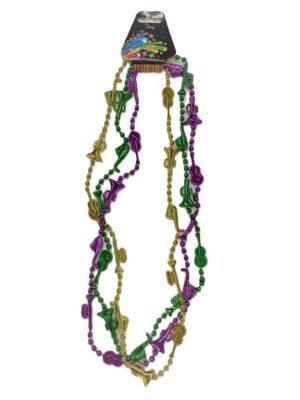
The night air of South Louisiana is thick with anticipation as a towering, multi-tiered tractor float rounds the corner of St. Charles Avenue. High above the crowd, a masked rider reaches into a deep canvas gear bag, pulls out a shimmering bundle, and launches it into the sky. It arcs gracefully over the oak trees, catching the flash of streetlights before landing securely in the hands of a cheering spectator.
Today, these flying token necklaces are synonymous with Carnival culture. Yet, the history of New Orleans beads is an evolutionary tale of material science, economic shifts, and local traditions. The journey from fragile, hand-strung European glass to the high-tensile, brilliantly electroplated plastics thrown today reflects the growth of the Crescent City's most famous celebration.
The Fragile Era: Bohemian Glass and Early Tokens
Long before plastic injection molding revolutionized the manufacturing world, early Carnival krewes relied on remarkably delicate materials. When the tradition of throwing souvenirs to the crowd took root in the late 19th and early 20th centuries, riders did not distribute mass-produced plastics. Instead, they threw inexpensive glass necklaces imported primarily from Czechoslovakia, Bohemia, and Japan.
These early glass variants were treasured for their rich, deep pigmentation and delicate beauty, but they presented significant operational challenges. They were heavy, expensive to buy in bulk, and highly fragile. If a glass strand missed a spectator’s hand and struck the cobblestone street or streetcar tracks, it shattered instantly. Because of their limited supply and fragile nature, catching a strand of imported glass was a rare, highly coveted achievement.
The Great Transformation: The Rise of Molded Plastics
By the mid-1960s, a major manufacturing shift forever changed the landscape of the parade route. Importers began sourcing injection-molded plastic necklaces from emerging manufacturing plants in Hong Kong.
This transition from glass to lightweight, durable polymers completely transformed the economics of Carnival. Plastic strings could be produced in massive quantities for a fraction of the cost of hand-made glass, making it sustainable for float riders to purchase dozens of cases rather than a few loose strands. Furthermore, shifting to lightweight plastics drastically improved safety on the route, allowing riders to toss throws deeper into the neutral ground crowds without risking injury.
Advanced Electroplating: Adding the Shimmer and Shine
Early plastic throws were often dull, featuring solid, matte colors that could easily look washed out under the flashing lights of night parades. In the late 1970s and early 1980s, manufacturers introduced advanced electroplating processes to the production lines.
By applying a microscopic layer of metallic film over the molded plastic core, fabricators created the brilliant, high-gloss finishes that define modern New Orleans beads. This process allowed the traditional purple, green, and gold colors to reflect bright daytime sunlight and night-time spotlights with incredible intensity, turning a simple plastic novelty into a dazzling, eye-catching souvenir.
Modern Innovations: Gauges, Medallions, and Pearlized Textures
Today, the evolution continues as local South Louisiana supply houses push the boundaries of design to keep the crowds cheering. Modern krewes no longer limit themselves to standard rounds. The contemporary parade landscape relies on a highly sophisticated variety of material tiers:
-
Heavy-Gauge Round Varieties: Moving far beyond the tiny rounds of the 1970s, modern riders throw thick 12mm, 14mm, and jumbo 22mm links that offer massive visual impact from the upper decks of a float.
-
Pearlized and Faceted Textures: Specialized injection lines create matte-finish "pearls," neon-glow finishes, and multi-faceted disco-ball shapes that capture and refract light in unique ways.
-
Custom-Molded Medallion Cords: Using high-density polyresins, modern krewes create large, highly detailed centerpieces featuring their official krewe crest, the current year’s parade theme, or iconic local landmarks.
Sourcing Your Inventory Safely and Locally
For modern float riders and event organizers, the greatest logistical hurdle is no longer sourcing the product, but managing weight and transportation. Because cases of heavy-gauge, high-density plastics are incredibly dense, ordering your supplies from national online drop-shippers often results in massive freight delivery surcharges that quickly destroy your event budget.
Sourcing your inventory through a regional distributor with deep roots in South Louisiana parade logistics eliminates these shipping markups, ensuring your budget goes directly toward securing high-quality, brilliant throws that won't snap or tangle on the route.
Equip Your Float Crew for the Upcoming Season
From the delicate glass imports of the 19th century to the heavy-gauge, shimmering polymers flying through the air today, these tokens remain the ultimate symbol of Louisiana's hospitality and festive spirit.
For riding members and local planners looking to secure top-tier, brilliant New Orleans beads without dealing with expensive shipping fees, exploring the seasonal catalog at Nola Throws is an excellent strategy. You can browse their extensive selection online and coordinate a seamless, freight-free pickup at their dedicated New Orleans East online pickup warehouse (situated conveniently inside the Furniture Mart at the I-10 Service Road Read Exit). If you prefer to view the weights, colors, and shine of their bulk inventory in person, you can visit their fully stocked year-round showrooms in Gretna or check out their seasonal hub in Houma. Partner with a local specialist early to ensure your gear bags are packed with premium souvenirs for the upcoming season.

 English
 Arabic
 French
 Spanish
 Portuguese
 Deutsch
 Turkish
 Italiano
 Russian
 Romaian
 Portuguese (Brazil)
 Greek
Greek