


Call Masking UAE: How Businesses Protect Privacy Without Breaking Customer Communication
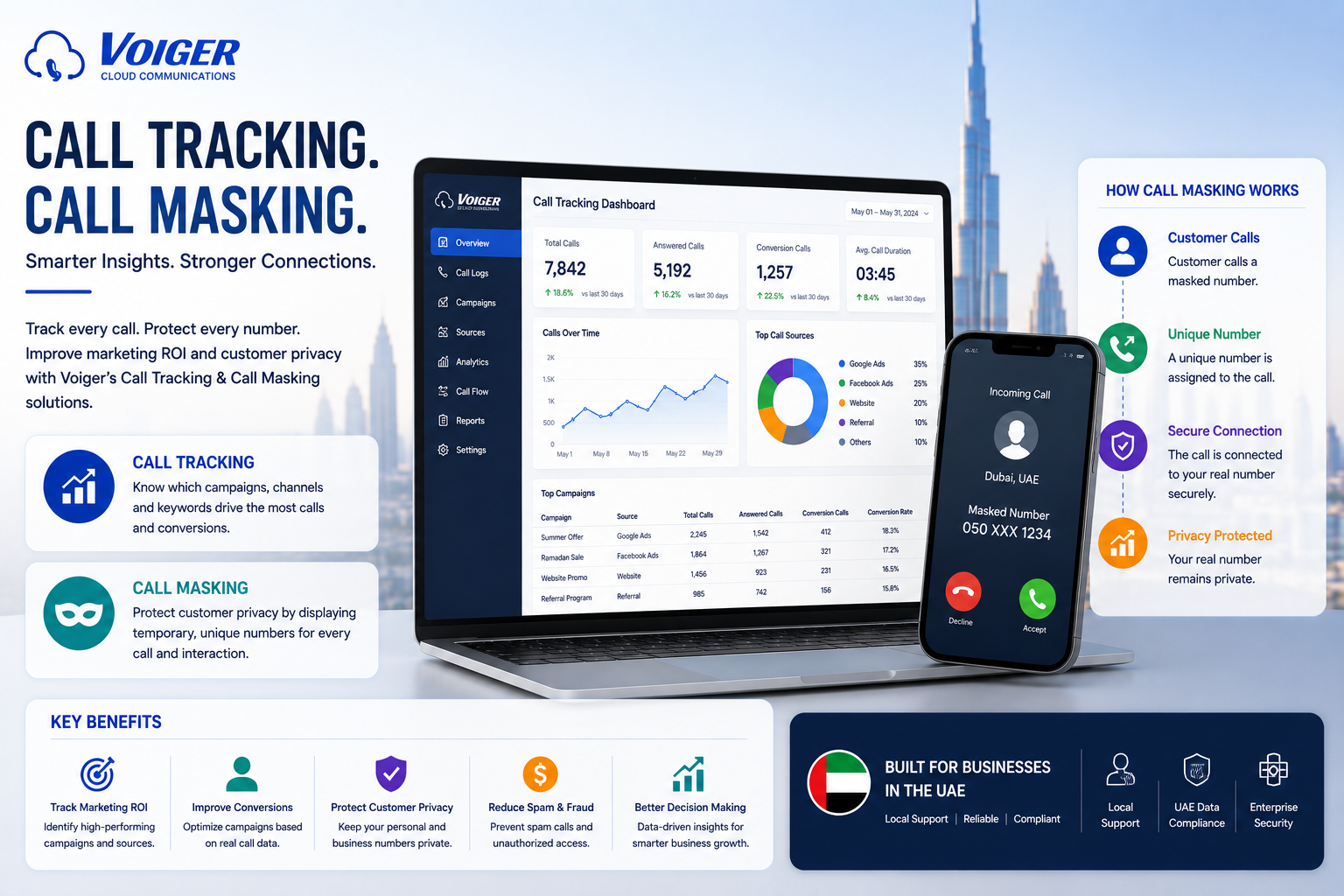
Customer communication still depends heavily on phone calls.
Even in businesses with apps, chat, email, and self-service workflows, there are still moments when a direct call is the fastest way to solve a problem.
A customer needs to confirm a location.
A field staff member needs to coordinate arrival.
A delivery driver needs to clarify directions.
A service provider needs to reach the customer before an appointment.
A support team needs to connect two parties without exposing personal contact details.
That is where privacy and communication can start to pull in different directions.
Businesses want calls to happen smoothly.
But they do not always want personal phone numbers shared between customers, drivers, field staff, agents, or service partners.
This is exactly where call masking in the UAE becomes important.
A well-designed call masking setup helps businesses protect privacy without making communication harder. It allows the conversation to happen, but through a controlled business layer rather than through direct personal number exposure.
If your team is evaluating call masking UAE options, here is how it works, where it fits best, and what a modern setup should really include.
What Call Masking Actually Means
Call masking is a communication setup that allows two parties to speak without revealing their real phone numbers to each other.
Instead of connecting one personal number directly to another, the call is routed through a controlled business layer that keeps the interaction functional while protecting contact details.
In practical terms, that means:
-
the customer does not see the staff member’s real number
-
the staff member does not see the customer’s real number
-
the business keeps better control over the communication flow
-
the interaction can still happen quickly and naturally when needed
That is why call masking UAE is not only a privacy feature.
It is also an operational control feature.
Why More Businesses in the UAE Need Call Masking
As customer communication becomes more distributed, more businesses are finding that direct mobile-to-mobile communication creates avoidable risks.
Those risks may include:
-
personal numbers being exposed unnecessarily
-
customers bypassing official channels later
-
staff receiving calls outside the intended service window
-
poor visibility into what happened during a transaction or service interaction
-
difficulty handling complaints or disputes
-
inconsistent communication across teams or vendors
This is especially relevant in businesses where customer communication involves more than one party, or where calls are tied to a transaction, booking, order, appointment, or service visit.
That is why call masking UAE is becoming more relevant for a wide range of use cases, not just one niche workflow.
The Real Goal of Call Masking
Some businesses assume call masking is only about hiding numbers.
That is too narrow.
The real goal is to create a communication model that is:
-
privacy-conscious
-
operationally controlled
-
easy for customers and staff to use
-
trackable when needed
-
aligned to the business workflow
A strong call masking setup should protect privacy without breaking customer communication.
If it makes calls too difficult, too slow, or too confusing, people will work around it.
That is why the best systems feel invisible to the user while still giving the business better control in the background.
Where Call Masking Fits Best
Call masking is useful wherever businesses need direct communication to happen temporarily, but do not want personal numbers exposed as a long-term communication channel.
1. Delivery and Last-Mile Operations
This is one of the most obvious use cases.
Drivers often need to call customers to:
-
confirm directions
-
coordinate arrival
-
clarify drop-off details
-
handle failed delivery attempts
Call masking allows those interactions without exposing the driver’s real number or the customer’s real number.
2. Field Service and Home Services
Technicians, installers, contractors, and service staff often need to call customers before or during appointments.
A call masking layer helps keep communication clean and business-controlled.
3. Marketplace and Platform Businesses
Where a platform connects customers with sellers, providers, or partners, direct personal-number exposure can create privacy, support, and control problems later.
Call masking helps the platform maintain the interaction inside a more structured workflow.
4. Real Estate and Viewings
Agents, viewing coordinators, and support staff may need to connect with prospects or tenants quickly without making personal numbers the long-term communication path.
5. Customer Support and Escalation Workflows
Some businesses need support teams to coordinate calls between customers and field staff, merchants, service providers, or internal teams while still keeping the business in control of the communication path.
This is why call masking UAE is relevant across multiple service-led industries.
Why Direct Number Sharing Creates Problems
At first, direct calling can seem simple.
A customer and service provider can reach each other immediately. A staff member can solve the issue faster. The call gets done.
But over time, the problems become clearer.
Direct number sharing can lead to:
-
repeated off-platform contact
-
out-of-hours calls to staff
-
loss of visibility for the business
-
inconsistent service experience
-
more difficulty reviewing disputes
-
privacy concerns from both customers and employees
-
challenges in maintaining professional communication boundaries
This is why many businesses realise that uncontrolled direct calling works in the short term but creates long-term operational friction.
What a Good Call Masking Setup Should Include
A proper call masking setup should do more than hide numbers.
Here is what businesses should actually expect from a modern solution.
1. Reliable Number Protection
At the most basic level, the system should ensure that personal numbers are not exposed unnecessarily between parties.
This is the foundation.
2. Fast and Natural Call Experience
The communication should still feel simple and quick.
If customers or staff struggle to place or receive the call, the solution becomes operationally weaker.
3. Business-Level Visibility
The business should be able to understand:
-
when calls happened
-
between which parties
-
how often communication occurred
-
whether calls were answered or missed
-
how this fits the broader service or transaction workflow
This is where call masking becomes more than a privacy feature.
It becomes a management tool.
4. Support for Time-Bound Communication
In many cases, communication should only remain available during an active service window, order lifecycle, appointment, or transaction stage.
That kind of control matters.
5. Fit with the Broader Workflow
The masking layer should fit naturally into the business process, not sit outside it.
That may mean supporting:
-
order workflows
-
delivery workflows
-
booking systems
-
customer service operations
-
CRM or support records
-
escalation and dispute handling
This is especially important for businesses using broader cloud contact centre UAE or contact centre software UAE environments.
Why Call Masking Should Be Considered Part of Customer Experience
Call masking is often discussed as a privacy feature, but it also affects customer experience.
A poor setup can feel confusing or unreliable.
A strong setup can feel seamless.
Customers do not usually care about the technical structure behind the call. They care that:
-
the right person can reach them quickly
-
the communication feels professional
-
the issue gets resolved without friction
-
their privacy is not compromised unnecessarily
That is why businesses should not evaluate call masking only as a compliance or internal-control feature.
It is part of the customer experience design.
How Call Masking Supports Better Business Control
One of the biggest advantages of call masking is that it helps the business stay inside the communication flow.
That creates value in areas such as:
Better Oversight
The business can track communication events more clearly.
Better Support Handling
When issues arise, there is more context available for customer service or operations teams.
Better Staff Protection
Employees, agents, drivers, and field teams are less exposed to direct personal contact beyond the service need.
Better Boundary Management
Communication can remain linked to the business process rather than turning into uncontrolled side-channel contact.
This is why call masking UAE is increasingly relevant for companies that take both privacy and operational consistency seriously.
Call Masking vs Just “Using Work Phones”
Some businesses assume the answer is simply to give employees a separate work phone or business SIM.
That can help in some cases, but it does not solve the full issue.
A separate work number may still create:
-
direct bypass of official business channels
-
weak visibility into when and why calls happen
-
poor integration into the customer workflow
-
lack of time-bound communication control
-
difficulty linking calls to a transaction, booking, or case
Call masking is stronger because it helps the business keep communication inside a structured process, not just on a different number.
Why Call Masking Works Best Inside a Broader Cloud Communication Environment
A standalone masking approach can work, but the real value becomes stronger when call masking sits inside a broader cloud contact centre UAE or cloud telephony UAE environment.
That is because the business can connect masking with:
-
routing
-
visibility
-
support processes
-
reporting
-
team workflows
-
CRM or service tools
-
future AI and analytics layers
This makes the communication environment more complete and easier to manage as the business grows.
What Businesses in the UAE Should Prioritise First
If your team is evaluating call masking UAE, start with the business problem you are actually trying to solve.
For most businesses, the right priorities are:
1. Privacy Protection
Where are personal numbers being exposed unnecessarily today?
2. Workflow Control
How can communication stay aligned to the transaction, booking, or service window?
3. User Simplicity
Will customers and staff be able to use this easily?
4. Visibility
Can the business track communication activity clearly enough when needed?
5. Integration with Operations
Will the masking flow support your real service process, not just the phone call itself?
This keeps the decision focused on practical outcomes.
What to Ask Before Choosing a Call Masking Provider
If your business is comparing providers, ask these questions early:
-
How does the masking setup protect personal numbers in practice?
-
Will the call experience still feel fast and natural for users?
-
Can communication be limited to active service or transaction windows?
-
What visibility will our business have into call activity?
-
How does this fit into our broader operations workflow?
-
Can the setup scale as our communication volume grows?
-
How will support teams review or respond to disputes or complaints?
-
Can this work alongside our broader cloud contact centre or telephony environment?
These questions help separate a basic masking feature from a more usable business communication solution.
Why This Matters for UAE SMB and Mid-Market Businesses
Large enterprises may already have multiple communication layers and bigger internal operations teams.
SMB and mid-market businesses often need something more practical.
They need:
-
privacy without complexity
-
better business control
-
easier rollout
-
clearer communication boundaries
-
room to grow without unmanaged calling habits
-
a solution that works with real daily operations
That is why call masking UAE is especially valuable in this segment.
It helps businesses protect both the customer experience and the internal communication model at the same time.
The Bottom Line
Call masking in the UAE helps businesses protect privacy without disrupting customer communication.
It allows calls to happen when they need to happen, but through a more controlled and business-led path.
That creates value not only in privacy, but also in:
-
operational visibility
-
staff protection
-
customer experience
-
communication boundaries
-
service consistency
The best call masking setup is not the one that simply hides a number.
It is the one that protects privacy while keeping the communication experience fast, usable, and aligned with the business workflow.
Ready to Explore a More Controlled Communication Setup?
Voiger helps businesses modernise customer communication with practical cloud contact centre workflows, flexible voice handling, and call masking capabilities designed for real operational use cases.
If your team is evaluating call masking UAE, book a demo with Voiger to explore a setup that protects privacy without breaking the customer experience.
FAQ's
What is call masking?
Call masking is a communication setup that allows two parties to speak without revealing their real phone numbers to each other.
Why is call masking important for businesses?
It helps businesses protect privacy, keep communication within a controlled workflow, and reduce the operational risks that come with direct personal-number sharing.
Which businesses can benefit from call masking in the UAE?
Delivery businesses, field service teams, marketplaces, real estate teams, home services, and any company that needs temporary direct communication without exposing personal numbers can benefit.
Is call masking only about privacy?
No. It also helps with business control, staff protection, support handling, communication boundaries, and operational visibility.
How is call masking different from using a work phone?
A work phone still creates a direct number-based communication path. Call masking keeps communication inside a more structured and business-controlled workflow.
Can call masking support customer experience?
Yes. A strong call masking setup should feel seamless to the user while still protecting privacy and supporting faster issue resolution.
What should businesses look for in a call masking solution?
They should look for reliable number protection, user simplicity, business visibility, time-bound communication control, and a setup that fits their actual workflow.
Can call masking work with a cloud contact centre?
Yes. Call masking can work especially well when it is part of a broader cloud telephony or cloud contact centre environment that supports routing, reporting, and operational workflows.

 English
 Arabic
 French
 Spanish
 Portuguese
 Turkish
 Dutch
Dutch
 Italiano
 Russian
 Romaian
 Portuguese (Brazil)
 Greek
Greek