


Ethanol Plant Setup Consultant in India
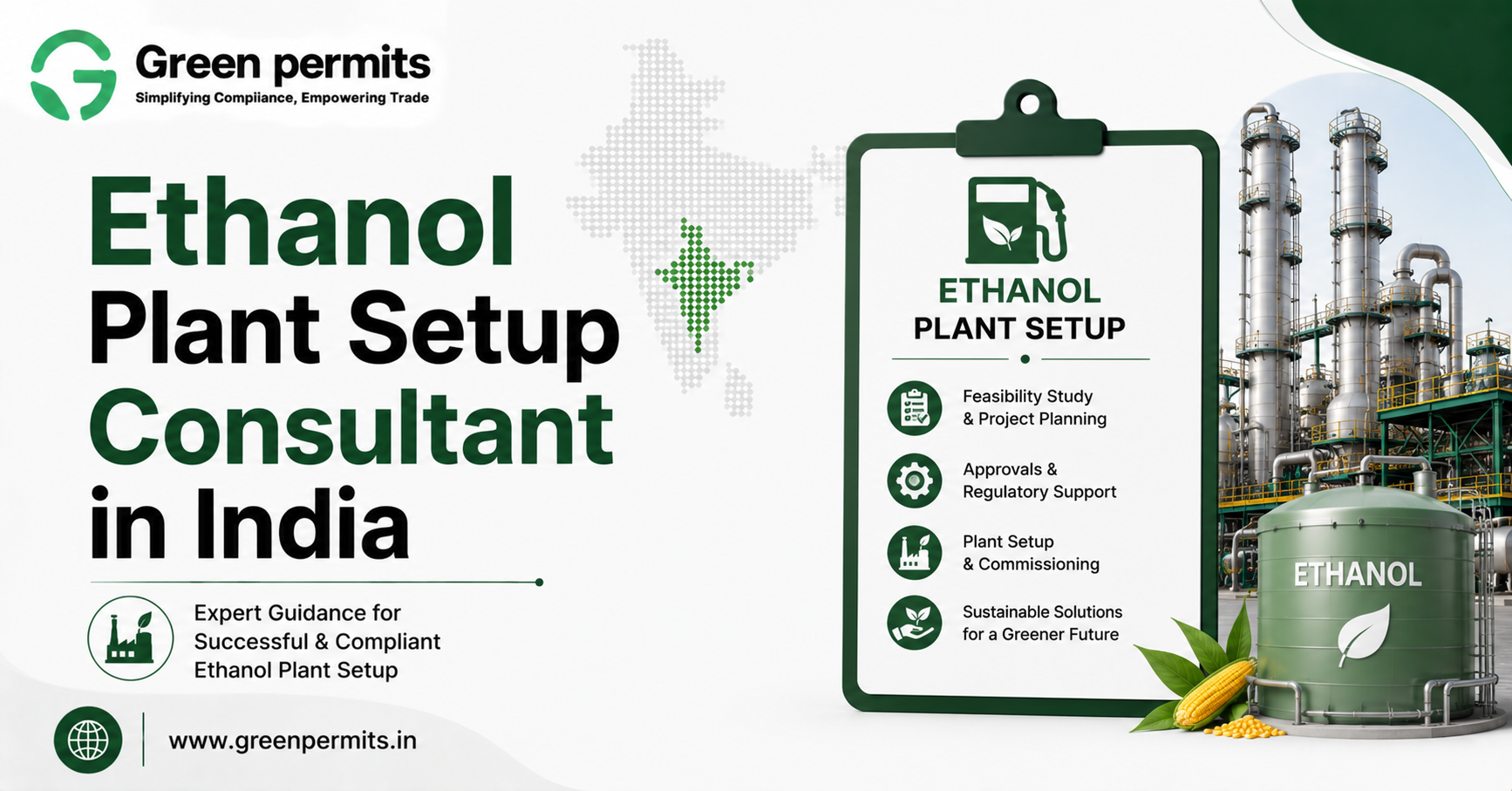
Ethanol Plant Setup Consultant in India plays an important role for businesses planning to enter the ethanol manufacturing, biofuel, industrial alcohol, grain-based distillery, molasses-based distillery, or renewable fuel sector. With India’s growing focus on ethanol blending, alternative fuels, farmer income, industrial alcohol demand, and clean energy, ethanol production has become an attractive business opportunity for investors and industrial groups.
Ethanol is used in multiple sectors, including fuel blending, pharmaceuticals, chemicals, cosmetics, food processing, industrial solvents, sanitizers, and beverages, depending on the grade and licence category. Fuel-grade ethanol is mainly supplied to oil marketing companies for blending with petrol, while other grades may be used for industrial or commercial purposes.
Setting up an ethanol plant in India requires detailed planning, technology selection, land suitability review, raw material assessment, environmental approvals, state excise permissions, pollution control approvals, machinery setup, utilities planning, and financial feasibility.
An Ethanol Plant Setup Consultant helps businesses manage the complete process from project concept to approvals, DPR preparation, plant layout, compliance planning, vendor coordination, and operational readiness.
What is an Ethanol Plant?
An ethanol plant is an industrial facility where raw materials such as grain, sugarcane molasses, damaged food grains, maize, rice, or other approved feedstock are processed to produce ethanol.
The plant may produce different types of ethanol depending on business model and licensing.
Common ethanol categories include:
- Fuel-grade ethanol
- Industrial ethanol
- Rectified spirit
- Extra neutral alcohol, where applicable
- Denatured alcohol
- Absolute alcohol
- Ethanol for chemical use
- Ethanol for blending with petrol
The exact process, licence, machinery, and compliance requirement depends on the feedstock, capacity, product category, and end use.
Why Ethanol Plant Setup is Important in India
Ethanol production is important because it supports India’s fuel blending program, reduces dependence on fossil fuel imports, creates value from agricultural produce, and supports the biofuel economy.
An ethanol plant helps in:
- Producing fuel-grade ethanol
- Supporting petrol blending requirements
- Creating demand for grain and molasses
- Generating employment in rural and industrial areas
- Supporting farmer income
- Reducing fossil fuel dependency
- Creating industrial alcohol supply
- Supporting circular economy through by-products
- Generating DDGS from grain-based plants
- Improving renewable fuel infrastructure
For investors, ethanol plants offer an opportunity in a regulated but growing industrial sector.
Who Can Set Up an Ethanol Plant in India?
Any eligible business entity can set up an ethanol plant after obtaining required approvals, licences, and registrations.
The following entities may set up ethanol plants:
- Private limited companies
- Limited liability partnerships
- Partnership firms
- Sugar mills
- Grain processing companies
- Agro-based industries
- Distillery businesses
- Renewable fuel companies
- Biofuel project developers
- Industrial alcohol manufacturers
- Large business groups
- Investors entering biofuel production
Before starting, the business must check project viability, land requirement, feedstock availability, water availability, environmental compliance, technology selection, and government approval requirements.
Types of Ethanol Plants in India
Ethanol plants may be classified based on raw material and product use.
Common types include:
- Grain-based ethanol plant
- Molasses-based ethanol plant
- Sugarcane juice-based ethanol plant
- Dual-feed ethanol plant
- Fuel ethanol plant
- Industrial ethanol plant
- Integrated distillery and ethanol plant
- Ethanol plant with co-generation
- Ethanol plant with DDGS production
- Ethanol plant with zero liquid discharge system
Each plant type has different process requirements, investment needs, approvals, and operating costs.
Role of Ethanol Plant Setup Consultant
An Ethanol Plant Setup Consultant helps investors and companies plan and execute the project properly.
Consulting support generally includes:
- Project feasibility assessment
- Feedstock availability study
- Land and site suitability review
- Capacity planning
- Detailed project report preparation
- Approval checklist preparation
- Environmental compliance planning
- Consent to Establish filing support
- Consent to Operate filing support
- Excise licence guidance
- Machinery and technology planning
- Utility planning
- Financial projections
- Query response support
- Plant commissioning compliance support
A consultant helps businesses reduce setup delays, avoid wrong approval sequencing, and prepare a bankable project structure.
Raw Materials Used in Ethanol Production
The raw material depends on plant type and approved business model.
Common raw materials may include:
- Maize
- Broken rice
- Damaged food grains
- Sugarcane molasses
- Sugarcane juice
- Surplus grain
- Starch-rich agricultural produce
- Other permitted feedstock
The selection of raw material is one of the most important decisions because it affects plant location, cost, yield, storage, machinery, by-products, and profitability.
Key Products and By-Products
An ethanol plant may generate main products and by-products depending on process design.
Common outputs include:
- Fuel ethanol
- Industrial ethanol
- Rectified spirit
- Extra neutral alcohol, where permitted
- DDGS from grain-based plants
- Carbon dioxide
- Fusel oil
- Spent wash
- Treated water
- Boiler ash
- Biomass residue
By-product planning is important because it can improve project revenue and reduce waste management burden.
Approvals Required for Ethanol Plant Setup
Setting up an ethanol plant requires multiple approvals depending on state, capacity, feedstock, product category, and end use.
Common approvals may include:
- Company registration
- GST registration
- Land use approval
- Factory licence
- Environmental Clearance, where applicable
- Consent to Establish from SPCB
- Consent to Operate from SPCB
- State excise licence
- Industrial licence, where applicable
- Boiler approval
- Fire NOC
- PESO approval, where applicable
- Electricity connection approval
- Water extraction permission, where applicable
- Building plan approval
- Hazardous waste authorization, where applicable
The exact approval requirement should be checked before land purchase or project investment.
Documents Required for Ethanol Plant Setup
Proper documentation is essential for approvals, financing, and project execution.
Common documents may include:
- Company Incorporation Certificate
- PAN Card
- GST Registration Certificate
- Land ownership or lease documents
- Site layout plan
- Factory layout plan
- Project report
- Detailed project report
- Process flow chart
- Plant capacity details
- Raw material details
- Product details
- Machinery list
- Water requirement details
- Power requirement details
- Boiler and utility details
- Effluent treatment details
- Zero liquid discharge plan, where applicable
- Air pollution control system details
- Fire safety plan
- Storage tank details
- Financial projections
- Authorization letter
- Undertaking or declaration
Additional documents may be required depending on state rules, excise department requirements, and environmental authority requirements.
Machinery Required for Ethanol Plant
Machinery selection depends on feedstock, capacity, technology, product grade, and automation level.
Common machinery and systems may include:
- Grain handling system
- Grain cleaning system
- Milling system
- Slurry preparation system
- Liquefaction system
- Saccharification system
- Fermentation tanks
- Distillation columns
- Molecular sieve dehydration system
- Evaporation system
- DDGS dryer
- Boiler
- Turbine, where applicable
- Cooling tower
- Water treatment plant
- Effluent treatment plant
- Zero liquid discharge system
- Storage tanks
- Fire safety system
- Laboratory equipment
The machinery should be selected after technical feasibility and capacity planning.
Ethanol Plant Setup Process
The ethanol plant setup process includes feasibility study, DPR preparation, approval filing, land development, machinery installation, commissioning, and compliance management.
Step 1: Feasibility Study
The first step is preparing a feasibility study for the ethanol project.
This includes checking:
- Feedstock availability
- Plant capacity
- Land requirement
- Water availability
- Power requirement
- Technology option
- Investment requirement
- Product demand
- By-product market
- Approval requirement
- Project profitability
A feasibility study helps decide whether the project is technically, commercially, and legally viable.
Step 2: Site Selection
The site should be suitable for industrial activity and ethanol production.
Important points include:
- Industrial land use
- Raw material availability
- Water availability
- Road connectivity
- Distance from sensitive areas
- Power availability
- Space for storage tanks
- Space for ETP and ZLD system
- Fire safety suitability
- Local approval feasibility
Wrong site selection can create approval delays, water issues, logistics problems, or community resistance.
Step 3: DPR Preparation
A detailed project report is required for investors, banks, approvals, and internal planning.
The DPR generally includes:
- Project background
- Promoter details
- Plant capacity
- Feedstock analysis
- Technology description
- Machinery list
- Land and building details
- Utilities planning
- Pollution control systems
- CAPEX and OPEX
- Manpower requirement
- Revenue projections
- Profitability analysis
- Risk assessment
- Compliance roadmap
A well-prepared DPR helps the project move forward with clarity.
Step 4: Apply for Environmental and Pollution Approvals
Before plant setup, the business must obtain applicable environmental approvals.
This may include:
- Environmental Clearance, where applicable
- Consent to Establish
- Water permission, where required
- Air pollution control approval
- Effluent treatment approval
- Waste management approval
- ZLD system planning
- Hazardous waste authorization, where applicable
Ethanol plants must carefully plan effluent management because spent wash and wastewater handling are major compliance areas.
Step 5: Apply for Excise and Factory Approvals
Ethanol production is also regulated by state excise departments.
Excise and factory-related approvals may include:
- Distillery licence
- Ethanol manufacturing permission
- Storage permission
- Denaturation approval, where applicable
- Transport permit system
- Factory licence
- Boiler approval
- Fire safety approval
Requirements vary from state to state, so local rules must be checked before setup.
Step 6: Install Machinery and Utilities
After approvals, machinery and utilities are installed as per approved layout.
This stage may include:
- Civil construction
- Machinery foundation
- Equipment installation
- Pipeline installation
- Electrical systems
- Boiler setup
- Water treatment system
- ETP and ZLD setup
- Storage tank installation
- Fire safety system installation
- Laboratory setup
The installation should follow approved drawings, safety norms, and pollution control conditions.
Step 7: Apply for Consent to Operate
After completing setup, the unit must obtain Consent to Operate before starting commercial operations.
The authority may verify:
- Installed machinery
- Pollution control systems
- Effluent treatment arrangement
- Boiler and emission control
- Storage systems
- Safety systems
- Compliance with CTE conditions
- Site readiness
CTO is required before regular production starts.
Step 8: Commissioning and Operations
After approvals and inspection, the plant can begin trial runs and commercial operations.
Operational compliance may include:
- Maintaining production records
- Maintaining raw material records
- Monitoring effluent quality
- Maintaining air emission data
- Filing excise records
- Maintaining ethanol dispatch records
- Managing storage safely
- Renewing approvals on time
- Keeping inspection documents ready
Ethanol plants need strong compliance systems because they are regulated by multiple departments.
Cost of Ethanol Plant Setup
The cost of setting up an ethanol plant depends on several factors.
These include:
- Plant capacity
- Raw material type
- Land cost
- Building cost
- Machinery cost
- Boiler and utility cost
- ETP and ZLD cost
- Storage tank cost
- Fire safety system cost
- Approval and licence cost
- Manpower cost
- Working capital requirement
- Consultant professional charges
A small plant may require lower investment, while a large grain-based or integrated ethanol plant may require significant capital investment.
Timeline for Ethanol Plant Setup
The timeline depends on project size, land readiness, approval processing, machinery procurement, construction, and commissioning.
The general timeline may include:
- Feasibility study: 5 to 10 working days
- DPR preparation: 10 to 20 working days
- Environmental approvals: depends on project category
- Consent to Establish: depends on SPCB processing
- Excise approval: depends on state process
- Machinery procurement: depends on supplier
- Construction and installation: depends on plant capacity
- Consent to Operate: after inspection and verification
- Commissioning: after approval and readiness
Businesses should plan timelines carefully because approvals and machinery installation can take several months.
Common Mistakes During Ethanol Plant Setup
Many ethanol projects face delays due to poor planning or incomplete compliance.
Common mistakes include:
- Selecting unsuitable land
- Starting setup without approvals
- Not checking water availability
- Ignoring effluent treatment planning
- Not planning ZLD properly
- Choosing wrong technology
- Preparing weak DPR
- Missing excise licence requirements
- Underestimating working capital
- Not planning raw material supply
- Starting operations without CTO
Professional guidance helps avoid these mistakes and improves project execution.
Benefits of Hiring Ethanol Plant Setup Consultant
Hiring an Ethanol Plant Setup Consultant provides several practical benefits.
These include:
- Better project planning
- Correct approval roadmap
- Faster document preparation
- Proper DPR preparation
- Better feedstock assessment
- Technology planning support
- Environmental compliance support
- Excise licence guidance
- Pollution control planning
- Financial feasibility support
- Reduced approval delays
- Improved project execution
A consultant helps businesses move from idea to implementation with a structured approach.
Learn More About Ethanol Plant Setup
If you are planning to start an ethanol manufacturing business in India, understanding land, feedstock, approvals, machinery, investment, environmental compliance, and excise requirements is essential before starting.
Read the complete guide here:
👉 https://www.greenpermits.in/ethanol-manufacturing-plant-consultants-in-india/
📞 Get Expert Assistance for Ethanol Plant Setup
If you need help with Ethanol Plant Setup, DPR preparation, feasibility study, Environmental Clearance, Consent to Establish, Consent to Operate, excise licence, pollution control compliance, machinery planning, or complete project approval support, Green Permits Consulting can guide you through the process efficiently.
🌐 Website: https://www.greenpermits.in/
📞 Phone: +91 78350 06182
📧 Email: wecare@greenpermits.in

 English
 Arabic
 French
 Spanish
 Portuguese
 Deutsch
 Dutch
Dutch
 Italiano
 Russian
 Romaian
 Portuguese (Brazil)
 Greek
Greek