


Desalination and High-Capacity Pumping Are Reinforcing Saudi Arabia’s Water Infrastructure
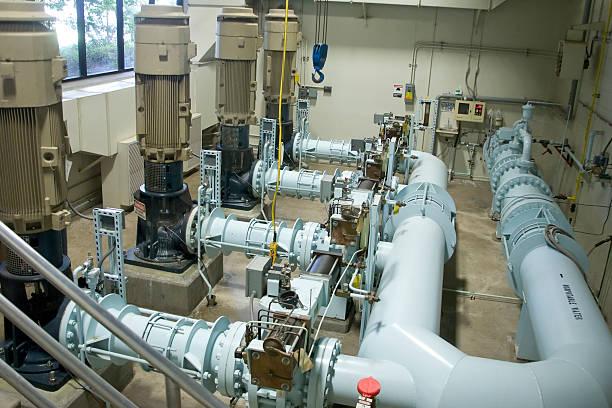
Saudi Arabia’s water systems depend heavily on reliable pumping equipment because water often needs to be produced on the coast and transported considerable distances to inland population centres. Desalination, municipal distribution, wastewater treatment, oil and gas operations, agriculture, and industrial facilities all create distinct pumping requirements. As the Kingdom strengthens water security, dependable high-capacity equipment and efficient system operation are becoming increasingly important.
According to a Vyansa Intelligence report, the Saudi Arabia water pump market was valued at USD 755 million in 2025 and is projected to reach USD 925 million by 2032, representing a 2.94% CAGR during 2026–2032. Desalination infrastructure, water transmission requirements, industrial activity, wastewater projects, and modernization of pumping systems are important factors influencing equipment demand.
Desalination Creates Extensive Pumping Requirements
Saudi Arabia’s limited natural freshwater availability makes desalination fundamental to urban water supply. Desalination plants require pumps at multiple stages, while additional high-capacity systems are necessary to move treated water from coastal production facilities toward reservoirs and inland distribution networks.
The Saudi Arabia water pump market analysis therefore needs to consider more than water production itself. Transmission distance, elevation, pressure requirements, energy consumption, and continuous equipment availability can all influence pump selection and system design.
National Water Strategy Highlights the Importance of Pumping Efficiency
Saudi Arabia’s Ministry of Environment, Water and Agriculture explains through its National Water Strategy that the Kingdom faces limited renewable water resources and substantial dependence on desalination. Importantly for pumping equipment, the strategy identifies high transmission costs associated with pumping desalinated water from coastal areas to inland locations as one of the economic challenges facing the sector.
This official perspective fits naturally with the latest market analysis because efficient water movement can influence the overall economics of desalinated-water supply. Pump efficiency, appropriate sizing, control systems, and pipeline configuration therefore have implications extending well beyond the equipment purchase itself.
Centrifugal Pumps Support High-Volume Applications
Centrifugal pumps remain particularly relevant where large quantities of water or process fluids need to be transported reliably. Municipal distribution, desalination facilities, wastewater treatment, cooling systems, and industrial applications can all require continuous high-volume fluid movement.
These detailed market insights show why established pumping technologies continue to play a central role even as control systems become more sophisticated. Digital monitoring can improve how equipment is managed, but suitable hydraulic design and mechanical reliability remain fundamental.
Water Security Is Expanding Infrastructure Requirements
Saudi Arabia continues to invest heavily in the infrastructure required to secure dependable water supplies. The Ministry of Environment, Water and Agriculture reported in June 2026 that daily water distribution had reached 11.4 million cubic metres, supported by 12.8 million cubic metres of daily production capacity. It also reported 11,000 kilometres of desalinated-water transmission pipelines and 127,500 kilometres of distribution networks.
For a water pump industry report, this infrastructure provides important context. Large transmission and distribution networks require pumping stations, monitoring equipment, maintenance services, replacement components, and reliable operational support.
Oil and Gas Operations Need Specialized Equipment
Saudi Arabia’s oil and gas industry creates pumping requirements that differ considerably from conventional municipal water applications. Pumps may be required for process water, cooling, produced-water handling, fluid transfer, and other demanding industrial operations.
Equipment used in these environments needs to address pressure, temperature, fluid characteristics, corrosion, and operational reliability. Manufacturers serving industrial users therefore need portfolios capable of handling specialized operating conditions rather than relying exclusively on conventional clean-water equipment.
Wastewater Reuse Is Creating Additional Applications
Treated wastewater is becoming increasingly important as Saudi Arabia seeks to reduce pressure on limited freshwater resources. Reclaimed water can support agricultural irrigation, landscaping, industrial applications, and other non-potable uses.
Broader industry analysis shows that greater reuse also creates requirements for pumps across collection, treatment, storage, and redistribution. Different wastewater characteristics can require equipment designed around solids handling, corrosion resistance, clogging prevention, and maintainability.
Smart Monitoring Can Improve Pump Reliability
Pumping stations are increasingly able to benefit from sensors, automated controls, and condition-monitoring technology. These systems can provide operators with information about pressure, vibration, flow, temperature, and other equipment conditions.
For installations where unexpected downtime can disrupt essential water or industrial services, improved operational visibility can support more informed maintenance. Predictive approaches may also help operators identify deterioration before it results in a significant equipment failure.
Agriculture Requires More Efficient Water Delivery
Agriculture represents another important part of Saudi Arabia’s water-management challenge. The National Water Strategy identifies agriculture as the country’s largest water-consuming sector and emphasizes improving irrigation efficiency and reducing reliance on non-renewable groundwater.
For pumping-system suppliers, this creates opportunities around efficient irrigation, treated-water reuse, appropriate pump sizing, and improved control of agricultural water movement. Equipment efficiency becomes particularly valuable where pumps operate frequently over long irrigation periods.
Energy Consumption Influences Lifecycle Economics
The initial purchase price of a pump represents only one component of its overall cost. Electricity consumption, maintenance, downtime, repairs, replacement parts, and service life can all influence long-term economics.
A comprehensive water pump market research report therefore needs to consider lifecycle performance. Energy-efficient pumps may require different upfront investment, but equipment that is correctly sized and effectively controlled can provide operational benefits over years of continuous service.
Local Service Capabilities Can Become a Competitive Advantage
Saudi Arabia’s large water and industrial projects require more than equipment delivery. Installation support, commissioning, spare parts, preventive maintenance, troubleshooting, and system upgrades can become important parts of supplier relationships.
Local technical capabilities are particularly valuable for critical pumping installations where long delays in obtaining replacement components or specialist support can create operational disruption. This gives manufacturers and distributors opportunities to differentiate through aftermarket service as well as product performance.
Reliable Water Movement Remains Central to Saudi Infrastructure
Saudi Arabia’s pumping requirements are closely connected with desalination, long-distance transmission, municipal distribution, industrial operations, wastewater reuse, and agricultural water management. These applications require different pump configurations, but reliability and efficient operation remain common priorities.
As the Kingdom strengthens water security and modernizes infrastructure, pumping systems that combine dependable mechanical performance with appropriate controls, energy-conscious operation, and strong technical support can play an increasingly important role across the country’s water value chain.

 English
 Arabic
 French
 Spanish
 Portuguese
 Deutsch
 Turkish
 Italiano
 Russian
 Romaian
 Portuguese (Brazil)
 Greek
Greek