


How Commercial Interior Doors for Offices Improve Daily Workflow
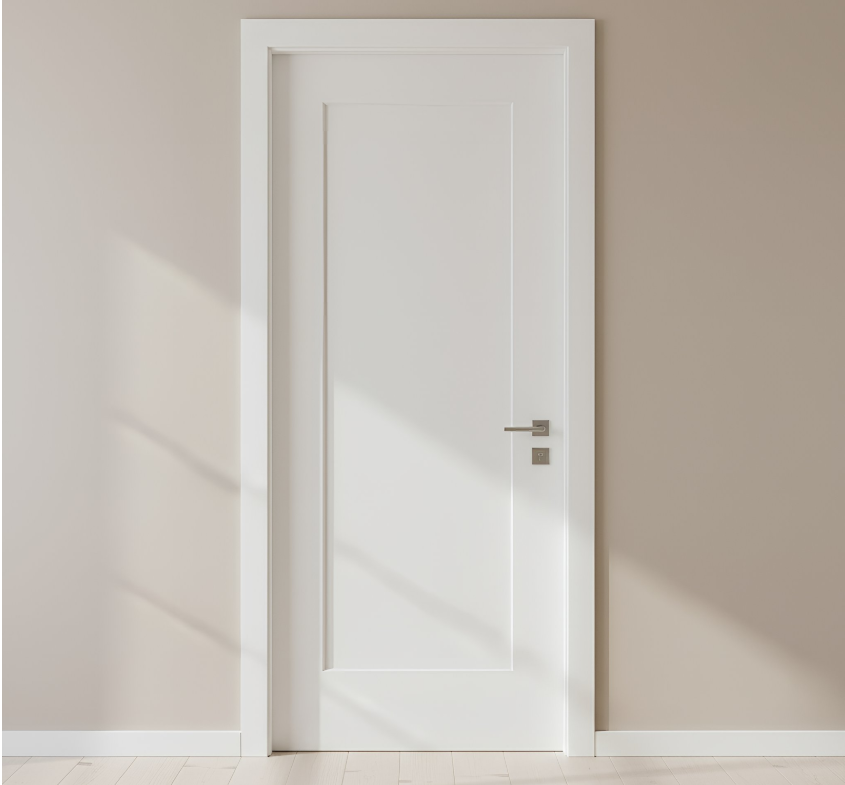
The physical environment of a workplace has a direct effect on how people work. Lighting, layout, temperature and noise levels all contribute to how productive and focused employees can be throughout the day. Among these factors, commercial interior doors for offices play a more significant role than most building managers and business owners realize. The right door does not simply separate one room from another. It shapes acoustics, supports privacy, controls temperature, and contributes to the overall professional tone of the workspace.
This guide explores the specific ways that well-chosen office interior doors improve daily workflow and what to consider when selecting them for a commercial environment.
The Connection Between Door Selection and Workplace Performance
An office is a place where concentration, communication, and confidentiality must coexist. Open floor plans have become common in modern office design, but the need for enclosed spaces has not disappeared. Meeting rooms, private offices, HR areas, phone booths, and executive suites all require doors that perform at a higher standard than a basic residential interior door.
When doors underperform in these areas the consequences are practical. Noise bleeds between meeting rooms and open workspaces. Conversations that should remain private become audible to nearby colleagues. Temperature differentials between conditioned and unconditioned areas create discomfort and push energy costs higher. These are not minor inconveniences. They affect concentration, morale, and the professional impression an office makes on clients and visitors.
Selecting purpose-appropriate commercial interior doors for offices addresses each of these issues directly.
Acoustic Control and Focused Work Environments
One of the most impactful functions a well-constructed office door performs is sound management. Background noise is consistently identified as one of the primary obstacles to focused work. Phone calls bleeding through thin walls, the sound of a printer in an adjacent room, or a louder conversation from a neighboring office can all disrupt concentration in ways that are difficult to compensate for.
Solid core construction is the foundation of effective acoustic control in office doors. A door built with a dense composite or hardwood core resists sound transmission because the mass of the material absorbs vibration rather than allowing it to pass through. In contrast, a hollow core door acts more like a membrane, resonating with sound energy and allowing it to transfer with much less resistance.
For meeting rooms where client conversations take place and for offices where sensitive discussions occur, choosing a door with genuine sound-blocking properties is essential. You can explore how construction type directly affects acoustic performance in this detailed guide on how solid core flush doors deliver superior soundproofing.
Proper installation also plays a role. Even a well-constructed door will allow sound to pass if gaps exist around the frame or beneath the door. Pairing quality construction with acoustic seals and door sweeps completes the acoustic system.
Privacy and Confidentiality in Professional Settings
Office environments often handle information that requires a level of physical privacy. HR discussions, client briefings, management conversations, and financial reviews are all examples of situations where the door between a room and the wider office is not merely symbolic. It is a functional privacy tool.
A door with solid construction and a properly seated frame provides a meaningful barrier. It communicates to everyone in the office that what happens behind that door is not meant for general hearing. This matters for compliance purposes in some industries and for general professional culture in all of them.
Beyond acoustic privacy, physical privacy contributes to employee comfort. People work differently when they know their conversations and movements are not visible or audible to colleagues. Private offices and meeting rooms with well-fitted doors give employees a contained space where they can speak and think freely, and that freedom directly supports better output.
For a broader perspective on how interior doors contribute to privacy and security in professional spaces read about why interior doors are essential for commercial retail spaces and the role of interior doors in enhancing home security.
Thermal Comfort and Energy Efficiency
Office buildings consume significant energy maintaining consistent temperatures across different zones. In open-plan offices adjacent to private rooms, server rooms, or spaces with different occupancy levels, temperature management becomes complex. An insulated interior door helps define thermal zones within a building and reduces the exchange of conditioned air between spaces.
An insulated interior door achieves this through its core material. Dense solid core construction provides better resistance to thermal transfer than lighter alternatives. When a door separates a cooled server room from a general office space or an interior meeting room from a warmer corridor, the door's insulating properties reduce the workload placed on the HVAC system serving each area.
The result is a more stable thermal environment in each space and lower energy consumption overall. Energy efficient doors are an increasingly relevant consideration for offices pursuing LEED certification or other sustainability benchmarks. They are also simply good practice for any organization looking to reduce operational costs without compromising occupant comfort.
When multiplied across the many openings in a mid-size or large office build-out, the cumulative impact of choosing energy efficient doors over hollow core alternatives is measurable over the lifecycle of the building.
Professional Aesthetics and Brand Impression
The way an office looks communicates a message to everyone who enters it. Clients forming their first impression of a business, job candidates evaluating whether they want to work there, and employees experiencing the space daily are all affected by the visual quality of the environment. Modern interior doors are a meaningful part of that visual quality.
A well-designed office with consistent door styles across all rooms reads as intentional and professionally managed. Mismatched, dated, or poorly finished doors undercut the visual coherence that good office design works to achieve. Modern interior doors with clean profiles, quality primer-ready surfaces, and consistent hardware provide the kind of visual continuity that elevates a workspace.
Two styles in particular work effectively in office environments.
Flush doors feature a completely smooth and flat surface. Their unadorned profile integrates seamlessly into contemporary office interiors where clean lines and minimal visual clutter support a focused atmosphere. They are easy to maintain and pair well with the type of streamlined hardware typically used in professional spaces. Explore Evolux Doors' range of flush doors to see how this style fits a modern office environment.
Shaker doors bring a subtle architectural element without becoming visually dominant. Their recessed panel design adds a degree of character that suits transitional or higher-end office interiors. They work well in reception areas, executive suites, and boardrooms where a more refined visual impression is appropriate. Browse the full collection of shaker doors for options suited to professional environments.
For a direct comparison of these two styles read shaker vs. flush doors: which one is right for your space.
Durability Under Commercial Use Conditions
Office doors operate under conditions that exceed what a typical residential door experiences. High foot traffic, frequent opening and closing by multiple users, contact with equipment and furniture being moved through doorways, and daily cleaning routines all place demands on a door that compound over years of use.
A door that performs well under these conditions needs to be built from materials that resist surface damage, maintain structural alignment, and hold up to the kind of regular maintenance that commercial cleaning involves. Solid core construction using dense engineered wood or hardwood composite provides this level of durability. The surface should be finished with a quality wear layer that tolerates cleaning products and does not degrade from moisture exposure over time.
Doors that begin to warp, swell, or show surface damage in a commercial environment create operational problems. A door that no longer closes properly disrupts acoustic and thermal performance. A door with a deteriorating surface sends a negative visual message in a client-facing space. Investing in commercial-grade construction at the point of selection avoids these outcomes.
You can read more about what makes a door genuinely durable in a demanding environment in this guide to the best material for interior doors based on your lifestyle.
Zoning and Space Definition Within an Open Office
Modern office layouts frequently use interior doors not just to enclose permanent rooms but also to define functional zones within larger open spaces. A set of flush doors at the entrance to a collaborative area signals a transition without creating a full enclosure. A door between a quiet focus zone and a more active workspace allows each area to function on its own terms while remaining accessible.
This kind of strategic door placement gives office managers the ability to manage noise levels and activity types within a single floor without undertaking major construction. It also gives employees agency over their environment. A person who needs focused work time can move to a space defined by a closed door while a team needing open collaboration can occupy a more open configuration.
Understanding how door selection interacts with space planning is covered in more depth in this guide on how to maximize small spaces with interior doors.
Customization for a Consistent Office Identity
Commercial fit-outs benefit from a consistent design language across all spaces and materials. Doors that can be painted to match a specific wall color, finished to coordinate with other woodwork, or specified in a single profile across all rooms contribute to the kind of cohesive identity that good office design achieves.
Primer-ready doors give designers and fit-out contractors the flexibility to apply any color specification without additional surface preparation. This is particularly useful in branded office environments where wall and trim colors are defined by company design standards. It is also useful in multi-tenant buildings where each floor or unit needs to carry a different color palette while using the same base door specification.
For guidance on achieving color consistency across an interior space read about how to incorporate interior doors into your home's color scheme, a principle that applies equally to commercial environments.
Selecting the Right Door for Each Office Space
Not every room in an office has the same requirements. Applying a single specification across all openings without considering the function of each space is a common mistake in commercial fit-outs. Here is a practical framework for matching door type to room function.
-
Meeting rooms and conference spaces: Prioritize acoustic performance and solid core construction. These spaces handle confidential conversations and benefit most from effective sound control.
-
Private offices: Similar to meeting rooms, privacy and noise reduction are the primary requirements. Modern interior doors with solid cores are the appropriate choice.
-
Open plan partitions and collaborative zones: Here the emphasis shifts to aesthetics and ease of use. A flush door in a clean finish integrates without drawing attention.
-
Executive areas and reception: These spaces often benefit from a slightly higher visual register. A shaker door or a flush door in a contrasting finish can communicate quality and care.
-
Utility and service areas: Durability is the primary concern. Solid construction that withstands heavy use and cleaning is the right specification.
Review the full guide to types of interior doors and how to choose the right one for each room for a more detailed breakdown.
Conclusion
Commercial interior doors for offices are not a secondary consideration in workplace design. They are functional infrastructure that affects how well an office performs acoustically, thermally, visually, and operationally every single day. From sound control in meeting rooms to the energy performance of insulated interior door installations and the professional impression made by modern interior doors throughout a space, the right selection delivers benefits that accumulate over the full life of the fit-out.
Evolux Doors offers a premium range of flush doors and shaker doors built for commercial and residential applications. To explore specifications and available options request our product catalogue or submit a wholesale inquiry for project-scale pricing today.
FAQs
Q. Why do commercial interior doors for offices need to be different from standard residential doors?
A. Office doors experience heavier use, require better acoustic performance, and must maintain their appearance under commercial cleaning routines. Standard residential doors are not built for these conditions. Commercial-grade construction offers the durability, sound control, and finish quality that professional environments demand.
Q. How does an insulated interior door help reduce energy costs in an office?
A. An insulated interior door resists thermal transfer between spaces with different temperature requirements. This reduces how hard the HVAC system must work to maintain stable conditions in each zone. Over time that reduced energy load translates into measurable savings on operational costs across the building.
Q. What door style works best for a modern office environment?
A. Modern interior doors with flush profiles are a common and effective choice for contemporary offices. Their smooth flat surface integrates cleanly with open-plan and minimalist interiors. For more formal or transitional spaces a shaker door adds architectural character while remaining professional and understated throughout the environment.
Q. Can office doors be customized to match a company's brand colors?
A. Yes. Primer-ready doors accept any paint specification without additional surface preparation. This allows designers and fit-out contractors to match door finishes precisely to branded wall colors or interior design standards. It is a practical approach for maintaining visual consistency across an entire commercial fit-out.
Q. How often should commercial office doors be maintained or replaced?
A. With proper care commercial doors built from solid core materials can last many years without replacement. Routine maintenance includes cleaning surfaces regularly, checking that doors close and latch properly, replacing worn seals, and repainting when surface wear appears. Addressing these details promptly extends the functional life of each door significantly.

 English
 Arabic
 French
 Portuguese
 Deutsch
 Turkish
 Dutch
Dutch
 Italiano
 Russian
 Romaian
 Portuguese (Brazil)
 Greek
Greek