


What Does Cloud Contact Centre Pricing in the UAE Actually Include?
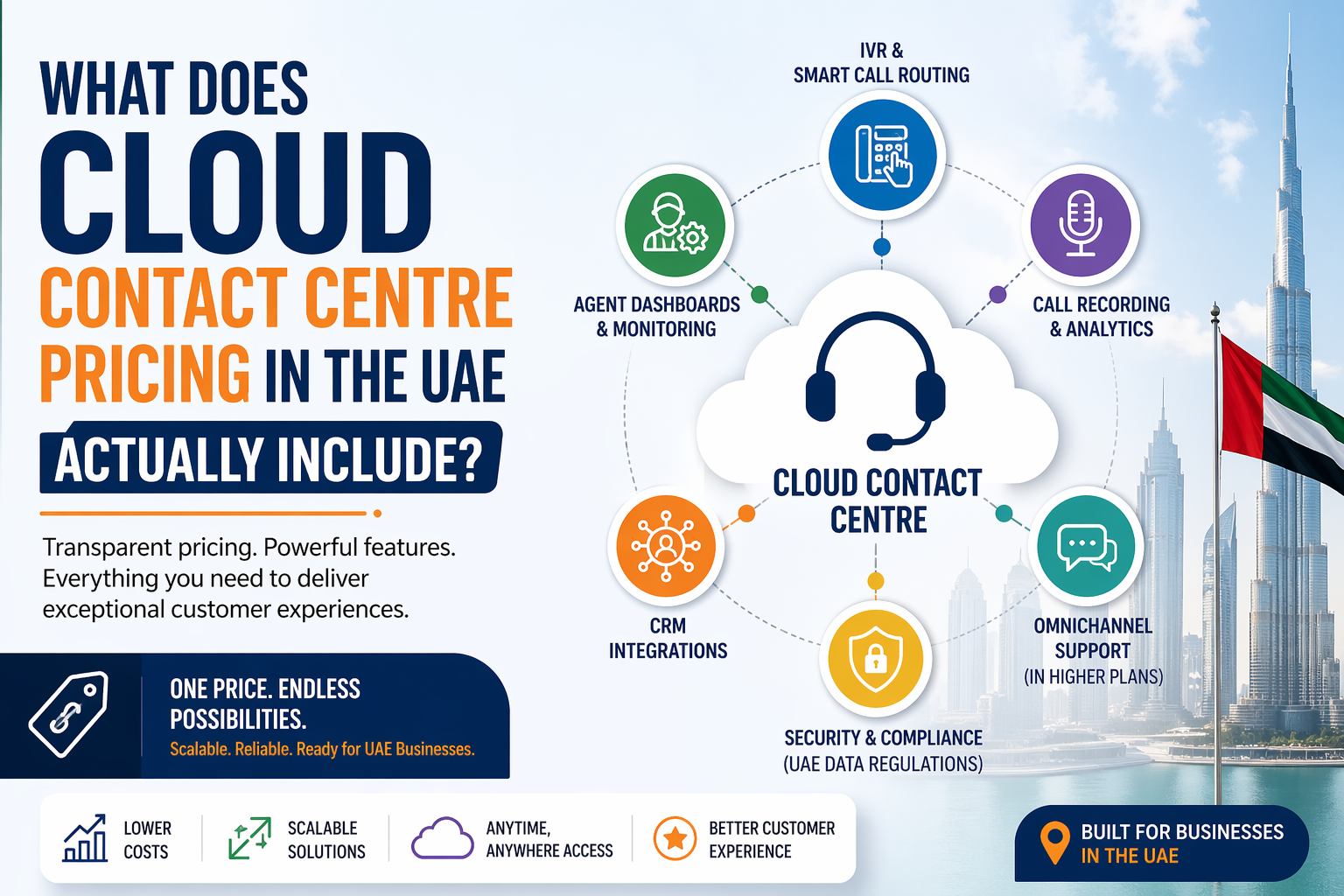
When businesses start comparing cloud contact centre platforms, pricing is often one of the first things they look at.
That makes sense.
Before evaluating features, integrations, or rollout plans, most buyers want to understand a simple question:
What will this actually cost us?
But cloud contact centre pricing is not always as straightforward as it appears.
One provider may show a simple per-user price. Another may ask you to contact sales. Another may include core features in the base plan but charge separately for usage, setup, analytics, advanced routing, support, or integrations.
That is where confusion starts.
For businesses in the UAE, especially SMB and mid-market teams, the right question is not only:
“What is the monthly price?”
The better question is:
“What does that price actually include, and what will we still need to pay for?”
If you are evaluating cloud contact centre software, here is what to look for before comparing vendors.
Why Pricing Can Be Misleading at First
At first glance, many cloud contact centre offers look simple.
You may see:
-
a per-user monthly fee
-
a trial offer
-
a starting price
-
a custom quote
-
a packaged plan with a short list of features
But in practice, the full cost often depends on more than the base subscription.
That is because cloud contact centre pricing is usually made up of multiple layers, such as:
-
the core voice platform
-
usage-based calling costs
-
AI add-ons
-
analytics features
-
onboarding or setup
-
integrations
-
support model
-
optional infrastructure or connectivity requirements
This is why buyers can sometimes compare two vendors and think one is cheaper, only to realise later that the final commercial picture is very different.
What Is Usually Included in a Base Cloud Contact Centre Plan
The exact structure varies by provider, but most cloud contact centre base plans typically cover the core operating layer of the platform.
That often includes features such as:
-
inbound and outbound calling
-
user or agent access
-
basic IVR or routing flows
-
queue management
-
browser-based calling
-
call recording
-
supervisor visibility
-
live dashboards
-
standard reporting
-
basic admin controls
For many businesses, this base layer is the foundation.
It is the part that helps teams move away from legacy telephony and into a more flexible cloud model.
But a base plan does not always mean “everything included.”
That is where buyers need to look more carefully.
What May Be Charged Separately
This is often where total cost starts to change.
Depending on the provider, businesses may need to pay separately for:
1. Calling Usage or Carrier Costs
Some platforms separate the software subscription from the actual voice usage or telephony layer.
That may include:
-
call minutes
-
carrier-related costs
-
virtual numbers
-
international usage
-
SIP or connectivity requirements
This matters because two vendors with a similar software price may still have very different commercial outcomes depending on how calling is handled.
2. AI Voice Bot Features
AI voice capabilities are often not part of the base contact centre plan.
These may be offered as separate modules or custom-priced features depending on the use case, automation scope, and workflow complexity.
3. AI Analytics and Post-Call Intelligence
Features such as:
-
transcription
-
summaries
-
sentiment signals
-
tagging
-
scorecards
-
advanced insights
are often treated as separate add-ons rather than core platform features.
4. CRM or Helpdesk Integrations
Some providers include standard integrations. Others treat them as premium or custom elements.
If the business wants voice to work with CRM or support tools, this should be clarified early.
5. Setup and Onboarding
Some businesses assume onboarding is always included.
Sometimes it is. Sometimes it is limited. Sometimes additional setup, onboarding, training, or workflow configuration may affect the commercial structure.
6. Advanced Support or Managed Services
Standard support may be included, but faster response models, premium support, infrastructure guidance, or more hands-on deployment help may be handled separately.
Why Businesses Should Look Beyond the Per-User Price
A per-user price is helpful, but it does not tell the full story.
For example, a business may ask:
-
Does this include call recording?
-
Are dashboards included?
-
What about routing and queue controls?
-
Will we pay separately for virtual numbers or usage?
-
Are integrations included?
-
Is AI available in the same plan or as an add-on?
-
What support model comes with the plan?
-
Will implementation cost extra?
These questions matter because the value of the platform comes from the full working setup, not just the license line item.
A lower visible price is not always the lower real cost.
The Difference Between Core Voice Pricing and AI Pricing
This is one of the biggest areas of confusion in the market.
Many businesses now see vendors talking about AI and assume it is automatically built into the same pricing layer as the core contact centre platform.
That is not always true.
In many cases, pricing is separated into:
Core Voice Platform
This is the operational foundation that supports calling, routing, agents, reporting, and day-to-day voice workflows.
AI Voice Bot
This usually refers to live automated voice interactions, such as lead qualification, appointment handling, routing, and conversational self-service.
AI Analytics
This usually refers to post-call analysis, such as summaries, transcripts, sentiment insights, and quality monitoring support.
These layers may be priced differently because they create value in different ways and may be adopted at different stages.
For many businesses, that is actually helpful.
It allows them to start with the core voice platform and add AI capabilities when they are ready instead of paying for everything upfront.
What Usually Affects the Final Cost
Even when two businesses choose the same provider, their final commercial structure may not look the same.
That is because pricing often depends on factors such as:
-
team size
-
number of users or agents
-
expected usage volume
-
local or international calling needs
-
routing complexity
-
number requirements
-
integration requirements
-
need for AI voice or AI analytics
-
onboarding complexity
-
support expectations
-
whether the business wants a more guided or managed setup
This is why it is important to compare pricing in the context of your actual use case, not just in the abstract.
Common Pricing Mistakes Buyers Make
When evaluating cloud contact centre solutions, businesses often make the same mistakes.
1. Comparing Only the Headline Price
A visible monthly number can look attractive, but it may not reflect the actual working setup the business needs.
2. Assuming All Features Are Included
Some features that seem standard may only be available in higher plans or as add-ons.
3. Ignoring Usage Costs
Software pricing and voice usage pricing are not always the same thing.
4. Overlooking Support and Onboarding
A lower subscription may come with less guidance, slower onboarding, or limited support compared to what the business actually needs.
5. Buying Too Much Too Early
Some businesses try to purchase every advanced feature upfront before validating the core workflow.
In many cases, a phased adoption model works better.
A Smarter Way to Compare Vendors
If you are evaluating cloud contact centre pricing in the UAE, ask vendors these questions clearly:
-
What is included in the base plan?
-
What is charged separately?
-
How are calling or usage costs handled?
-
Are AI voice and AI analytics included or added separately?
-
Are CRM or helpdesk integrations part of the plan?
-
What does onboarding include?
-
What support model comes with the plan?
-
What factors will increase cost as we grow?
These questions will help you compare quotes more meaningfully and avoid surprises later.
Why Pricing Clarity Matters for SMB and Mid-Market Teams
Large enterprises may have procurement teams, longer evaluation cycles, and more room to absorb complexity.
SMB and mid-market buyers usually need something more practical.
They want:
-
predictable commercial structure
-
clarity on what is included
-
flexibility to start smaller
-
room to add functionality later
-
less risk of hidden costs
-
a setup that matches real operational needs
That is why pricing clarity matters so much in this segment.
It builds trust early and helps buyers move faster.
What a Good Buying Approach Looks Like
The best buying decisions usually happen when businesses separate the evaluation into three parts:
1. Core Voice Needs
What do we need to run day-to-day voice operations properly?
2. Optional Intelligence Layers
Do we need AI voice, analytics, or both now, or later?
3. Workflow Fit
How well does the platform fit our current CRM, support, reporting, and operational processes?
This helps businesses avoid overbuying while still planning for growth.
It also makes vendor comparisons much easier.
The Bottom Line
Cloud contact centre pricing in the UAE is not just about the visible monthly fee.
It is about understanding what is included in the core platform, what may cost extra, and how the commercial model fits the way your business actually operates.
The right vendor should make pricing easier to understand, not harder.
That means clarity around the base platform, voice usage, integrations, onboarding, support, and optional AI layers.
When buyers understand those pieces clearly, they can compare providers more confidently and choose a setup that matches both budget and business goals.
Ready to Understand What the Right Setup Could Look Like for Your Business?
Voiger helps businesses build practical voice workflows with flexible deployment options, clear platform structure, and room to add AI capabilities when the business is ready.
If you are comparing cloud contact centre options and want a clearer view of what your setup could include, book a demo with Voiger to explore the right approach for your team.
FAQ's
What is usually included in cloud contact centre pricing?
Most base plans typically include core voice features such as inbound and outbound calling, user access, routing, queue management, call recording, dashboards, and basic reporting. Exact inclusions vary by provider.
Are call minutes included in cloud contact centre pricing?
Not always. Some providers separate the software subscription from actual calling or carrier-related usage, so this should always be clarified during evaluation.
Is AI voice included in the base contact centre price?
Often, no. AI voice bot capabilities are frequently offered as separate modules or add-ons depending on the provider and use case.
Is AI analytics included in the base price?
Not always. Features like call transcription, summaries, tagging, sentiment insights, and scorecards are often positioned as separate analytics layers.
Do integrations cost extra?
Sometimes. Some providers include standard integrations, while others may treat CRM, helpdesk, or custom integrations as premium or separately scoped items.
Why is the lowest price not always the best deal?
Because the visible price may not include usage, integrations, support, onboarding, or advanced features the business actually needs. The real comparison should be based on the full working setup.
How should businesses compare cloud contact centre pricing?
Businesses should compare vendors based on base plan inclusions, usage handling, support model, onboarding, integration fit, AI add-ons, and what factors may increase cost over time.
Is cloud contact centre pricing suitable for SMB and mid-market businesses?
Yes, especially when the provider offers a clear base platform, flexible growth path, and the ability to add advanced capabilities like AI only when needed.

 English
 Arabic
 French
 Spanish
 Portuguese
 Turkish
 Dutch
Dutch
 Italiano
 Russian
 Romaian
 Portuguese (Brazil)
 Greek
Greek