


Structured Learning Paths for Oracle Certifications in 2026
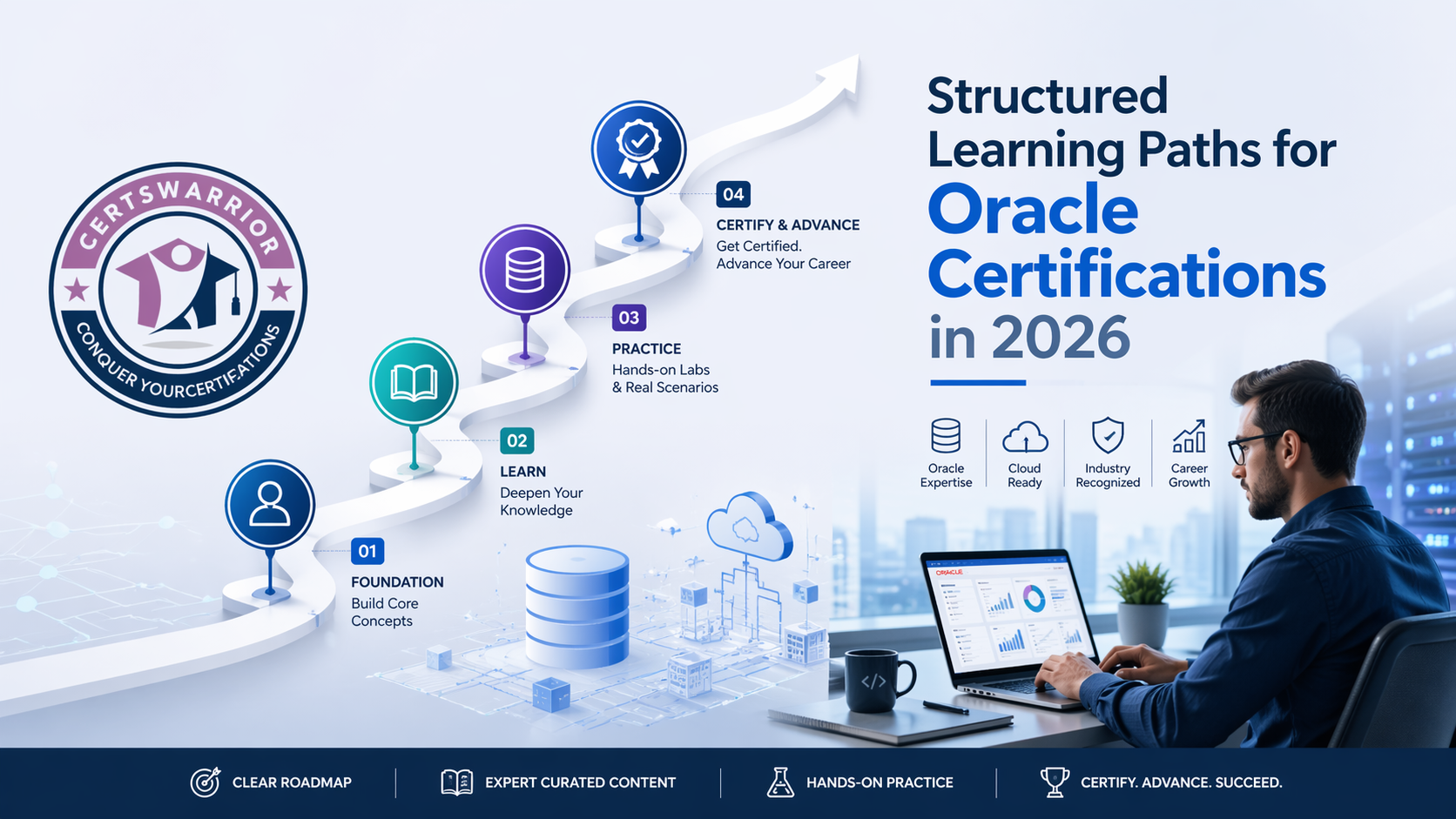
In 2026, Oracle certifications continue to hold immense value for IT professionals worldwide. Organizations depend on skilled Oracle-certified individuals to manage databases, cloud infrastructures, and enterprise applications efficiently. As technology evolves rapidly, preparing for Oracle exams without a structured approach can be overwhelming.
Take Priya, for example. She began as a junior database administrator and aspired to become an Oracle Cloud Infrastructure specialist. Initially, her study plan was scattered she referred to multiple textbooks and online guides without a clear sequence. The result? Confusion, wasted time, and mounting stress. By shifting to a structured learning path, combining theory, hands-on labs, and exam simulators, Priya completed her Oracle Cloud Certification with confidence and landed a promotion within six months.
This article explores step-by-step structured learning paths for Oracle certifications, practical preparation strategies, and tips to avoid common pitfalls, helping IT professionals maximize both learning efficiency and career impact.
Why Structured Learning Paths Are Crucial for Oracle Certification Success
Many candidates underestimate the value of following a structured approach. Without it, exam preparation can become inefficient, leaving critical gaps in knowledge and practice.
Structured learning paths provide several advantages:
- Focus: Helps candidates prioritize high-weighted topics and avoid distractions.
- Consistency: Ensures concepts are built progressively, from fundamentals to advanced topics.
- Confidence: Combines theory and practice for real-world readiness.
Consider Arjun, a systems analyst preparing for the OCP exam. He initially studied topics in random order, which caused confusion during simulations. Once he adopted a structured roadmap aligned with the Oracle Certification Overview, his confidence and exam performance improved drastically.
Understanding Oracle Certification Levels
Oracle certifications are divided into three main levels:
- Oracle Certified Associate (OCA): Fundamental skills and theoretical knowledge.
- Oracle Certified Professional (OCP): Advanced knowledge and practical implementation skills.
- Oracle Certified Master (OCM): Expert-level skills for architects and senior DBAs.
Each level requires a different approach, and understanding this hierarchy ensures candidates do not waste time studying advanced topics before mastering fundamentals.
Mapping Skills to Job Roles
Structured learning paths also align skills with real-world job roles. For example:
- Learning SQL and PL/SQL at the OCA level prepares candidates for database developer roles.
- OCP-level knowledge of cloud infrastructure equips professionals for Oracle Cloud Architect or senior DBA positions.
- OCM expertise demonstrates leadership and problem-solving skills essential for enterprise-level project management.
Step-by-Step Structured Learning Path for Oracle Certifications
A structured path integrates foundational knowledge, hands-on practice, and exam simulations. This approach ensures comprehensive preparation without the overwhelm.
Stage 1: Foundations (OCA)
At the associate level, candidates focus on fundamental database concepts. Key areas include:
- Oracle Database architecture and management
- SQL fundamentals: queries, joins, and data manipulation
- Introduction to Oracle Cloud basics
Real-world application is critical. For instance, practicing table creation, indexing, and simple queries helps candidates understand the underlying architecture, laying a solid foundation for advanced studies.
Stage 2: Intermediate (OCP)
The professional level builds upon foundational knowledge with advanced administration and cloud concepts. Candidates develop skills in:
- Database security and backup strategies
- Performance tuning and optimization
- Cloud services configuration and deployment
Hands-on labs and simulations are essential. Using best Oracle practice tests at this stage helps reinforce concepts and bridges the gap between theory and real-world application.
Stage 3: Advanced / Specialization (OCM or Cloud)
At the expert level, candidates tackle complex problem-solving and enterprise scenarios. Preparation involves:
- Disaster recovery planning and high-availability setups
- Advanced performance tuning for large-scale systems
- Cloud infrastructure architecture, security, and compliance
Practical exercises, scenario-based labs, and mock exams ensure candidates are ready for both the written and performance components of Oracle’s advanced certifications.
Integrating Hands-On Practice and Exam Simulation
Hands-on practice is often the difference between understanding theory and performing under exam conditions. Structured preparation should include:
- Virtual labs: Practice configuring databases, cloud instances, and networking within Oracle Cloud.
- Exam simulators: Timed simulations replicate real exam conditions and help identify knowledge gaps.
Using resources like CertsWarrior practice resources for Oracle preparation ensures that candidates gain both confidence and practical competence before taking the actual exam.
Tips to Stay Ahead in Oracle Certification Preparation
Even with a structured learning path, success depends on consistency and continuous improvement.
- Schedule study sessions that balance theory and hands-on labs.
- Focus on high-priority topics based on exam blueprints available in the Oracle Certification Overview.
- Engage in Oracle forums and communities to share insights and solve real-world problems.
- Review concepts periodically and take mock exams to gauge readiness.
- Rest and maintain a focused mindset during study periods.
Common Mistakes Candidates Should Avoid
Candidates often fall into these traps:
- Overloading on theory without practical labs.
- Skipping foundational topics before attempting advanced modules.
- Ignoring the official exam blueprint.
- Failing to simulate real exam conditions using practice tests and exam simulators.
Avoiding these mistakes while following a structured learning path dramatically improves your chances of success.

 English
 Arabic
 French
 Spanish
 Portuguese
 Deutsch
 Turkish
 Dutch
Dutch
 Italiano
 Russian
 Portuguese (Brazil)
 Greek
Greek