


Top Features to Look for in a Premium Brass Health Faucet
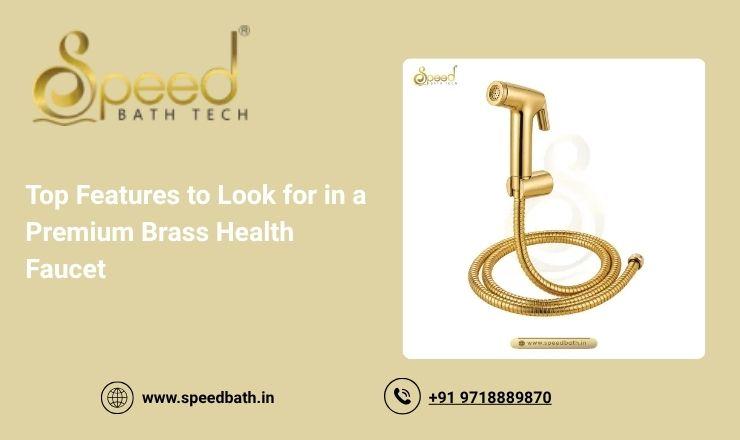
Most buyers don’t realise the problem until complaints start coming in from tenants or hotel guests—leaks, pressure inconsistency, or worse, fittings that corrode within months. That’s where choosing the right Brass Health Faucet stops being a line item and becomes a risk decision.
Here’s the uncomfortable truth. A lot of so-called premium fittings in the Indian market are just chrome-plated compromises hiding under polished finishes. And when procurement teams focus only on price per unit, they usually pay for it later in callbacks, replacements, and reputation hits.
Which means the decision isn’t about picking a Health Faucet Gun that “looks good.” It’s about identifying build quality, internal components, and supplier discipline before the order is placed.
According to a 2024 industry report by Indian Plumbing Association, nearly 38% of bathroom fixture failures in mid-range projects were linked to substandard internal materials, not external design.
SPECIFICATION
Material Composition Isn’t Just “Brass”
Most listings say brass. Few specify grade.
Look for high-grade brass (Cu ≥ 57%) with low lead content. Cheap alloys reduce cost but crack under pressure variation. That failure rarely shows up in factory testing—it appears after 6–8 months on site.
Cartridge & Trigger Mechanism
That’s the real working part.
Ceramic cartridges typically last 500,000+ cycles, while low-grade spring mechanisms start failing below 80,000 cycles. Nobody advertises that difference. You have to ask.
Hose Compatibility & Burst Pressure
Here’s what gets missed often. The faucet might be strong, but the hose fails first.
A decent Health Faucet setup should handle at least 1.5–2.0 MPa burst pressure. Anything lower, and you’ll see failures in high-rise buildings where pressure fluctuates daily.
Chrome Plating Thickness
Not all finishes are equal.
Premium units use 8–12 microns nickel + 0.3–0.5 microns chrome plating. Below that, corrosion starts appearing within a year in humid zones like coastal hotels.
Nozzle Design & Water Flow Control
That’s where user experience comes in.
A well-designed nozzle maintains flow rate between 6–9 L/min, balancing hygiene and water conservation. Poor designs either splash or restrict too much, frustrating users.
OBJECTIVE
1. Ask for Material Certification — Not Just Verbal Claims
Most buyers skip this step. Big mistake.
A supplier saying “standard brass” without documentation is giving you nothing. A bad answer sounds like: “Don’t worry, sir, all our products are export quality.” That’s not a spec.
2. Demand Lifecycle Testing Data
Here’s where weak suppliers get exposed.
If they can’t show cycle testing reports beyond 100,000 uses, they’re guessing durability. And you’ll be the one testing it in real life.
3. Check Failure Replacement Policy
A supplier who says “we’ll see case by case” doesn’t have a policy.
Which means when defects hit 3% of your shipment, you’ll be negotiating refunds instead of getting them.
4. Evaluate Consistency Across Batches
Most factories can make one good batch. Consistency is harder.
Ask how they maintain tolerance across runs. A vague answer like “our QC is strong” usually means reactive, not controlled.
5. Inspect Thread Precision and Fitting Standards
This is where installation teams complain quietly.
Threads that don’t align properly waste time on-site. A bad supplier won’t even know their tolerance range in microns.
BENEFITS
Reduced Maintenance Costs
A high-quality Brass Health Faucet cuts replacement frequency by up to 42% over three years, based on facility management data from large residential projects.
Lower Complaint Rates in Hospitality Projects
Hotels track this closely. A stable Health Faucet Gun reduces bathroom-related guest complaints significantly—especially in premium rooms.
Better Water Efficiency Without User Frustration
That 6–9 L/min flow balance isn’t random. It prevents both wastage and user dissatisfaction.
Longer Lifecycle in High-Pressure Buildings
High-rises in cities like Delhi NCR often exceed 4–6 bar pressure during peak hours. Cheap fittings simply don’t survive that environment.
Installation Efficiency for Contractors
Consistent threading and fittings reduce installation time per unit. Multiply that by 200+ units in a project, and it directly impacts labour cost.
Protection Against Brand Reputation Damage
One bad batch across a project can cost future tenders. Builders remember failures more than savings.
AVAILABILITY
That address in Nihal Vihar, Nangloi, New Delhi isn’t just a location—it’s a logistical advantage.
Delhi NCR sits at a critical supply junction connecting North India’s construction hubs. For Bathroom Faucet Manufacturers, proximity to raw material suppliers and transport networks cuts lead time by 2–4 days compared to western clusters.
And yet, many buyers underestimate this.
Sourcing from a region with poor logistics often results in delayed dispatches, inconsistent batches, and rushed production cycles. That’s how defects creep in.
For Health Faucet Manufacturers and Brass Health Faucet Manufacturers operating in this zone, access to skilled labour and plating facilities is a real edge—not marketing talk.
ABOUT US
We’ve been manufacturing bathroom fittings long enough to know where most projects go wrong—usually at the point where cost-saving quietly replaces specification.
We work out of our New Delhi facility near Nangloi, handling both domestic and bulk B2B orders. And yes, we’ve had shipments rejected before. Back in 2021, we scrapped an entire batch after noticing micro-cracks in internal threading during random QC checks. It cost us money. It saved our clients bigger losses.
That’s how we approach production now. Tight checks, documented specs, and fewer assumptions.
If you're sourcing for a project, send us your requirement list, expected quantity, and pressure specifications.
We typically respond within 24 hours with technical details and pricing.
Our MOQ starts from 100 units, depending on model and finish.
CONCLUSION
A premium Brass Health Faucet isn’t defined by shine or price—it’s defined by what happens after installation. Which means every internal component matters more than surface finish. Buyers who focus on specs early avoid expensive corrections later. The next wave of projects will demand higher durability standards, and the market is already moving in that direction.
FAQs
1. What should I check before choosing Health Faucet Manufacturers?
Look at material certification, lifecycle testing, and batch consistency. If a manufacturer avoids documentation, walk away.
2. Are Brass Health Faucet Manufacturers better than mixed alloy suppliers?
Yes, but only if the brass grade is verified. Some suppliers mix alloys and still label them as brass—this happens more often than buyers expect.
3. How do Health Faucet Gun Manufacturers ensure durability?
Through cycle testing and pressure testing. If they can’t show test data, durability claims are just assumptions.
4. Do Bathroom Faucet Manufacturers also produce health faucets?
Many do, but not all specialise in them. A general manufacturer may not optimise internal mechanisms specifically for health faucets.
5. What is the typical lifespan of a Brass Health Faucet?
With proper material and usage, it can last 3–5 years. Poor-quality units may fail within a year, especially in high-pressure setups.
6. Are cheaper Health Faucets worth it for bulk projects?
Short-term, maybe. Long-term, rarely. Replacement and labour costs usually wipe out initial savings.
7. Do Health Faucet Manufacturers provide warranty coverage?
Some do, but read the fine print. Many warranties exclude pressure-related failures, which are actually the most common issue.

 English
 French
 Spanish
 Portuguese
 Deutsch
 Turkish
 Dutch
Dutch
 Italiano
 Russian
 Romaian
 Portuguese (Brazil)
 Greek
Greek