Understanding the Role of Tags in SEO
Tags are used to organize content and create connections between related posts. While categories define broad topics, tags focus on specific details. Search engines crawl these tag pages and use them to understand relationships between different pieces of content.
However, there is a common misconception that simply adding more tags improves SEO. In reality, poorly managed tags can create duplicate or thin content pages, which may harm indexing rather than help it.
To use tags effectively, they must be relevant, structured, and optimized.
Why Tag Field Configuration Matters
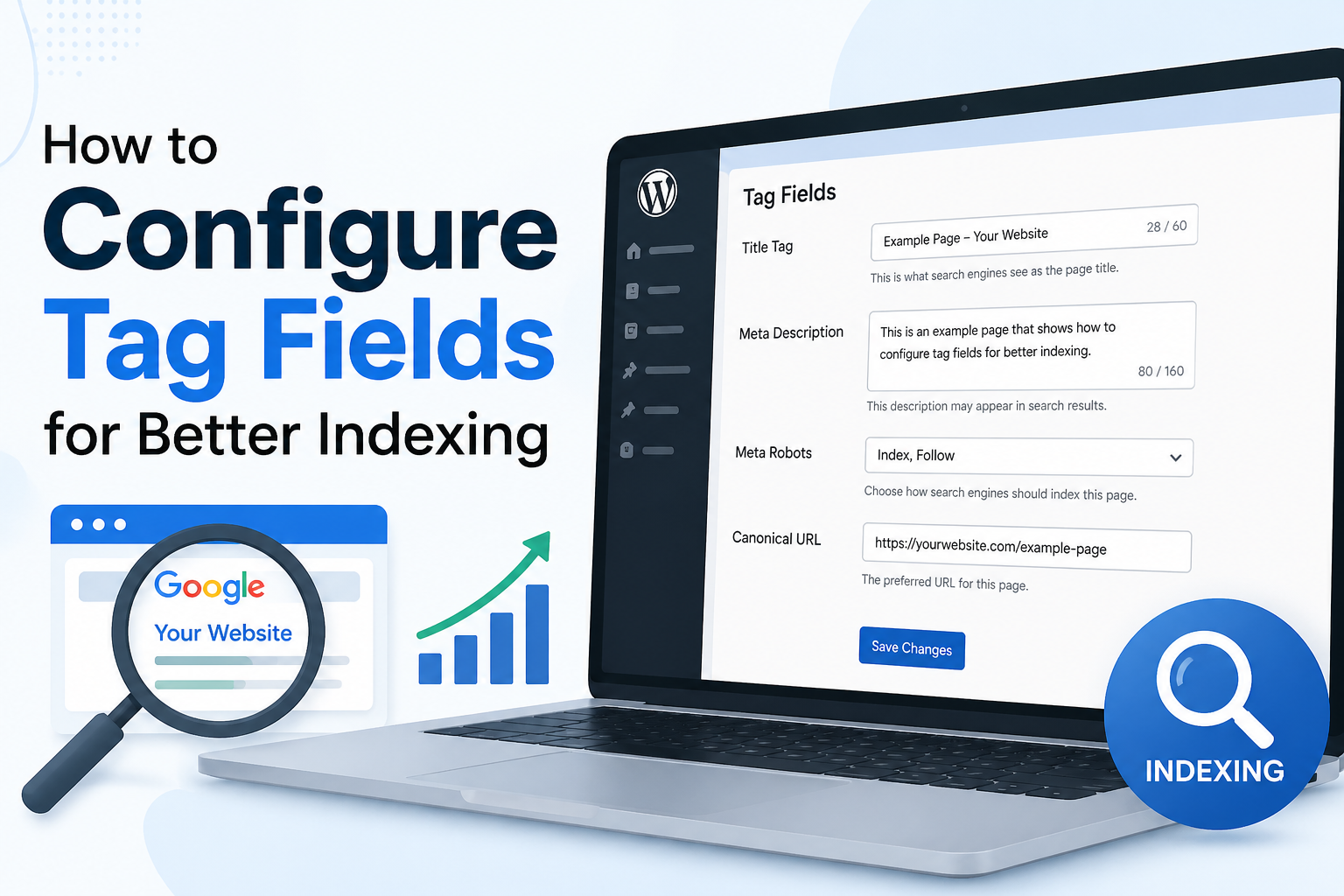
Search engines rely on structured data to index pages efficiently. Tag fields play a role in:
- Improving internal linking
- Helping search engines discover related content
- Enhancing user navigation
- Reducing crawl inefficiencies
If tags are not configured properly, they can lead to issues like keyword cannibalization, duplicate pages, or low-value indexed URLs.
Setting Up Tag Fields Correctly in WordPress
Keep Tags Relevant and Specific
Each tag should represent a specific concept related to your content. Avoid using vague or overly broad terms. For example, instead of using a tag like “SEO,” use something more precise like “on-page optimization tips.”
This helps search engines understand context and improves the chances of ranking for targeted queries.
Avoid Overusing Tags
One of the biggest mistakes is adding too many tags to a single post. This creates unnecessary tag pages with little content value.
A good practice is to use only a few highly relevant tags per post. Quality matters more than quantity here.
Maintain Consistency Across Tags
Consistency is key when managing tag fields. If you use different variations of the same term, such as “email login” and “email sign-in,” you may unintentionally split your SEO value.
Choose one version and stick with it across your entire website.
Optimizing Tag Pages for Indexing
Add Unique Content to Tag Pages
By default, tag pages often contain only a list of posts. This is not enough for strong indexing. Adding a short description to each tag page provides context for both users and search engines.
A well-written tag description should explain what the topic is about and what users can expect to find.
Use SEO-Friendly URLs
Tag URLs should be clean and readable. Avoid unnecessary numbers or symbols. A simple structure improves both user experience and search engine understanding.
For example:
- Good: /tag/email-security/
- Poor: /tag/123abc-email/
Control Indexing with SEO Plugins
Not all tag pages need to be indexed. If a tag has very few posts or low value, it might be better to set it to noindex.
This prevents search engines from wasting crawl budget on low-quality pages.
Balancing Tags and Keywords
Tags should support your keyword strategy, but they should not replace it. A common mistake is treating tags as a place to stuff keywords.
Instead, use them naturally and strategically. For example, if your content focuses on wordpress meta name keywords, you should not create multiple similar tags just to include variations of the same phrase.
Search engines are smart enough to understand context, so focus on clarity rather than repetition.
Common Mistakes to Avoid
Creating Duplicate Tags
Duplicate tags lead to multiple pages targeting the same topic, which can confuse search engines. Always check existing tags before creating new ones.
Ignoring Tag Maintenance
Over time, websites accumulate unused or outdated tags. Regularly audit your tags and remove or merge those that no longer add value.
Indexing Every Tag Page
Not all tag pages deserve to be indexed. Low-content pages can reduce overall site quality in the eyes of search engines.
Best Practices for Long-Term Success
To ensure your tag fields continue to support better indexing, follow these key practices:
- Focus on user intent when creating tags
- Keep the number of tags per post limited
- Write meaningful descriptions for important tag pages
- Monitor performance using analytics tools
- Update and refine tags regularly
These steps help maintain a clean and effective tag structure that benefits both users and search engines.
How Tag Structure Improves User Experience
In addition to SEO, tags also have an essential function in optimizing your user experience. By employing tags effectively, you give the user the ability to browse other related material without having to do a manual search.
By clicking on the appropriate tag while reading about how to troubleshoot emails, for instance, the user will be able to find all other articles related to that topic.
The Connection Between Tags and Crawl Efficiency
Search engines allocate a limited crawl budget to each website. Poorly structured tags can waste this budget on low-value pages.
By refining your tag fields, you ensure that search engines focus on your most important content. This leads to faster indexing and better visibility for key pages.
Final Thoughts
Proper configuration of tag fields is more than just a technical process; it is a strategic one that affects your overall SEO results. Through better internal linking and crawling, proper management of tags has a significant effect on your content’s discoverability and ranking.
Do not overlook the importance of having tags for your website, but do take time to formulate a strategy around them. By ensuring that your tags are relevant, consistent, and high-quality, you will soon see the effects on your indexing and rankings.
Learn more about building your tagging system with Indexing Tag Setup.




 English
 Arabic
 French
 Portuguese
 Deutsch
 Turkish
 Dutch
Dutch
 Italiano
 Russian
 Romaian
 Portuguese (Brazil)
 Greek
Greek