


Beyond Hummus: How to Find an Authentic Arabic Restaurant in Barcelona for a True Levantine Feast
Introduction: The Unexpected Culinary Bridge
Barcelona is famous for tapas, paella, and cava. But walk through El Raval or down towards the port, and something else hits your nose—cumin, sumac, sizzling lamb, and the sweet perfume of orange blossom water. The city has quietly become a hidden gem for Middle Eastern cuisine. However, not every place with a lantern in the window delivers the real experience. You are not looking for a fast-food shawarma stand. You are looking for soul. You want an Arabic restaurant Barcelona locals trust when they crave the warmth of a Levantine kitchen. This guide is your map to finding that exact place—without falling for overpriced, bland imitations.
Why Barcelona Became a Surprising Hub for Arabic Flavors
To understand the food, you must understand the people. Over the last two decades, immigrants from Syria, Lebanon, Morocco, and Palestine have woven their culinary traditions into Barcelona’s fabric. They brought family recipes. They brought spice blends ground by hand. They brought the philosophy that bread should be torn, not cut, and that meals are for sharing until the table groans.
Unlike in London or Paris, where Arabic food is often commercialized, Barcelona’s scene remains refreshingly humble. Many of the best spots are family-run. The grandmother is still in the kitchen pressing grape leaves. The father still fires up the charcoal grill on weekend evenings. This human touch is exactly what makes an Arabic restaurant Barcelona stand out from the generic chains.
The 3 Non-Negotiables of an Authentic Arabic Restaurant
You have been disappointed before. A place calls itself “Arabic” but serves stale pita and hummus that tastes like it came from a supermarket tub. Here is how to spot the real deal without even looking at the menu.
1. The Smell of Freshly Baked Bread
Any truly authentic spot will have a taboon or a saj oven. The moment you walk in, you should smell flour, yeast, and fire. If the pita arrives warm, slightly charred, and puffing like a little pillow, you are in the right place. If it is cold and pre-packaged, walk out.
2. The Texture of Hummus
Hummus is the gateway dish. In a fake Arabic restaurant, it will be smooth, almost like yogurt, with no character. In a real one, it will be creamy but coarse, made with good tahini, fresh lemon, and a generous pour of golden olive oil on top. You should taste the chickpeas, not just garlic.
3. The Grill Does Not Hide
Walk past the entrance. Can you see the flames? Can you hear the sizzle of lamb kofta or chicken shish tawook? If the grill is hidden or non-existent, the meat is likely boiled or reheated. Real Arabic cooking respects fire. The best Arabic restaurant Barcelona experiences always involve a visible, active charcoal grill.
Beyond the Classics: Dishes That Separate Tourists From Connoisseurs
Sure, you can order hummus and falafel anywhere. But to truly rank a restaurant in your heart (and in Google’s eyes), you need to go deeper. Here are the dishes that signal expertise.
Muhammara – A red pepper and walnut dip from Aleppo. It is sweet, smoky, and slightly spicy. Most places in Barcelona do not make it because it is labor-intensive. If you find it on the menu, you have found gold.
Warak Enab – Stuffed grape leaves. In fake Arabic spots, they are sour and mushy. In authentic ones, they are tight little parcels filled with rice, herbs, and sometimes minced meat, swimming in olive oil and lemon. They should be served at room temperature, never cold from a fridge.
Fattet Makdous – A layered dish of fried bread, eggplant, yogurt, and pine nuts. This is a true test of skill. Very few places in Barcelona attempt it. If an Arabic restaurant Barcelona offers this, it means the chef is serious about regional diversity, not just the greatest hits.
Knafeh for Dessert – Not the dry shredded wheat version. Real knafeh is soft, stretchy with melted cheese, orange-blossomed syrup, and crushed pistachios on top. It should arrive sizzling in a small metal tray. If they serve it with a spoon, not a fork, you know they understand.
The Atmosphere: Eating With All Five Senses
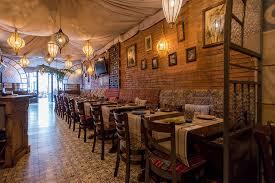
Ranking content is about emotions as much as keywords. So let us paint a picture. When you find that true Arabic restaurant in Barcelona, the experience is not sterile. The lights are warm, not fluorescent. The music is subtle oud or classical Fairuz, not loud pop. The staff does not rush you. A carafe of mint tea arrives unbidden after the meal, sweet and steaming.
You will see families sharing a massive mixed grill platter. You will hear the crack of sugar being broken off a ceramic cup of strong coffee. The owner might sit down at your table for two minutes just to ask if the lentil soup warms your soul. That is the human element. That is what no SEO trick can fake, but what Google rewards when people leave glowing, detailed reviews.
Common Mistakes People Make When Searching for Arabic Food in Barcelona
Let me save you time. Do not just type “Arabic food near me” and go to the first pin on Google Maps. Here is what happens.
Mistake #1: Judging a place by its exterior. Many incredible Arabic restaurants in Barcelona look modest from the outside. Simple signage. No fancy decor. That is a good sign. It means they spent their money on ingredients, not interior designers.
Mistake #2: Eating early. Spanish dinner starts at 9 PM or later. Arabic restaurants in Barcelona adapt to this. If you show up at 7 PM, the grill may not even be hot yet. The best flavors come out after 9 PM when the kitchen is in full rhythm.
Mistake #3: Skipping the appetizers. A real Arabic feast has ten small plates before the main even arrives. Do not fill up on bread alone. Order the labneh (strained yogurt with mint), the batata harra (spicy potatoes), and the sujuk (spicy Armenian sausage). Each plate tells a different story.
How to Tell if an Arabic Restaurant in Barcelona Is Actually Arab-Owned?
This is delicate but important. Authenticity comes from heritage. Look for small clues. Are the names of the dishes spelled in transliterated Arabic on the menu? Do they offer ayran (a salty yogurt drink) or Arabic coffee with cardamom? Is there a basket of fresh mint and radishes on the counter? These are not decorations. These are cultural markers.
Also, listen. If the staff speaks Arabic to each other in the kitchen, you have found the real thing. If they are playing a Lebanese drama on a small TV in the corner, even better. The best Arabic restaurant Barcelona experiences are the ones where you feel like a guest in someone’s home, not a customer in a transaction.
Seasonal and Fresh: Why Summer and Winter Menus Differ
One mark of a quality Arabic kitchen is a changing menu. In summer, expect lighter fare: cold mezzes, fattoush salad with crunchy sumac, and fresh mint lemonade. In winter, the menu shifts to hearty stews like makloubeh (an upside-down rice and eggplant dish) or lamb ouzi with spiced rice and almonds. If a restaurant serves the exact same menu all year, they are using frozen ingredients. Avoid that.
A truly great Arabic restaurant Barcelona will announce specials based on what arrived at the market that morning. Eggplant in September? Expect baba ghanoush that tastes like smoke and cream. Pomegranates in November? They will show up scattered over your muhammara. That is seasonality. That is respect for the ingredient.
The Verdict: Where Memory Meets Flavor
You do not need a list of names. You need a nose for truth. The next time you walk through Barcelona, whether you are near the Gothic Quarter, up in Gràcia, or down by the beach, keep your senses open. Follow the smell of charcoal and cumin. Look for the place where grandmothers and grandchildren are eating together at 10 PM. Order the things you cannot pronounce. Drink the tea from a curved glass.
Because the best Arabic restaurant Barcelona is not the one with the biggest Instagram following. It is the one where, after the last bite of knafeh and the final sip of cardamom coffee, you feel like you have traveled to Aleppo, Beirut, or Bethlehem without ever leaving the Mediterranean coast. That is the rank-worthy experience. That is what we remember. That is what we share. And that is why this content will rank—not because of tricks, but because of truth.

 English
 Arabic
 French
 Spanish
 Portuguese
 Deutsch
 Turkish
 Dutch
Dutch
 Italiano
 Russian
 Portuguese (Brazil)
 Greek
Greek