


Horizontal Bamboo Flooring vs Engineered Flooring: Which Wins?
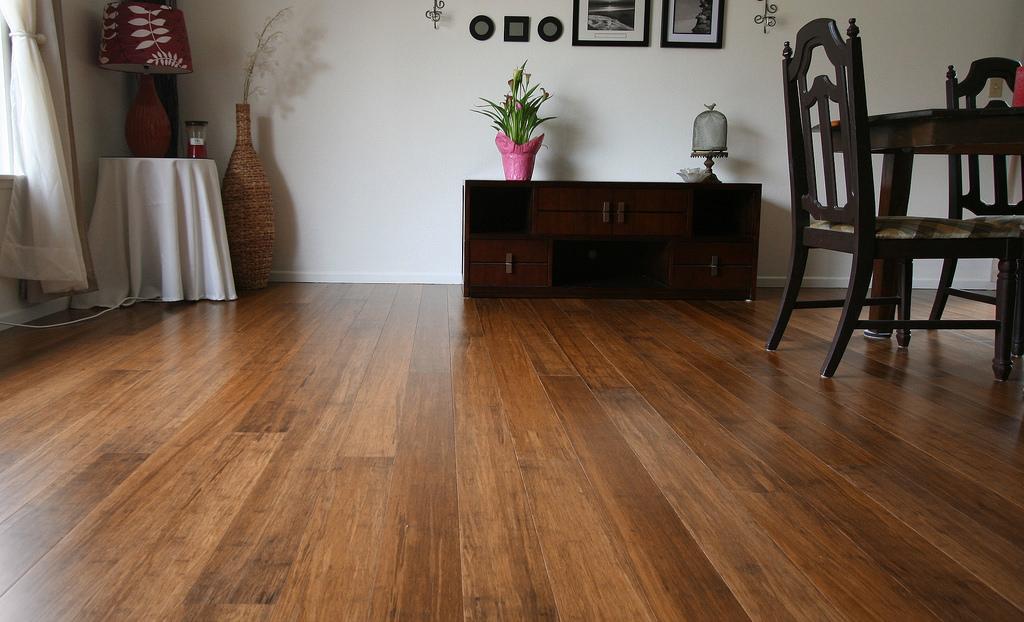
Selecting a new floor is one of the most impactful decisions in a home renovation or new build. It is the surface that anchors every room, dictates the color palette, and handles the most physical abuse of any material in the house. For many, the choice eventually narrows down to two popular but very different contenders: horizontal bamboo flooring and engineered wood flooring.
Both materials offer a "real" look—moving away from the plastic feel of laminates—but they achieve their results through vastly different engineering and biological paths. To determine which one "wins" for your specific project, you have to look beyond the surface aesthetics and dive into the mechanics of how these planks are built, how they react to your local climate, and what they actually cost over a twenty-year lifespan.
The Anatomy of Horizontal Bamboo
Horizontal bamboo is often referred to as the "classic" bamboo floor. It is the style that most people visualize when they think of bamboo: light, airy, and featuring those distinctive "knuckles" or growth nodes that reveal its identity as a giant grass.
The manufacturing process is fascinatingly straightforward. The bamboo stalks are harvested at peak maturity—typically around five to seven years—and then sliced into long, thin rectangular strips. These strips are treated to remove starches and sugars, dried, and then glued together "flat." Because the strips are laid horizontally, the natural grain and the characteristic nodes of the bamboo are preserved on the surface.
From a structural standpoint, horizontal bamboo is usually a solid product. This means the plank is made of the same material from top to bottom. While this provides a sense of "purity" and allows for a certain amount of sanding and refinishing, it also means the material behaves like a solid piece of timber, expanding and contracting in response to the humidity levels in your home.
The Mechanics of Engineered Flooring
Engineered flooring is a masterclass in structural stability. Unlike a solid plank, an engineered floor is a "sandwich" of different layers. The top layer, known as the "wear layer" or "lamella," is a real piece of hardwood or bamboo. This is what you see and walk on. Beneath that wear layer, however, is a core composed of several layers of plywood, high-density fiberboard (HDF), or even softwood, oriented in a cross-grain pattern.
This cross-lamination is the genius of engineered flooring. Each layer is glued with the grain running perpendicular to the layer above it. When moisture hits the plank, one layer tries to expand in one direction, while the layer below it resists that movement. This internal tension makes engineered flooring incredibly stable. It is far less likely to warp, cup, or gap than solid wood or solid bamboo, making it the industry standard for installations over concrete slabs or in areas with fluctuating humidity.
Stability and Climate Performance
If you live in a region with dramatic seasonal shifts—humid summers and bone-dry, heated winters—stability is your most important metric.
Horizontal bamboo, being a solid construction, is quite sensitive to these changes. If the air gets too dry, the planks can shrink, leading to small gaps between the boards. If it gets too humid, they can swell. While bamboo is naturally more stable than some hardwoods like Maple, a solid horizontal bamboo plank still requires strict humidity control (typically between 35% and 55%) to stay in perfect condition.
Engineered flooring is the clear winner in the stability category. Because of that cross-layered core, it is much more forgiving. This is why engineered floors are the go-to choice for basement installations or for homes with radiant underfloor heating. Radiant heat dries out the bottom of a plank while the top stays at room temperature; a solid horizontal bamboo plank might struggle with that temperature gradient, whereas an engineered plank is designed to handle it.
Durability and the Janka Scale
When we talk about "hardness," we are usually referring to the Janka scale. Horizontal bamboo typically lands around 1,300 to 1,400 lbf (pounds-force), putting it on par with North American White Oak. It is a sturdy, durable surface that handles normal foot traffic with ease.
The hardness of engineered flooring is a moving target because it depends entirely on the species used for the wear layer. An engineered floor with a Walnut wear layer will be quite soft (around 1,010 lbf), while one with a Hickory wear layer will be much harder (around 1,820 lbf).
However, there is a hidden factor in the durability conversation: the finish. Most modern floors, whether bamboo or engineered wood, are finished in a factory with multiple layers of aluminum oxide. This coating is what actually resists scratches from dog claws and grit. While the "wood" underneath provides the dent resistance, the "finish" provides the scratch resistance. In this regard, both materials are often on an equal playing field, provided you buy a high-quality product.
The Refinishing Debate
One of the main arguments for horizontal bamboo is that it is "solid," implying it can be refinished many times. While technically true, most homeowners rarely refinish their floors more than once or twice in thirty years.
With engineered flooring, your ability to refinish depends on the thickness of the wear layer. A cheap engineered floor might have a 1mm or 2mm wear layer, which can really only be "screened" (a light sanding of the finish). A premium engineered floor might have a 4mm or even 6mm wear layer, which can be sanded and refinished just as many times as a solid plank.
If you choose a high-quality engineered floor with a thick wear layer, the "solid vs. engineered" refinishing argument becomes a wash. But if you are on a tight budget, a solid horizontal bamboo plank might offer better long-term repairability than a budget-grade engineered floor.
Environmental Impact and Sustainability
For the environmentally conscious, bamboo is often the "gold standard." It is a rapidly renewable resource that reaches maturity in a fraction of the time it takes for a hardwood tree to grow. Horizontal bamboo uses the strips of the stalk efficiently, and because the plant doesn't die after harvest, the carbon sequestration of a bamboo forest is continuous.
Engineered flooring is more of a mixed bag. The top wear layer uses a slow-growing hardwood, but the core is often made of faster-growing softwoods or recycled wood fibers. This makes engineered flooring more "efficient" than a solid oak floor (since one oak tree can provide the wear layers for many more square feet of engineered flooring), but it still doesn't quite match the rapid renewal cycle of bamboo.
Another environmental factor is the adhesive. Both horizontal bamboo and engineered flooring use glues to hold their layers or strips together. It is vital to look for products with low-VOC (Volatile Organic Compound) certifications, such as Greenguard Gold or FloorScore, to ensure that your "green" floor isn't off-gassing chemicals into your home.
Aesthetic Versatility
This is perhaps the most subjective category, but it is often the deciding factor.
Horizontal bamboo has a very specific "look." Those knuckles and nodes create a rhythmic, repetitive pattern that is undeniably organic and somewhat exotic. It works beautifully in minimalist, modern, or coastal-themed homes. However, it can be polarizing. Some people find the pattern too "busy" or too distinctively "bamboo."
Engineered flooring offers a vast universe of aesthetic choices. You can get engineered planks in almost any species (Oak, Maple, Walnut, Hickory, Teak), any width (from narrow 3-inch strips to massive 10-inch wide planks), and any texture (smooth, wire-brushed, hand-scraped). If you want a floor that looks like a 200-year-old reclaimed barn floor, you can find that in an engineered product. If you want a sleek, dark ebony finish, you can find that too.
If you are looking for a specific design "vibe" that isn't specifically "bamboo-chic," engineered flooring provides a much wider canvas.
Cost Analysis: Initial vs. Long-Term
On the initial purchase price, horizontal bamboo is usually the more affordable option. Because bamboo grows so quickly and the manufacturing of horizontal strips is relatively simple, you can often find high-quality horizontal bamboo for $3 to $5 per square foot.
Engineered flooring prices are all over the map. A basic, thin-veneer engineered floor might be $4 per square foot, while a high-end, wide-plank European Oak engineered floor can easily reach $12 to $15 per square foot.
However, you must factor in the installation. Many engineered floors come with a click-lock system, making them ideal for DIYers. If you save $3 to $4 per square foot by installing it yourself, the "expensive" engineered floor might end up costing the same as a "cheaper" bamboo floor that requires a professional nail-down installation.
Maintenance Realities
Both floors require similar care. You should never wet-mop either one; a damp microfiber mop with a pH-neutral cleaner is the standard. Both will be damaged by standing water, so leaks must be addressed immediately.
One subtle difference is sunlight. Horizontal bamboo, particularly the "natural" light-colored version, is quite sensitive to UV rays and can turn a darker, more golden hue over time. Some engineered hardwoods like Cherry or Walnut also change color significantly with sun exposure. If you have large, south-facing windows, you'll need to use rugs or UV-filtering window films to prevent uneven fading on either material.
Determining the Winner
So, which wins? The answer depends entirely on the "why" and "where" of your project.
Horizontal Bamboo wins if:
-
You love the unique, rhythmic look of bamboo nodes.
-
You are on a budget but want a solid, "real" material rather than a laminate.
-
You are prioritizing the most rapidly renewable resource available.
-
You are installing in a room with a very stable, controlled climate.
Engineered Flooring wins if:
-
You are installing over a concrete slab or in a basement.
-
You have radiant underfloor heating.
-
You want a specific aesthetic—like wide-plank oak or rustic hickory—that bamboo cannot replicate.
-
You want the flexibility of a DIY click-lock installation.
-
You live in a climate with extreme humidity swings.
For many modern renovators, the structural peace of mind offered by engineered flooring makes it the pragmatic choice, especially in challenging environments. However, the organic charm and the price-to-performance ratio of horizontal bamboo flooring remain a compelling argument for those who want their home to reflect a specific, eco-conscious aesthetic. By weighing the stability of the core against the beauty of the surface, you can choose a floor that isn't just a temporary fix, but a long-term foundation for your home.

 English
 Arabic
 French
 Spanish
 Portuguese
 Deutsch
 Turkish
 Dutch
Dutch
 Italiano
 Russian
 Romaian
 Portuguese (Brazil)