


How to Become a Doctor in India 2026: Step-by-Step Guide
Introduction
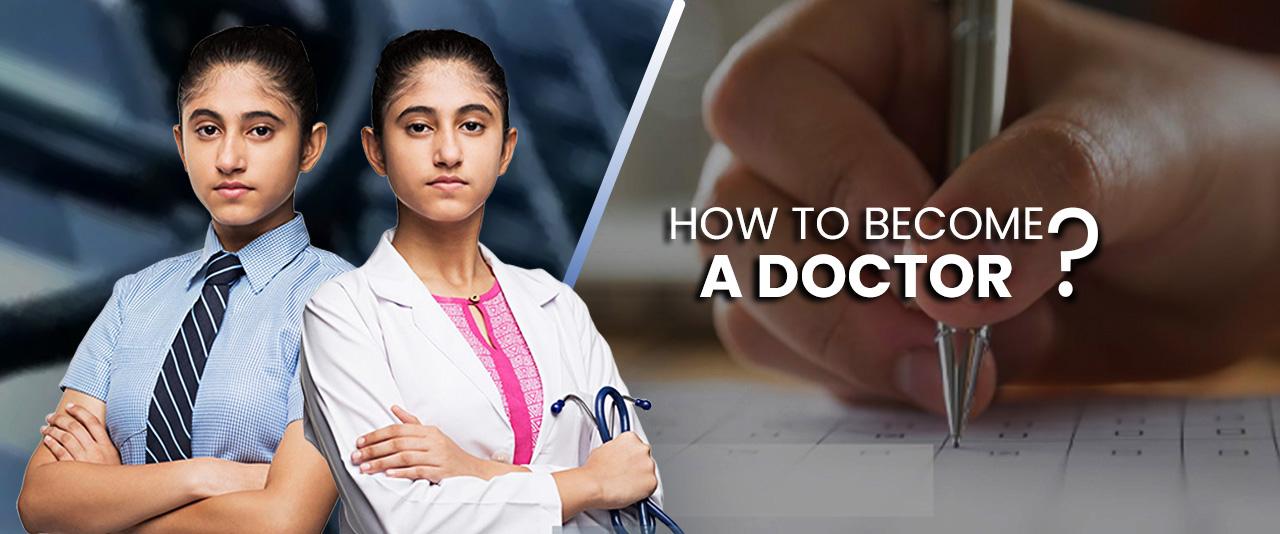
Becoming a doctor is one of the most respected and rewarding career choices in India. But the journey from a class 12 student to a practicing doctor isn't straightforward — it involves years of focused study, competitive exams, mandatory internships, and (for many) specialization. Knowing how to become a doctor in India means understanding each step clearly, so you don't waste time or take wrong turns.
In this guide, we'll walk you through the complete path — including alternatives if you don't get into a government college in India.
Step 1: Choose the Right Stream in Class 11 & 12
The journey to becoming a doctor begins right after class 10. To be eligible for medical education, you must:
- Choose Science stream (PCB) in class 11 — Physics, Chemistry, Biology
- Score a minimum of 50% aggregate in PCB in class 12 (40% for reserved categories)
- Have English as a compulsory subject
Without Biology in class 12, you cannot apply for MBBS. Some students opt for PCMB (with Mathematics added), which keeps engineering as a backup option — but Biology is non-negotiable.
Step 2: Clear NEET-UG (The Gateway Exam)
The National Eligibility cum Entrance Test (NEET-UG) is the single mandatory exam for MBBS, BDS, BAMS, BHMS, and BVSc admissions in India. Key facts:
- Conducted by: National Testing Agency (NTA)
- Frequency: Once a year (May)
- Total marks: 720
- Subjects: Physics, Chemistry, Biology
- Duration: 3 hours 20 minutes
- Mode: Offline (pen and paper)
Minimum NEET Qualifying Marks (Approximate)
| Category | Qualifying Percentile | Approx. Marks |
|---|---|---|
| General / EWS | 50th | 144+ |
| OBC / SC / ST | 40th | 113+ |
| PwBD | 45th | 127+ |
Just qualifying NEET isn't enough — to get into a government MBBS college, you typically need 600+ marks due to fierce competition (around 25 lakh aspirants competing for about 1 lakh MBBS seats nationwide).
Step 3: Apply for MBBS Admission
Once you have your NEET score, you can apply through:
- All India Quota (AIQ): 15% of seats in government colleges, allotted via central counselling by MCC
- State Quota: 85% of state government college seats
- Deemed Universities & Private Colleges: Through MCC counselling
- AIIMS, JIPMER & Other AI Institutes: Counselled separately under common counselling
If you don't secure a government seat, your options are:
- Take a drop year and reattempt NEET
- Join a private medical college (fees range from ₹50 lakhs to ₹1 crore+)
- Pursue MBBS abroad in NMC-approved universities at affordable fees (₹18–35 lakhs total)
For students considering the third option, Education Vibes — a trusted study abroad consultancy — helps Indian students secure admission in NMC-approved medical universities across Russia, Georgia, Uzbekistan, Kazakhstan, and other affordable destinations.
Step 4: Complete Your MBBS Course
The MBBS course in India spans 5.5 years, broken down as:
| Phase | Duration | Focus |
|---|---|---|
| Pre-clinical | 1 year | Anatomy, Physiology, Biochemistry |
| Para-clinical | 1.5 years | Pathology, Microbiology, Pharmacology |
| Clinical | 2 years | Medicine, Surgery, OBG, Pediatrics |
| Internship | 1 year | Compulsory rotatory hospital training |
You'll attend lectures, clinical postings, write semester exams, and gradually transition from textbook learning to real patient care during your internship year.
Step 5: Register with the Medical Council
After completing MBBS and your internship, you must register with the State Medical Council or the National Medical Commission (NMC) to legally practice medicine in India.
If you've completed your MBBS abroad, you'll first need to clear:
- FMGE (Foreign Medical Graduate Examination) — currently active
- NExT (National Exit Test) — replacing FMGE soon
Only after passing this licensing exam can foreign-degree holders register and practice in India.
Step 6: Choose Your Specialization (Optional but Recommended)
After MBBS, most doctors pursue postgraduate specialization to grow their career and earning potential. Options include:
Clinical PG Routes
- MD (Doctor of Medicine): Internal Medicine, Pediatrics, Dermatology, Psychiatry
- MS (Master of Surgery): General Surgery, Orthopedics, ENT, Ophthalmology
- DNB (Diplomate of National Board): Equivalent to MD/MS
Entrance Exam: NEET-PG
You'll need to clear NEET-PG to secure a postgraduate seat. This is the second major competitive hurdle in a doctor's journey.
Super-Specialization (After PG)
- DM (Doctorate of Medicine): Cardiology, Neurology, Oncology
- MCh (Master of Chirurgiae): Cardiothoracic Surgery, Neurosurgery, Plastic Surgery
This adds another 3 years of study but significantly boosts career prospects.
Total Time to Become a Doctor
Here's the realistic timeline for becoming a fully qualified doctor in India:
| Stage | Years |
|---|---|
| Class 11 & 12 (PCB) | 2 |
| NEET-UG preparation (if needed) | 1 |
| MBBS + Internship | 5.5 |
| MD/MS (PG specialization) | 3 |
| DM/MCh (Super-specialization, optional) | 3 |
| Total (General Practitioner) | 8.5 years |
| Total (Specialist) | 11.5 years |
| Total (Super-specialist) | 14.5 years |
Frequently Asked Questions
Q1. Can I become a doctor without NEET in India? No. NEET is mandatory for all medical admissions in India, including private colleges and MBBS abroad (for license recognition by NMC).
Q2. What is the minimum age to become a doctor? You can complete MBBS by age 23–24 if you start right after class 12 without taking a drop year. Specialization adds more years.
Q3. How much does it cost to become a doctor in India? Government MBBS: ₹50,000–2 lakhs total. Private MBBS: ₹50 lakhs–₹1 crore. MBBS abroad: ₹18–35 lakhs. PG specialization adds ₹2–25 lakhs depending on the college.
Q4. Can I become a doctor through MBBS abroad? Yes. After completing MBBS from an NMC-approved foreign university, you must clear FMGE/NExT to practice in India.
Q5. What's the difference between MBBS, MD, and DM? MBBS is the basic medical degree. MD is a 3-year postgraduate specialization. DM is a 3-year super-specialization done after MD.
Final Thoughts
The path to becoming a doctor is long, demanding, and highly competitive — but it's also one of the most fulfilling careers available. The key milestones are clear: PCB in class 12, NEET-UG, MBBS, internship, registration, and (optionally) specialization.
If government MBBS isn't within reach due to the cutoff competition, don't lose hope. Studying MBBS abroad in NMC-approved universities is a legitimate, affordable, and increasingly popular path. Just make sure you choose the right country, the right university, and consult with experienced advisors before making the decision.
Becoming a doctor is a 6 to 14-year commitment depending on your specialization goal plan early, prepare seriously, and stay consistent.

 English
 Arabic
 Spanish
 Portuguese
 Deutsch
 Turkish
 Dutch
Dutch
 Italiano
 Russian
 Romaian
 Portuguese (Brazil)
 Greek
Greek