


The Dead-Simple PST ⇌ EST Reality Check for 2026
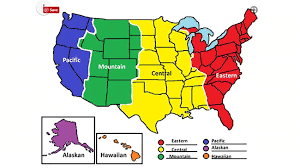
PST ⇌ EST is the time zone pair that keeps quietly costing teams hours of wasted time, awkward late starts, and that low-level “why do we keep doing this” frustration that never quite goes away.
It is February 24 2026 right now and a little after 5 pm here in Karachi. That puts Los Angeles at 11 am PST and New York at 2 pm EST. Three hours apart. That is the rule. It never changes. Pacific and Eastern coasts spring forward together on March 8 and fall back together on November 1. The clocks move in perfect lockstep. The labels switch from PST/PDT to EST/EDT but the actual hour difference stays locked at three hours every single day of the year.
I have seen this one tiny detail turn smart people into scheduling disasters more times than I can count. Last year I watched a San Francisco product manager send 10 am PST invites to her New York sales team week after week. Winter was fine. Spring arrived and she kept the label as PST. New York showed up at 1 pm their time because they had mentally flipped to EDT while the calendar stayed stuck in standard time abbreviations. The call started forty-five minutes late, the agenda got crushed, and the energy was flat for the rest of the meeting. One eight-second check in a decent converter would have shown 10 am PDT is still 1 pm EDT. Three hours. No lost hour. Just a label nobody bothered to update.
The numbers behind this kind of timezone friction are honestly embarrassing when you look at them. The 2025 Owl Labs Hybrid Work Report says 28 percent of hybrid workers put US time zone coordination in their top three daily frustrations. Buffer's 2025 State of Remote Work survey clocks the average remote knowledge worker at losing about 1.2 hours per week to scheduling confusion. For a team of ten people that is twelve hours a week gone. At a blended hourly rate of sixty dollars that is seven hundred twenty dollars a week or more than thirty-seven thousand dollars a year evaporated because someone didn't confirm the labels. That is real money walking out the door for something you can fix in seconds with the right tool and one good habit.
PST to EST Is Always Three Hours – Stop Making It Complicated
PST to EST is always three hours. Full stop. Right now in late February Los Angeles trails New York by three hours. On March 8 both coasts spring forward at 2 am local time so Pacific Daylight Time and Eastern Daylight Time begin at the same moment. Los Angeles is still three hours behind New York. On November 1 both fall back together and the gap stays three hours. The only thing that changes is what the abbreviation says. PST flips to PDT. EST flips to EDT. The math never moves.
Most of the pain comes from labels, not hours. Someone sees PST on an invite in July and thinks it is still standard time when it should be PDT. Or they read EST in September and forget it is EDT. I had a Seattle designer who kept putting 11 am PST on weekly check-ins. Fine in winter. In May she reused the label and New York started showing up at 2 pm their time instead of 2 pm. Three weeks of late starts, quiet resentment, and one very awkward retro before she realized the invite needed to say 11 am PDT. Tiny label oversight. Massive team energy drain.
The Converters I Actually Use Every Week
World Time Buddy is still the one I open first every time I need PST ⇌ EST clarity. Drag the timeline, add Los Angeles and New York, and the three-hour gap is impossible to miss. The background tint changes when daylight saving hits so PDT and EDT labels appear without any thinking. Free tier is fine for most. Pro (cheap monthly) saves city groups. I have one preset for standard California–New York calls and another when we add Austin or Denver. Sharing those links ends ninety percent of the “what time is that for you?” back-and-forth.
Timeanddate.com is the one I trust when the meeting has real stakes. Pick Pacific and Eastern, select any date in 2026, and it automatically knows whether you're looking at PST/PDT and EST/EDT. The meeting planner shades overlapping work hours in a clean grid. You can instantly see that 9 am to 5 pm Eastern is 6 am to 2 pm Pacific every single day. Free. No login. No ads. No nonsense.
Savvy Time is my mobile go-to for quick checks. The current three-hour gap sits in big numbers at the top, daylight saving dates are highlighted inline so March 8 and November 1 jump out, and it gives a fast table of nearby hour conversions. No account. Loads in a second. Free. Perfect when I'm walking or on a call and need to reply fast.
24timezones.com is the best free option when more than two people are involved. Add Pacific and Eastern (maybe Central or Mountain) and it highlights low-conflict windows while keeping the three-hour offset correct. It also shows local daylight hours so you avoid putting someone at 6 am local on either coast.
Every Time Zone gives you the calendar-scroll view that helps when you're planning whole weeks instead of single slots. Scroll through dates and watch the PST/PDT and EST/EDT labels update automatically. The three-hour difference stays constant and weekends are color-coded so good blocks pop out fast.
The PST ⇌ EST Mistakes That Refuse to Die
The biggest mistake is still thinking daylight saving shrinks the gap to two hours. It doesn't. Both coasts move together so the difference stays three hours. People see PST in July and think it's standard time when it's PDT. Or they see EST in September and forget it's EDT. That label confusion is the real killer.
Another common trap is forgetting about non-daylight-saving locations. Arizona stays on MST year-round. Hawaii stays on HST. Parts of Indiana skip daylight saving. People assume every West Coast contact is Pacific time and get surprised. One Phoenix engineer was off by an hour for months because his San Francisco teammates shifted to PDT but he didn't. His 10 am Arizona time became 1 pm Eastern instead of noon. Three missed stand-ups before he caught it.
Converters that default to standard time year-round are also a silent killer. Some tools or widgets still show PST and EST even in summer. Always confirm the date you entered or switch to a tool that auto-updates the abbreviations.
Practical PST ⇌ EST Habits That Actually Stick
I keep two calendar reminders every year: March 8 and November 1 labeled “check coast labels.” When I suggest a time I always write both versions so 1600 UTC is 11 am EST or 8 am PST right now and 12 pm EDT or 9 am PDT after March 8. No one has to do mental math.
For recurring calls I save a preset in World Time Buddy with Los Angeles and New York. The next agenda loads with correct labels and offset automatically. That single habit has slashed my rescheduling rate. When you run the numbers a team of ten people losing fifteen minutes per week to timezone confusion at sixty dollars blended hourly rate is nine hundred dollars a week or over forty-six thousand dollars a year saved just by getting PST ⇌ EST right. The real win is the softer stuff: fewer frustrated teammates, smoother flow, stronger trust between coasts.
Expert PST ⇌ EST Tips Most Articles Miss
Always ask for the exact city not just the zone. San Francisco is Pacific. Phoenix is not. Parts of Indiana stay on Eastern Standard year-round. When someone says “West Coast” clarify whether they mean California, Oregon, Washington or somewhere that ignores daylight saving.
The legislative noise is still out there. No major changes for 2026 but California and New York have bills pending that could push for permanent daylight saving or permanent standard time. If anything passes before 2027 the three-hour rule could wobble during transition. Until then treat PST ⇌ EST as fixed at three hours.
The pro features in World Time Buddy that let you save multiple city sets are worth the small monthly cost if you juggle several recurring calls. One for California–New York, one for Seattle–New York–Austin, switch in seconds.
Watch your calendar app's time zone cache. Some mobile clients still show PST in May unless you force a refresh. I have seen invites go out with wrong labels because the organizer was looking at stale data. A quick browser converter check catches it before it spreads.
The Future of PST ⇌ EST in 2026
Calendar apps are getting smarter. Native overlap suggestions that respect the fixed three-hour gap and auto-update PDT/EDT labels are becoming standard. Team platforms are following. By late 2026 many teams will propose times and get instant cross-coast validation without touching a separate tool.
Until that is everywhere the converters we have today already make PST ⇌ EST almost effortless if you pick one or two that fit your style and use them consistently. The bottom line is simple. PST ⇌ EST is one of the easiest major US time zone pairs because the difference never moves. Three hours. Every day of the year. Once you lock that in and build the habit of quick converter checks the confusion disappears.
Honestly the teams that nail PST ⇌ EST every time are not smarter than everyone else. They are just more consistent. Grab one of the converters above, run your next few West Coast East Coast invites through it, and feel how much lighter the coordination becomes. Your California product folks and New York sales people will notice even if they never say it out loud. That kind of quiet reliability is worth far more than any premium scheduling app feature

 English
 French
 Spanish
 Portuguese
 Deutsch
 Turkish
 Dutch
Dutch
 Italiano
 Russian
 Romaian
 Portuguese (Brazil)
 Greek
Greek