


INFINITYGRO Informational Guide: PCC Apostille in India — Why Police Verification History Influences International Acceptance
Introduction
PCC Apostille is one of the most requested document legalization procedures for international migration, overseas employment, residency permits, and long-term visa applications.
Many applicants assume the process is straightforward because the Police Clearance Certificate has already been officially issued.
But international acceptance of a PCC depends on more than the certificate itself.
Police verification history, jurisdictional consistency, address records, and identity accuracy all influence how smoothly the legalization process moves.
In many cases, delays occur not because the PCC is invalid, but because supporting records require additional verification before authentication can proceed.
This article explains how PCC Apostille in India works and why background verification consistency plays a major role during international documentation procedures.
What PCC Apostille Actually Confirms
A Police Clearance Certificate confirms that no adverse criminal information was found during police verification under the issuing authority’s jurisdiction.
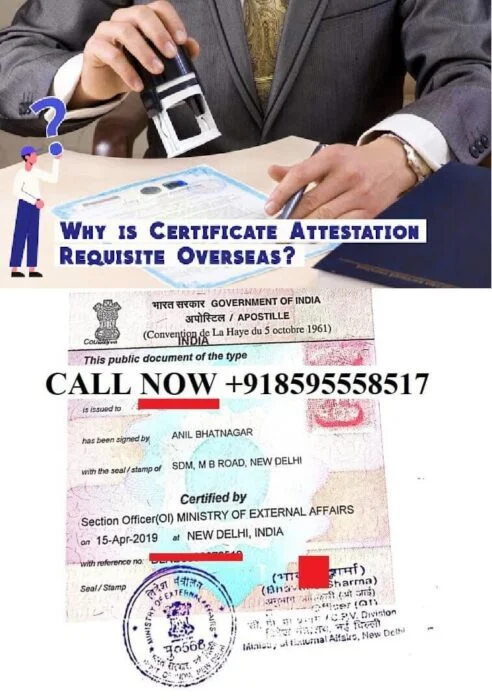
Apostille authenticates the legitimacy of the issuing authority so the PCC can be legally accepted internationally.
The apostille itself does not independently investigate criminal history.
Its purpose is to validate that the document was officially issued and properly authenticated before foreign use.
Why PCC Documents Are Internationally Sensitive
Police Clearance Certificates are directly connected to immigration screening, long-term residency approval, foreign employment eligibility, and international visa processing.
Because these documents relate to legal background verification, foreign authorities examine them carefully during immigration assessment procedures.
Identity consistency and jurisdictional accuracy are extremely important.
How the Apostille Process Works
The process begins with verification of the Police Clearance Certificate through the appropriate issuing authority.
After authentication procedures are completed, the document proceeds to the Ministry of External Affairs for apostille certification.
If the destination country does not accept apostille under the Hague Convention, Embassy Attestation becomes necessary after authentication.
Each legalization stage depends on successful document verification.
Why Address History Creates Verification Challenges
PCC verification depends heavily on address history and police jurisdiction records.
Applicants who have changed addresses frequently may experience additional verification requirements.
Differences between passport address, PCC details, and supporting documentation can trigger delays during authentication.
This becomes especially sensitive during immigration applications involving multiple residence histories.
Common Reasons PCC Apostille Is Required
PCC Apostille is frequently required for overseas employment and long-term immigration applications.
It is also commonly used for work permits, residency visas, international dependent sponsorship, and foreign settlement procedures.
Several countries require legalized PCC documents before approving migration or employment eligibility.
What Usually Causes Delays
Address inconsistencies are one of the biggest reasons.
Jurisdictional verification delays may occur when applicants have lived in multiple locations.
Outdated passport addresses, incomplete police records, and unclear personal information can increase authentication timelines.
Damaged certificates or inconsistent identity details may also require additional review.
Why Older PCC Records Sometimes Create Problems
Some applicants attempt to use outdated PCC documents during international processing.
However, many countries require recently issued police clearance records because background verification validity changes over time.
Authorities may reject older certificates even if they were previously authenticated.
That is why applicants should verify destination-country validity requirements carefully before submission.
Timeline Based on Actual Verification Flow
If police verification records are clear and identity details are consistent, legalization generally moves smoothly.
If address history requires additional review or jurisdictional clarification, timelines increase considerably.
Destination-country legalization rules may also affect overall duration.
Cost Factors Explained
Cost depends on urgency, document handling complexity, destination-country requirements, and additional verification needs.
Standard timelines follow regular pricing.
Priority handling and extra authentication procedures increase total processing cost.
Practical Approach That Works
Ensure passport details, address history, and PCC records match correctly before submission.
Check destination-country validity requirements because many authorities accept PCC documents only within a limited timeframe.
If identity details or addresses differ across documents, resolving inconsistencies early can reduce legalization delays.
Applicants should also confirm whether apostille or Embassy Attestation is required before beginning the process.
Real Scenario Insight
An applicant submitted a PCC for overseas employment legalization.
The passport displayed a different address from the recently issued PCC.
Although both addresses belonged to the same applicant, additional verification became necessary before authentication could continue.
The delay resulted from address inconsistency rather than any issue with the certificate itself.
About INFINITYGRO
INFINITYGRO
C – 5 A/2 New Ashok Nagar, Delhi – 110096
Phone: +91 8595558517
FAQs
Why do PCC apostille applications face delays
Address inconsistencies and jurisdictional verification issues are common reasons.
Can older PCC documents still be apostilled
Some countries require recently issued PCC records for acceptance.
Does apostille verify criminal history independently
No, it authenticates the issuing authority and document legitimacy.
What is the difference between apostille and Embassy Attestation
Certain countries require embassy legalization instead of apostille certification.
Can address mismatches affect processing
Yes, inconsistent address records may trigger additional verification.
Conclusion
PCC Apostille in India depends heavily on identity consistency, jurisdictional verification, and accurate police clearance records.
If address history and supporting documents align properly, legalization usually moves efficiently.
If inconsistencies or additional verification requirements appear, processing timelines increase significantly.
Understanding how police verification influences international legalization helps applicants prepare correctly and avoid unnecessary delays during overseas immigration and employment procedures.

 English
 Arabic
 French
 Spanish
 Portuguese
 Deutsch
 Dutch
Dutch
 Italiano
 Russian
 Romaian
 Portuguese (Brazil)
 Greek
Greek