


Why Asset Visibility Is Becoming More Important in Construction
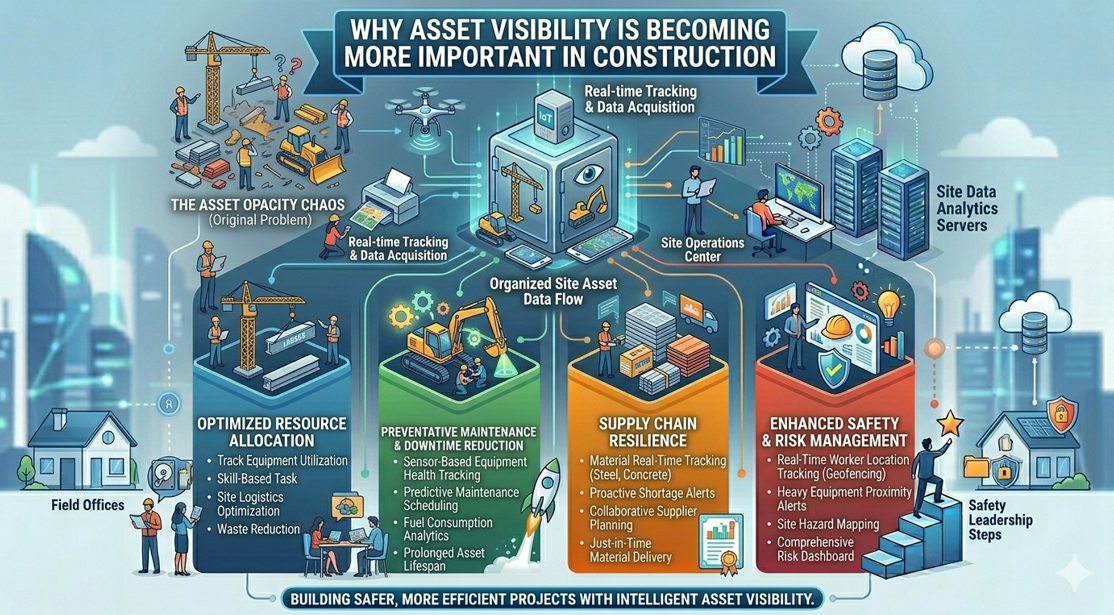
Construction companies depend on equipment, tools, vehicles, attachments, and jobsite assets to keep work moving. When teams cannot see where those assets are, how they are being used, or what condition they are in, operations become harder to control. This is why asset visibility is becoming a major priority for contractors. Many teams now use construction asset tracking software to create a clearer picture of their owned, rented, and field-deployed assets.
Asset visibility is not only about preventing loss. It helps with jobsite planning, maintenance, utilization, safety, cost control, and accountability. As construction projects become more complex, contractors need better ways to manage assets across multiple crews, sites, yards, and service locations.
What Asset Visibility Means in Construction
Asset visibility means having reliable information about where assets are, who is using them, what condition they are in, and whether they are available. It covers more than large equipment. It can include attachments, trailers, generators, compact equipment, tools, vehicles, and rental items.
The goal is to reduce uncertainty. When teams know what they have and where it is, they can plan work more effectively.
Asset Visibility Answers Practical Questions
Good asset visibility helps teams answer questions such as:
-
Where is this asset right now?
-
Which project is using it?
-
Is it available for another job?
-
Is it rented or owned?
-
Is it due for maintenance?
-
Who last used it?
-
Is it sitting idle?
-
Is it still in working condition?
These questions may seem basic, but when the answers are unclear, projects lose time and money.
Why Asset Visibility Is More Important Now
Construction teams are under pressure to control costs, reduce downtime, improve productivity, and make better use of existing resources. At the same time, equipment prices, rental costs, labor constraints, and project complexity continue to put pressure on operations.
In that environment, poor asset visibility becomes expensive. A contractor may buy or rent equipment that is already available somewhere else. A jobsite may wait for a tool that nobody can locate. A high-value asset may sit idle because its status was not updated.
Visibility Helps Reduce Waste
When asset information is organized, teams can reduce waste caused by:
-
Duplicate rentals
-
Lost tools
-
Idle equipment
-
Poor asset allocation
-
Missed returns on rented assets
-
Delayed maintenance
-
Unnecessary purchases
-
Confusing jobsite transfers
Visibility does not remove every problem, but it gives teams the information needed to make faster and better decisions.
Where Construction Asset Tracking Software Fits
Construction asset tracking software helps contractors organize asset records, location data, assignments, usage notes, and maintenance status. It creates a more reliable system for managing assets that move across jobsites and departments.
The best asset tracking process connects field activity with office visibility. Field teams need a quick way to update asset status. Managers need clean records they can use for planning, costing, and accountability.
Tracking Should Cover More Than Location
Location is important, but it is only one part of the picture. A useful asset tracking process should also include:
-
Asset type
-
Current assignment
-
Ownership or rental status
-
Condition
-
Inspection history
-
Maintenance status
-
Usage pattern
-
Responsible crew or operator
-
Cost center or project
This creates a fuller view of each asset’s role in the business.
Better Asset Visibility Improves Jobsite Planning
Jobsite planning depends on asset availability. If equipment, tools, or attachments are missing, delayed, or assigned elsewhere, work slows down. Better asset visibility helps project teams plan with more confidence.
For example, if a crew needs a generator, the team should be able to see whether one is available in the yard, assigned to another project or already rented. That simple visibility can prevent unnecessary spending and avoid delays.
Planning Gets Stronger When Records Are Accurate
Accurate asset records support:
-
Daily crew planning
-
Equipment scheduling
-
Tool allocation
-
Material handling
-
Rental planning
-
Maintenance coordination
-
Job costing
-
Project closeout
When records are outdated, the team ends up planning around assumptions. That is where mistakes happen.
Asset Visibility Helps Control Rentals
Rental costs can creep up quickly when teams do not track assets properly. A rented asset may stay on a site after it is no longer needed. Another project may rent the same type of asset because nobody knows one is available. Returned assets may not be documented correctly.
Better visibility helps managers see which rented assets are active, idle, overdue, or ready to return. This is especially useful for contractors handling several projects at once.
Rental Tracking Should Include Key Details
A strong rental visibility process should track:
-
Rental provider
-
Rental start date
-
Expected return date
-
Current jobsite
-
Assigned project
-
Usage status
-
Daily, weekly, or monthly cost
-
Return confirmation
This gives contractors more control over rental spend and reduces unnecessary charges.
Maintenance and Safety Also Depend on Visibility
Asset visibility supports maintenance because teams need to know where equipment is and whether it is safe to use. If an asset has a reported issue but the record is not updated, it may continue working until the problem gets worse.
Visibility also supports safety. When inspection records, issue reports, and condition notes are connected to asset records, teams can identify problems earlier.
Visibility Creates Better Safety Records
Good asset records can show:
-
Inspection completion
-
Reported defects
-
Repair status
-
Service history
-
Operator notes
-
Safety-related issues
-
Asset condition before and after use
This helps teams make safer decisions and creates stronger documentation when questions come up later.
Accountability Becomes Clearer
Asset visibility improves accountability without turning the jobsite into a blame game. When assets are assigned clearly, teams know who had them, where they were used, and what happened during the assignment.
This helps reduce disputes over missing tools, damaged equipment, late returns, and unclear transfers. It also protects crews by creating a better record of asset condition and responsibility.
Final Thoughts
Construction teams cannot manage what they cannot see. As projects become more complex and equipment costs rise, asset visibility is no longer a nice extra. It is a basic requirement for better planning, cost control, maintenance and accountability.
The real value of construction asset tracking software is that it helps contractors build a clearer, more reliable view of their assets. When teams know where assets are, how they are being used, and what condition they are in, they can reduce waste, avoid confusion, and keep jobsites better organized.

 English
 Arabic
 French
 Spanish
 Deutsch
 Turkish
 Dutch
Dutch
 Italiano
 Russian
 Romaian
 Portuguese (Brazil)
 Greek
Greek