


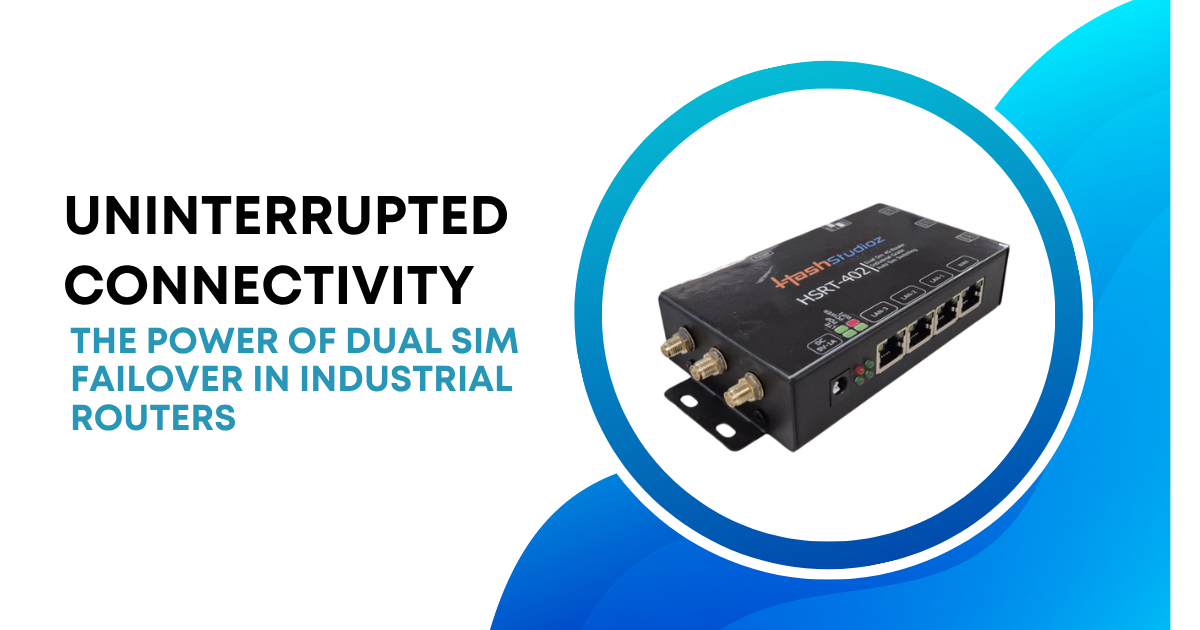
Uninterrupted Connectivity: The Power of Dual SIM Failover in Industrial Routers
Modern industry depends on data. Every second, machines send status updates to the cloud. Logistics hubs track packages in real-time. Power plants monitor grid stability across thousands of miles. This entire digital ecosystem rests on one thing: a stable internet connection.
In a home or office, a brief outage is a minor bother. In an industrial setting, a five-minute disconnect can stop production. It can lead to safety risks or massive financial loss. This is why companies invest in a Dual Sim Industrial Router.
Connectivity is the lifeblood of the Fourth Industrial Revolution. Without it, automation fails. This article explains the technical mechanics of failover. It shows why redundancy is the only way to ensure total uptime in harsh environments.
What is an Industrial Router?
An Industrial Router is far more than a standard Wi-Fi box. It is a rugged device built for high-stress locations. These routers operate in oil fields, moving trains, and hot factories.
Standard routers use plastic shells and basic chips. An industrial model uses metal casings and high-grade components. They handle extreme vibrations and electrical surges. Most importantly, they offer advanced cellular features. They connect local equipment to the wider world using LTE or 5G networks.
Defining Dual SIM Failover
Failover is a backup mechanism. It switches a cellular connection from a primary path to a secondary path. A Dual Sim Industrial Router holds two different SIM cards. Usually, these cards come from two different network providers.
The router constantly checks the health of the first connection. If the signal drops or data stops flowing, the router acts. It instantly activates the second SIM card. This transition happens without human help. It keeps the machines online even if one carrier has a total tower collapse.
How Failover Works Technically
The process of failover involves several technical layers. Understanding these steps shows the intelligence of the device.
1. Connection Monitoring
The router does not just look for "signal bars." It sends "pings" to a known server on the internet. It also checks the Latency and Packet Loss. If these metrics stay poor for too long, the router marks the link as failed.
2. The Switch Logic
The device follows a "Priority Table." The primary SIM stays active as long as it meets the criteria. Once it fails, the router triggers the "Switchover" script.
3. Verification
After switching to the second SIM, the router tests the new link. It ensures the second carrier is actually working. If both links fail, some routers can even trigger a third backup like a satellite link.
4. Automatic Failback
Failback is the final step. The router continues to monitor the primary SIM in the background. Once the primary carrier fixes their network, the router switches back. This saves money if the primary plan has lower data costs.
Why Redundancy is Necessary
Single points of failure are dangerous in engineering. If you have only one link, you are at the mercy of the carrier.
1. Carrier Maintenance
Cellular companies perform regular upgrades. They shut down towers for hours at a time. If your factory sits near that tower, you lose all data.
2. Network Congestion
During major events or holidays, cellular networks get crowded. A primary network might become too slow for industrial data. A Dual Sim Industrial Router can switch to a less crowded provider.
3. Physical Obstructions
In rural areas, weather or new construction can block signals. Having two providers increases the chance of a clear path to a tower. One provider might have a tower to the North, while another is to the East.
Connectivity Statistics and Costs
Data proves that downtime is an expensive mistake. Companies cannot afford to ignore these numbers.
|
Metric |
Industry Average |
|
Cost of Downtime |
$5,600 per minute (Gartner) |
|
Network Reliability Goal |
"Five Nines" (99.999% uptime) |
|
Annual Outage Hours |
87 hours for average single-link users |
|
Redundant Uptime |
Less than 5 minutes of outage per year |
The cost of a Dual Sim Industrial Router is small compared to these losses. One hour of downtime can pay for the hardware many times over.
Hardware Durability for Field Work
Redundancy is useless if the hardware breaks. Industrial sites present many physical threats.
-
Temperature Ranges: These routers work from -40°C to +75°C.
-
Vibration: They meet military standards for shock resistance. This is vital for buses and trucks.
-
Power Input: They accept a wide range of DC voltages. This allows them to run on batteries or solar power.
-
Mounting: Most use DIN-rail mounts for easy installation in electrical cabinets.
Security Protocols in Dual SIM Devices
Security is a major concern when using cellular links. An Industrial Router must protect sensitive data.
1. VPN Support
The router creates a "Virtual Private Network." This encrypts all data before it travels over the cellular network. It makes the data unreadable to hackers.
2. Firewall Protection
Built-in firewalls block unauthorized traffic. They prevent people from "pinging" your machines from the outside.
3. Secure Boot
This feature ensures the router only runs trusted software. It prevents attackers from installing malicious code on the device.
Real-World Examples
1. Smart Grids
Electric companies use thousands of remote sensors. These sensors monitor transformers and power lines. They send data back to a central control room.
If a storm knocks out a local cell tower, the data stops. The company might miss a warning about a failing transformer. By using a Dual Sim Industrial Router, the sensor stays online. It switches to the backup carrier immediately. This helps the company prevent a massive blackout.
2. Cold Chain Logistics
Food and medicine must stay at specific temperatures. Trucks carrying these goods use IoT sensors. If the internet fails, the driver might not know the fridge broke.
A Dual Sim Industrial Router ensures the temperature data reaches the office. As the truck drives across the country, it moves between cell towers. If one carrier has a "dead zone" in a canyon, the second carrier takes over. This protects millions of dollars in inventory.
Difference Between Load Balancing and Failover
Many people confuse these two terms.
Failover is like a spare tire. You only use the second SIM when the first one goes flat. This keeps things simple and saves data costs on the backup plan.
Load Balancing uses both SIMs at the same time. It splits the traffic between them. This increases total speed. However, it requires a more complex setup. Most industrial tasks prefer the stability of Failover.
Choosing the Right Carriers
Not all SIM combinations are effective. You must be strategic.
Avoid using two providers that share the same towers. In many regions, small carriers rent space from big companies. If the big company has a failure, both carriers go down.
Choose two providers with separate infrastructure. This ensures a "True Redundancy." One should be a major national provider. The other could be a local or regional specialist.
Managing a Fleet of Routers
Large companies might own 500 routers. They cannot check each one manually.
Modern Industrial Router manufacturers offer Cloud Management. This allows the IT team to see every router on a map. They can see which SIM is active in real-time. If a router switches to the backup SIM, the team gets an email. They can then investigate why the primary provider is failing.
The Role of 5G in Industrial Connectivity
5G is changing the landscape. It offers much lower "latency." This means data travels faster with less delay.
A modern Dual Sim Industrial Router often supports both 4G and 5G. The primary SIM might be a high-speed 5G link. The backup SIM might be a reliable 4G link. 4G has a longer range and better building penetration. This combination offers both speed and reliability.
Installation Best Practices
Correct installation is key to performance.
-
Antenna Placement: Mount antennas outside of metal cabinets. Metal blocks radio signals.
-
Antenna Separation: Keep the two antennas a few inches apart. This prevents them from interfering with each other.
-
Power Protection: Use a surge protector. Lightning strikes near a field site can ruin electronics.
-
Firmware Updates: Check for updates every few months. Manufacturers release patches to fix new security threats.
Selecting the Best Hardware
When buying a Dual Sim Industrial Router, look for these specific features:
1. Dual Radio vs. Dual SIM
A "Dual Radio" router has two cellular modems. It can connect to both networks at the same time. A "Dual SIM" router has one modem and two slots. It takes a few seconds to switch. Dual Radio is faster but costs more.
2. Software Flexibility
The router software should allow for custom scripts. This lets you decide exactly when to switch based on your specific needs.
3. Technical Support
Buy from companies that offer real technical help. Industrial networking is complex. You will eventually have questions about VPNs or routing protocols.
Conclusion
The modern world does not tolerate downtime. Remote sites face too many risks to rely on a single connection. A Dual Sim Industrial Router provides the essential safety net for data. It protects against carrier outages, weather, and congestion.
Failover is the standard for professional operations. It is a technical solution for a physical problem. By investing in an Industrial Router, you protect your equipment and your profits. Constant connectivity is no longer a goal. It is a requirement. Make sure your network has the power to stay online, no matter what happens.

 English
 Arabic
 French
 Spanish
 Portuguese
 Turkish
 Dutch
Dutch
 Italiano
 Russian
 Romaian
 Portuguese (Brazil)
 Greek
Greek