


Caribbean Food and Traditions 15 Unforgettable Specialties
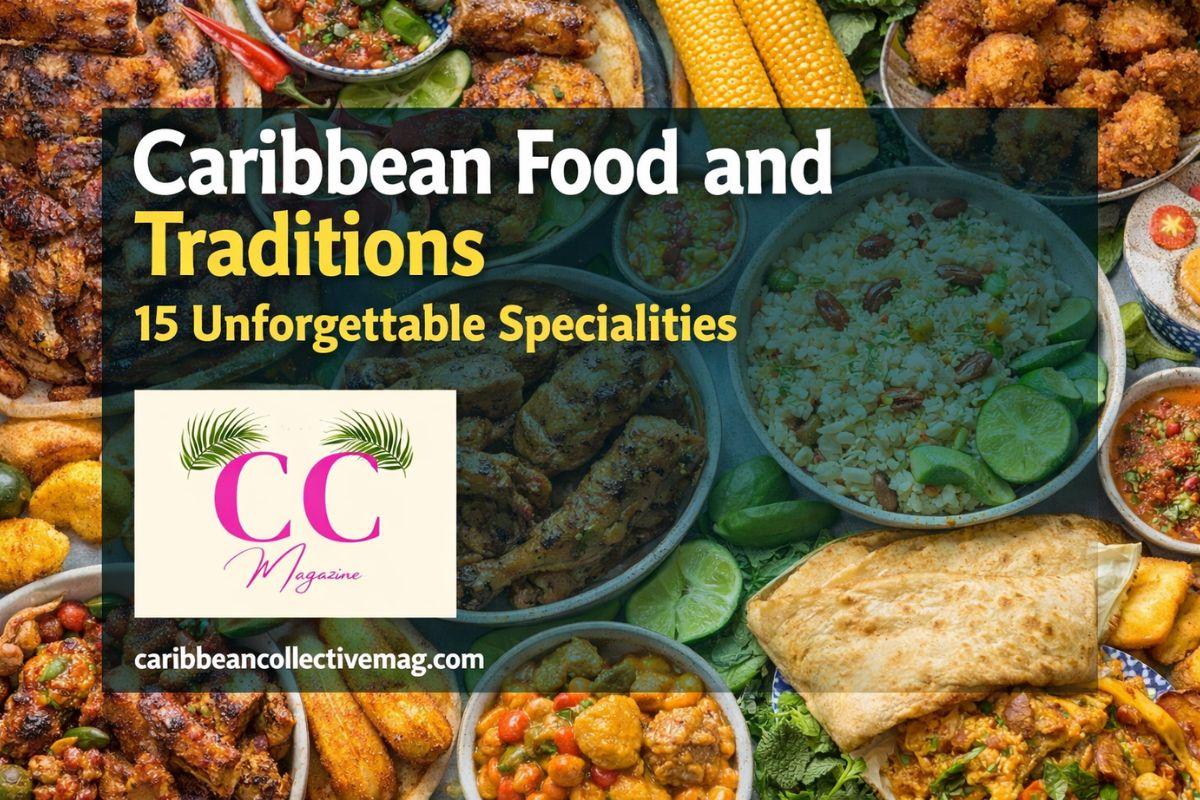
Caribbean Food and Traditions are not random tropical recipes thrown together under palm trees. They are the result of survival, migration, colonization, resistance, and cultural fusion. African slaves, Indigenous Taíno communities, European colonizers, Indian indentured laborers, and Chinese migrants all left permanent marks on the region’s cuisine. What you taste in Caribbean food is history — layered, complex, and unapologetically bold.
15 unforgettable specialties that define Caribbean Food and Traditions across the islands
1. Jerk Chicken – Jamaica
Jerk is more than seasoning; it’s a cooking method developed by the Maroons. Chicken is marinated in Scotch bonnet peppers, allspice, thyme, garlic, and scallions, then slow-smoked over pimento wood. Smoky, spicy, and deeply aromatic, it represents resilience and identity.
2. Ackee and Saltfish – Jamaica
Jamaica’s national dish combines ackee (a fruit originally from West Africa) with salted cod introduced by Europeans. Sautéed with onions and peppers, it symbolizes the global forces that shaped the Caribbean.
3. Roti – Trinidad and Tobago
Introduced by Indian indentured laborers, roti wraps curried meats or chickpeas inside soft flatbread. It’s practical street food and a clear example of how Indian influence reshaped Caribbean Food and Traditions.
4. Doubles – Trinidad and Tobago
Two pieces of fried flatbread filled with curried chickpeas, chutney, and pepper sauce. Cheap, fast, and explosive in flavor, doubles dominate Trinidad’s street food culture.
5. Callaloo – Trinidad and Tobago
A thick stew made from leafy greens, coconut milk, okra, herbs, and sometimes crab. It’s a reminder that Caribbean cuisine often transforms simple, local ingredients into deeply satisfying meals.
6. Flying Fish and Cou-Cou – Barbados
Barbados’ national dish features lightly seasoned flying fish served with cornmeal and okra mash. It reflects the island’s strong fishing traditions and coastal identity.
7. Conch Fritters – The Bahamas
Conch, a sea snail found in Caribbean waters, is chopped with herbs and deep-fried into golden fritters. The dish reflects how coastal communities depend heavily on the sea.
8. Mofongo – Puerto Rico
Mashed fried plantains mixed with garlic and pork cracklings, often filled with shrimp or chicken. It’s dense, savory, and rooted in African culinary techniques blended with Spanish influence.
9. Sancocho – Dominican Republic
A hearty stew combining multiple meats, root vegetables, and plantains. Often served at celebrations, sancocho represents community and abundance.
10. Griot – Haiti
Chunks of pork marinated in citrus and spices, then fried until crispy. Typically served with pikliz (spicy pickled vegetables), griot showcases Haiti’s bold and distinct culinary identity.
11. Pelau – Trinidad and Tobago
A one-pot rice dish cooked with caramelized sugar, meat, pigeon peas, and coconut milk. Efficient and flavorful, pelau is built for gatherings and family events.
12. Rice and Peas – Jamaica
Rice simmered in coconut milk with kidney beans (called “peas”), thyme, and scallions. It’s a staple side dish and a foundation of many meals.
13. Pasteles – Puerto Rico
Green banana and root vegetable dough stuffed with seasoned meat, wrapped in banana leaves, and boiled. Traditionally prepared during holidays, pasteles require teamwork and time.
14. Festival and Bammy – Jamaica
Festival is slightly sweet fried dough; bammy is a flatbread made from cassava, tracing back to Indigenous Taíno roots. These foods show how Caribbean Food and Traditions predate colonial influence.
15. Rum Cake – Barbados
Made with dried fruit and soaked in rum, this dessert reflects the region’s sugarcane plantation history. It’s especially popular during holidays and celebrations.
The Cultural Meaning Behind Caribbean Food and Traditions
Food in the Caribbean is not just sustenance — it’s social glue. Sunday dinners bring extended families together. Carnival celebrations feature street vendors selling traditional snacks. Christmas meals are elaborate and deeply symbolic. Cooking is often communal, with recipes passed down orally rather than written.
Spices like allspice, thyme, garlic, and Scotch bonnet peppers dominate the flavor profile. Coconut milk, plantains, cassava, seafood, goat, and pork are widely used. Many dishes are one-pot meals designed to feed large groups efficiently.
Caribbean Food and Traditions stand out because they are not trend-driven. They evolved from necessity. Enslaved Africans adapted ingredients they could access. Indian laborers introduced curry and roti. European colonizers brought salted cod and baking techniques. The result is cuisine built on adaptation and endurance.
Frequently Asked Questions (FAQ)
What defines Caribbean Food and Traditions?
They are defined by cultural fusion, bold seasoning, tropical ingredients, and strong communal dining customs rooted in African, Indigenous, European, and Asian influences.
Is all Caribbean food spicy?
No. While hot peppers are common, many dishes focus more on layered flavor than extreme heat.
What is the most internationally recognized Caribbean dish?
Jerk chicken from Jamaica is likely the most globally known, but each island has its own defining specialties.
Are Caribbean cuisines the same across all islands?
No. Trinidad shows strong Indian influence, Haiti reflects French and African roots, and Puerto Rico highlights Spanish culinary traditions. Each island is distinct.
What are staple ingredients in Caribbean cooking?
Plantains, rice, beans, coconut milk, cassava, seafood, pork, goat, thyme, and hot peppers are common across the region.
Conclusion
Caribbean Food and Traditions are not just about flavor — they are about identity, survival, and cultural fusion. Every dish carries the imprint of history: African resilience, Indigenous knowledge, European colonization, and Asian migration. That complexity is exactly what makes Caribbean cuisine powerful.
From the smoky depth of jerk chicken to the communal ritual of preparing pasteles, these specialties are more than meals. They represent adaptation under pressure, creativity with limited resources, and the importance of gathering around food as a community. The bold spices, tropical ingredients, and one-pot traditions are not trends — they are the result of generations refining what works.
If you truly want to understand Caribbean culture, you don’t start with beaches or resorts. You start at the table. Because Caribbean Food and Traditions tell the real story of the islands — layered, intense, and impossible to ignore.

 English
 Arabic
 French
 Spanish
 Portuguese
 Turkish
 Dutch
Dutch
 Italiano
 Russian
 Romaian
 Portuguese (Brazil)
 Greek
Greek