


Scheduled Logistics Delivery Services Are Becoming a Competitive Advantage for Software Companies
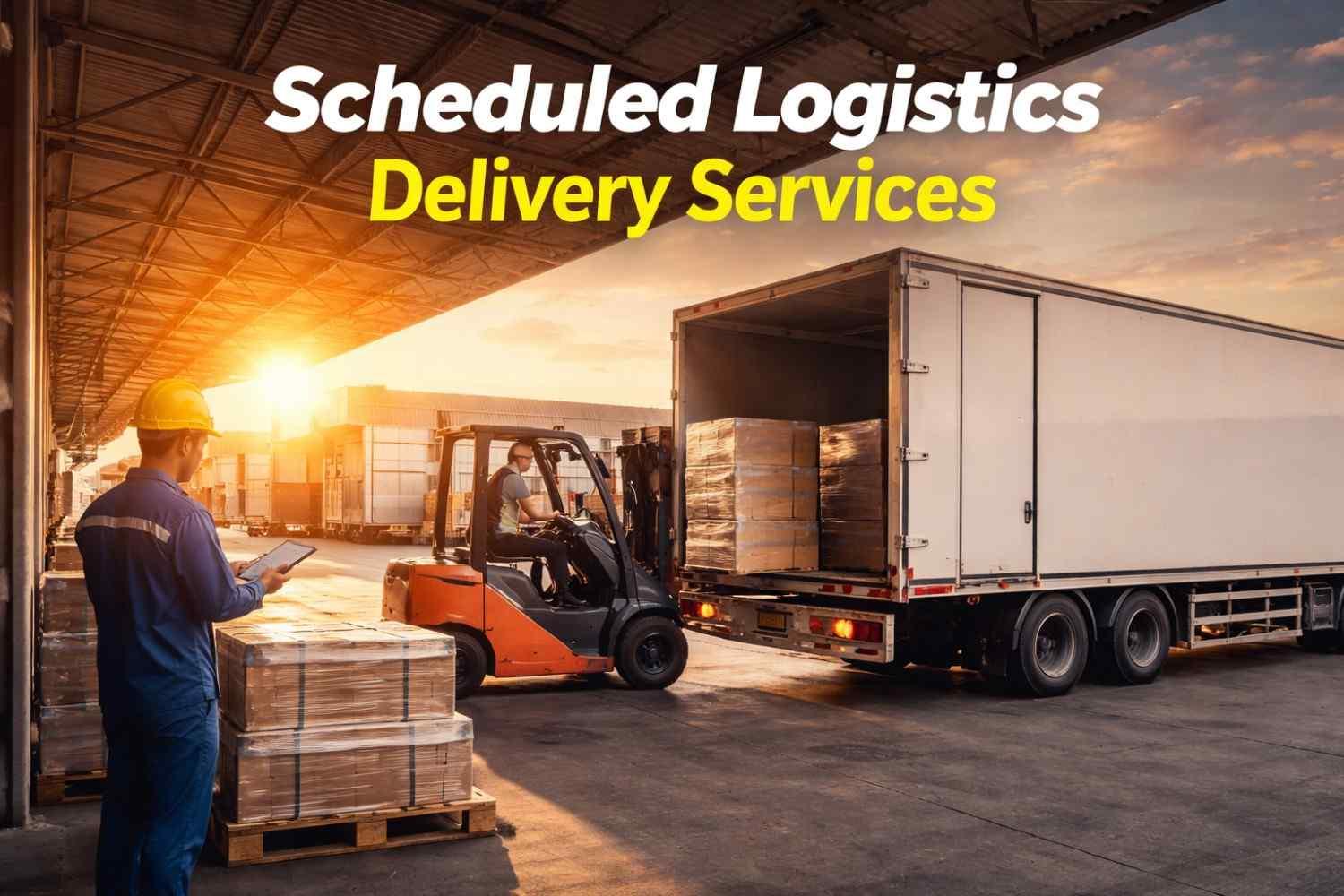
Most software companies don’t think seriously about logistics until something breaks.
A delayed hardware shipment. A missed deployment window. A replacement device stuck in transit while an enterprise client waits on a critical implementation. In reality, logistics become visible only when it fails. And by that point, the damage is already customer-facing.
This is exactly why scheduled logistics delivery services are quietly becoming essential for software businesses, especially those dealing with SaaS infrastructure, IoT deployments, enterprise onboarding kits, POS systems, or distributed hardware support teams.
The interesting part is that the conversation around logistics in software has changed over the last few years. Earlier, companies only cared about “fast shipping.” Now the focus is shifting toward predictability. That difference matters more than most founders initially realize.
A delivery arriving tomorrow sounds great in marketing copy. But a delivery arriving exactly at the committed operational window is what actually protects business continuity.
And honestly speaking, this is where most businesses struggle.
The Industry Still Confuses Speed With Reliability
There’s a strange obsession in the market with same-day and next-day delivery. Logistics companies advertise speed aggressively because it sells well. But software companies operating in B2B environments usually care about coordination more than raw delivery speed.
A software deployment partner does not want a networking device reaching a client location at 11 AM if the installation engineer arrives at 6 PM. Similarly, sending replacement equipment too early can create storage confusion at client sites, especially in regulated industries like healthcare, fintech, or manufacturing.
This is why shipment scheduling services in India are gaining serious attention among operational teams.
The challenge is not transportation itself. India already has thousands of logistics operators. The real operational problem is synchronization.
When software companies scale across multiple cities, their physical operations become surprisingly fragile. One missed shipment can delay onboarding cycles, support SLAs, or implementation milestones. And unlike traditional retail businesses, software companies often work with tightly planned customer activation timelines.
I have seen businesses spend lakhs on acquisition campaigns and enterprise sales, only to lose client trust because a scheduled device delivery arrived two days late without communication. Customers rarely separate software experience from operational experience. To them, it is one company.
That distinction becomes brutally clear during scale.
Why Scheduled Logistics Delivery Services Matter More Than Ever
The software industry is no longer fully digital. That assumption became outdated years ago.
Today’s software ecosystem depends heavily on physical movement:
-
IoT hardware deployments
-
Retail POS installations
-
Employee laptop distribution
-
Data center equipment transportation
-
Kiosk setup logistics
-
Return pickups and replacement devices
Once physical infrastructure becomes part of the business model, planned shipment logistics solutions stop being optional operational support. They become customer experience infrastructure.
And there’s another layer most people ignore.
Software companies operate on coordination-heavy workflows. Their operations involve sales teams, onboarding managers, field technicians, support departments, implementation specialists, and client-side IT teams working together within specific timelines.
A random or unpredictable logistics process creates friction across all these layers simultaneously.
In reality, delayed deliveries rarely create one isolated problem. They create cascading delays.
A missed hardware shipment delays setup. Delayed setup postpones training. Delayed training affects go-live timelines. Then finance teams delayed invoice approvals because implementation was incomplete.
One logistics failure quietly spreads across the entire operational chain.
This is why mature companies now prioritize scheduled delivery systems over reactive courier operations.
The Real Problem With Traditional Courier Models
Most standard courier systems were designed for mass-volume transportation, not business-critical coordination.
That’s an important distinction.
Traditional courier networks optimize routes based on volume efficiency. Your shipment becomes one package among thousands moving through automated operational pipelines. This works fine for generic commerce deliveries. It becomes problematic for software operations that require timing precision.
This is where most businesses make poor decisions early on.
They choose logistics partners based entirely on shipping rates instead of operational compatibility.
Cheaper logistics often looks efficient on spreadsheets. But once delayed installations, failed onboarding appointments, and customer escalations start happening, the hidden operational cost becomes obvious.
A slightly more expensive but reliable scheduled logistics delivery service usually saves significantly more money in long-term operational stability.
And software companies feel this faster than other industries because their margins depend heavily on retention and recurring revenue.
An unhappy enterprise client is not just one lost order. It can become a multi-year revenue leak.
Planned Shipment Logistics Solutions Need Better Technology Integration
One of the biggest gaps in Indian logistics operations is visibility.
Software companies expect real-time operational transparency because their internal systems already work that way. Engineering teams track deployments live. CRM systems monitor lead movement instantly. Support teams work with ticket visibility in real time.
Then logistics enter the picture and suddenly everything becomes uncertain.
“Pickup attempted.”
“In transit.”
“Delayed due to operational reasons.”
These vague status updates frustrate operational teams because they are not actionable.
Modern planned shipment logistics solutions need deeper integration with software workflows themselves. APIs, automated scheduling triggers, delivery confirmation sync, technician coordination, and predictive alerts are becoming far more important than flashy delivery promises.
This is where newer logistics-focused companies are slowly differentiating themselves.
Instead of acting like generic transport vendors, they are positioning themselves as operational infrastructure partners.
There’s a huge difference between those two mindsets.
Choosing Affordable Scheduled Shipment Services Without Creating Operational Chaos
Price sensitivity is understandable, especially for growing software businesses. But low-cost logistics decisions often create hidden scalability problems later.
The smarter approach is evaluating logistics providers based on operational alignment.
A few things genuinely matter here:
-
Can they commit to fixed delivery windows consistently?
-
Do they support reverse logistics efficiently?
-
Is communication proactive during delays?
-
Can their system integrate with your operational software?
-
Are they reliable in Tier-2 and Tier-3 locations?
This sounds basic, but many companies skip these questions entirely during vendor selection.
Honestly speaking, reliability in smaller cities matters far more than performance in metros. Most providers perform reasonably well in Bangalore, Delhi, or Mumbai. Operational cracks start appearing when deployments expand deeper into regional markets.
And this is where scalable shipment scheduling services in India become difficult to manage unless the logistics partner has strong regional coordination capabilities.
The Future of Scheduled Delivery in 2026 Will Be Precision-Based
The next phase of logistics is not about moving faster. It is about moving smarter.
By 2026, scheduled delivery systems will likely become deeply integrated into operational software ecosystems rather than functioning as separate courier workflows.
We are already seeing early signs of this shift.
Software companies want logistics platforms that can automatically trigger dispatches after CRM approvals, coordinate installation schedules dynamically, and predict delivery risks before they become customer problems.
AI-driven route planning will improve, yes. But the bigger transformation will come from operational predictability.
Businesses will increasingly pay premium rates for certainty.
And honestly, that shift makes sense.
A predictable delivery at 4 PM tomorrow is operationally more valuable than an uncertain “fast delivery” arriving anytime over two days.
The logistics companies that understand this psychology early will dominate enterprise-focused shipping.
Conclusion
Scheduled logistics delivery services are no longer just transportation support for software businesses. They are operational stability systems.
As software companies continue blending digital services with physical infrastructure, logistics reliability becomes directly tied to customer trust, retention, and scalability.
This is where many growing businesses make mistakes. They treat logistics as an afterthought until operational failures force them to rethink everything.
In reality, smart companies build delivery predictability into their growth strategy from the beginning.
Because customers may buy software for features, but they stay because the overall operational experience feels dependable.
And dependable businesses are usually built on invisible systems working quietly in the background.
Logistics is one of those systems.
FAQs
1. What are scheduled logistics delivery services?
Ans. Scheduled logistics delivery services allow businesses to plan shipments for fixed pickup and delivery windows instead of relying on unpredictable courier timelines. This improves coordination, especially for software deployments, installations, and enterprise operations.
2. Why are shipment scheduling services in India important for software companies?
Ans. Software businesses often deal with hardware deployments, onboarding kits, and replacement devices. Delayed or poorly timed deliveries can disrupt implementation schedules and customer onboarding processes.
3. Are affordable scheduled shipment services reliable?
Ans. Affordable services can work well if the provider focuses on operational consistency rather than just low pricing. The key factor is reliability in communication, pickup adherence, and regional delivery execution.
4. How do planned shipment logistics solutions improve customer experience?
Ans. They reduce uncertainty. Customers receive products or equipment within committed timelines, which helps businesses maintain professional service standards and avoid implementation delays.
5. What should businesses look for in scheduled delivery providers?
Ans. Businesses should evaluate delivery consistency, API integrations, reverse logistics support, regional coverage, proactive communication, and scalability before choosing a logistics partner.

 English
 Arabic
 French
 Spanish
 Portuguese
 Deutsch
 Turkish
 Dutch
Dutch
 Italiano
 Russian
 Romaian
 Greek
Greek