


Wooden Medical Doors: Practical Specification Tips
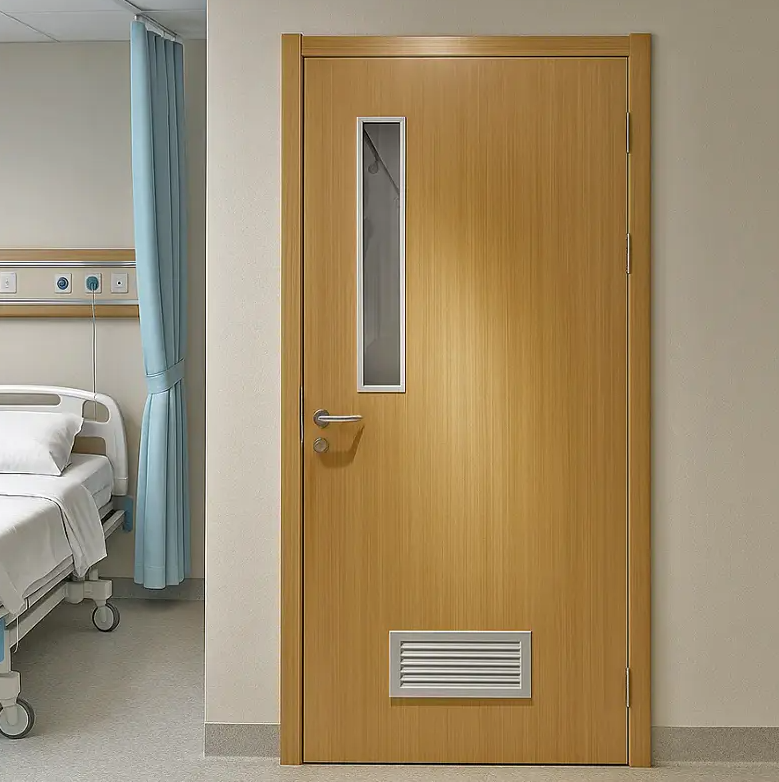
Specifying wooden medical doors for a healthcare project is one of those tasks that rewards early attention. Leave it too late in the design process and you end up making rushed decisions that the building will live with for the next twenty years. Get the brief right from the start, and the doors become a quiet asset — functional, compliant, and visually coherent with the broader interior.
The starting point is always the room schedule. Different areas of a healthcare facility have different door requirements, and a single specification will not cover the whole building. A patient bedroom door needs strong acoustic performance and a warm visual character. A clinical utility room door needs chemical resistance and easy wipe-down surfaces. A corridor fire door needs to meet specific fire-resistance ratings and close reliably every single time. Mapping these requirements room by room before selecting products prevents the common mistake of applying one door type across contexts where it underperforms.
Fire rating is a non-negotiable starting point for most healthcare door schedules. In the United Kingdom, wooden medical doors are typically specified to FD30 or FD60 standards — indicating 30 or 60 minutes of fire resistance respectively. In other markets, equivalent national standards apply. The fire rating must be certified for the complete door set: door leaf, frame, ironmongery, and glazing all tested together. A fire-rated wooden door leaf fitted into a non-rated frame is not a compliant installation, regardless of how the individual components performed in isolation.
Infection control is a growing influence on wooden medical door specification. Surface continuity matters — the fewer gaps, joints, and recesses on a door surface, the fewer places bacteria can accumulate. Flush-panel wooden doors with concealed hinges and minimal surface detailing are increasingly favoured in clinical areas for this reason. Some manufacturers now offer antimicrobial surface treatments applied to the laminate facing, adding a further layer of hygiene management without altering the door's appearance.
Finally, consider the long view. A wooden medical door in a busy hospital corridor is a working component that will be used thousands of times a year. Specifying a door with a robust warranty, a manufacturer that holds replacement parts, and a surface finish that can be touched up rather than replaced wholesale keeps maintenance costs manageable over the building's life. The upfront cost of a well-specified timber medical door is almost always recovered through reduced replacement and repair expenditure down the line. Good specification is, in the end, straightforward economics.

 English
 Arabic
 French
 Spanish
 Portuguese
 Deutsch
 Turkish
 Dutch
Dutch
 Italiano
 Russian
 Portuguese (Brazil)
 Greek
Greek