Office environments have changed significantly over the last decade. Businesses now understand that workspace design directly affects workflow efficiency, employee health, and client perception.
Furniture is no longer a secondary purchase made after construction; it is a planned investment integrated into architectural and operational strategy. This is where corporate design furniture becomes essential in creating offices that are structured, purposeful, and aligned with business objectives.
Corporate design furniture refers to office furnishings that are planned according to spatial layout, workflow patterns, ergonomic standards, and brand positioning. It is not about decorative appeal alone.
It involves technical considerations such as load-bearing capacity, material durability, acoustic control, cable routing, and modular adaptability. When properly specified, furniture contributes to measurable improvements in productivity and workplace organization.
The Structural Difference Between Standard and Corporate Furniture
Standard office furniture is typically mass-produced with limited configuration options. It may serve basic needs, but it often ignores workflow analysis, spatial planning, and ergonomic calibration. Corporate design furniture, on the other hand, is selected or manufactured based on a company’s operational requirements.
For example, workstation depth is not chosen randomly. A 600 mm desk may suit compact setups, but design studios or finance teams working with dual monitors often require 750–800 mm depth for effective screen distance and document placement. Similarly, workstation height must align with ergonomic guidelines to maintain a 90-degree elbow angle and proper eye-level alignment with screens.
Storage solutions are also strategically designed. High-density filing units, concealed cable trays, under-desk pedestals, and integrated power modules reduce clutter and improve safety. These technical considerations separate corporate-grade furniture from generic alternatives.
Integration with Space Planning and Workflow

Furniture planning begins with spatial analysis. Open-plan layouts, cellular offices, hybrid meeting zones, and breakout areas each require different configurations. A workspace with 100 employees cannot function efficiently without circulation planning, noise zoning, and collaborative segmentation.
Corporate design furniture supports these requirements through modular systems. Bench-style workstations encourage collaboration in creative teams, while partitioned cubicles are better suited for departments handling confidential data. Executive cabins require statement desks with integrated storage and concealed wiring to maintain a clean visual environment.
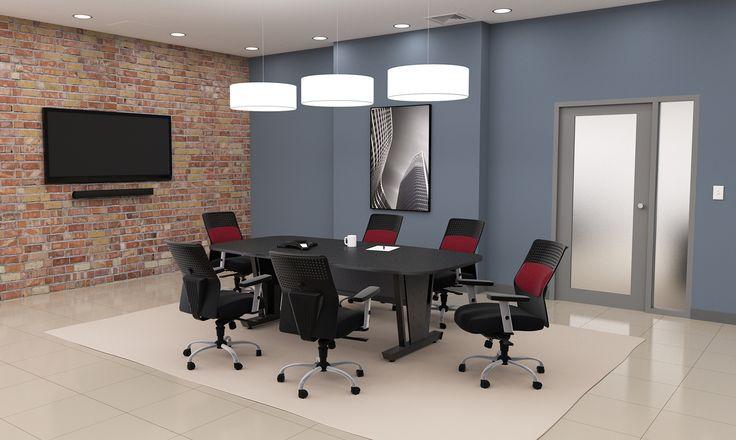
Conference tables are another example of functional design. Dimensions are calculated based on seating capacity and screen visibility. A 12-person boardroom table typically ranges between 3600–4200 mm in length to ensure adequate spacing and visual clarity for presentations. These details directly influence meeting effectiveness.
Ergonomic Standards and Workplace Health
Employee wellbeing is directly connected to furniture specification. According to occupational health studies, prolonged static sitting contributes to musculoskeletal strain, particularly in the lower back, neck, and shoulders. Properly designed office furniture reduces these risks.
Adjustable task chairs with synchronized tilt mechanisms and lumbar support maintain spinal alignment. Seat height adjustment (typically between 420–520 mm) ensures feet rest flat on the floor. Sit-stand desks, increasingly common in corporate environments, allow employees to alternate posture, reducing fatigue and improving circulation.
Corporate design furniture integrates these ergonomic standards into daily operations. It is not an optional upgrade, it is a preventive investment in workforce health and long-term productivity.
Material Selection and Durability
Material choice determines both longevity and maintenance requirements. In high-traffic corporate environments, surfaces must withstand constant use. Engineered wood with high-pressure laminate (HPL) offers scratch resistance, while powder-coated steel frames provide structural strength and corrosion protection.
Executive spaces may incorporate veneer finishes for a refined appearance, but durability remains a priority. Upholstery fabrics are selected based on abrasion resistance, often measured in Martindale rub tests to ensure long-term performance.
Corporate design furniture is evaluated not just on appearance but on lifecycle cost. Durable materials reduce replacement frequency, making them financially practical over time.
Acoustic and Privacy Considerations
Open-plan offices improve communication but often increase noise levels. Without acoustic planning, productivity declines due to distractions. Furniture plays a critical role in addressing this challenge.
Acoustic panels integrated into workstation partitions absorb sound and reduce echo. Meeting pods and privacy booths provide enclosed spaces for calls and focused work. Soft seating areas with fabric upholstery help dampen ambient noise.
Corporate design furniture incorporates these elements to balance collaboration and concentration. The goal is not to eliminate openness but to manage sound effectively.
Technology Integration
Modern offices depend heavily on digital infrastructure. Furniture must accommodate this reality. Integrated power modules, concealed cable channels, data ports, and charging docks are now standard in corporate environments.
Boardroom tables often include flush-mounted power boxes. Workstations include vertical cable risers to prevent visible wiring. These features improve safety, reduce trip hazards, and maintain a professional appearance.
Without proper integration, technology becomes visually disruptive and operationally inefficient. Corporate design furniture addresses these needs at the planning stage rather than as afterthoughts.
Adaptability for Hybrid Work Models
Hybrid work structures require flexible furniture systems. Not every employee occupies the same desk daily. Hot-desking arrangements demand shared workstations with secure storage lockers and booking systems.
Modular furniture allows departments to expand or reorganize without major reconstruction. Mobile tables, foldable partitions, and reconfigurable seating support changing team sizes and project-based collaboration.
Midway through workspace planning, many organizations recognize that static furniture limits operational agility. Investing in adaptable corporate design furniture ensures that layouts can evolve without incurring repeated capital expenses.
Brand Representation Through Design Language
Furniture communicates corporate identity. A technology firm may prefer minimal lines and neutral tones to reflect innovation and clarity. A financial institution might opt for structured layouts and premium finishes to project stability.
Reception desks, executive tables, and meeting areas are particularly significant. These are the first points of interaction for clients and partners. Consistency in color palette, material selection, and form reinforces brand recognition.
Corporate design furniture ensures that design language remains coherent across departments. This consistency strengthens professionalism and builds trust.
The Value of Professional Workspace Planning
Furniture selection should not occur in isolation. It requires collaboration between designers, facility managers, and operational leaders. Accurate measurements, load calculations, and employee workflow analysis determine the right specifications.
Professional workspace solution providers conduct site evaluations, develop layout plans, and recommend furniture systems aligned with business objectives. KV Workspace, for example, focuses on structured workspace development rather than simple product supply. Their approach considers ergonomics, spatial efficiency, material durability, and brand alignment before final implementation.
By analyzing operational needs and future growth plans, they help organizations implement corporate design furniture that supports performance instead of merely filling space.
Final Thoughts
Office furniture directly influences how businesses function. From ergonomic compliance and acoustic management to workflow optimization and brand representation, each detail contributes to operational success.
Corporate design furniture is not a decorative upgrade, it is an integrated system designed to support productivity, health, adaptability, and professional identity. When planned strategically and executed with durable materials and ergonomic precision, it becomes a long-term asset rather than a short-term expense.
Organizations that approach workspace planning with technical insight and professional guidance position themselves for efficiency, employee satisfaction, and sustained growth.




 English
 Arabic
 French
 Spanish
 Portuguese
 Deutsch
 Turkish
 Italiano
 Russian
 Romaian
 Portuguese (Brazil)
 Greek
Greek