


Revolutionizing Restoration: The Power of Precision Laser Cleaning Technology
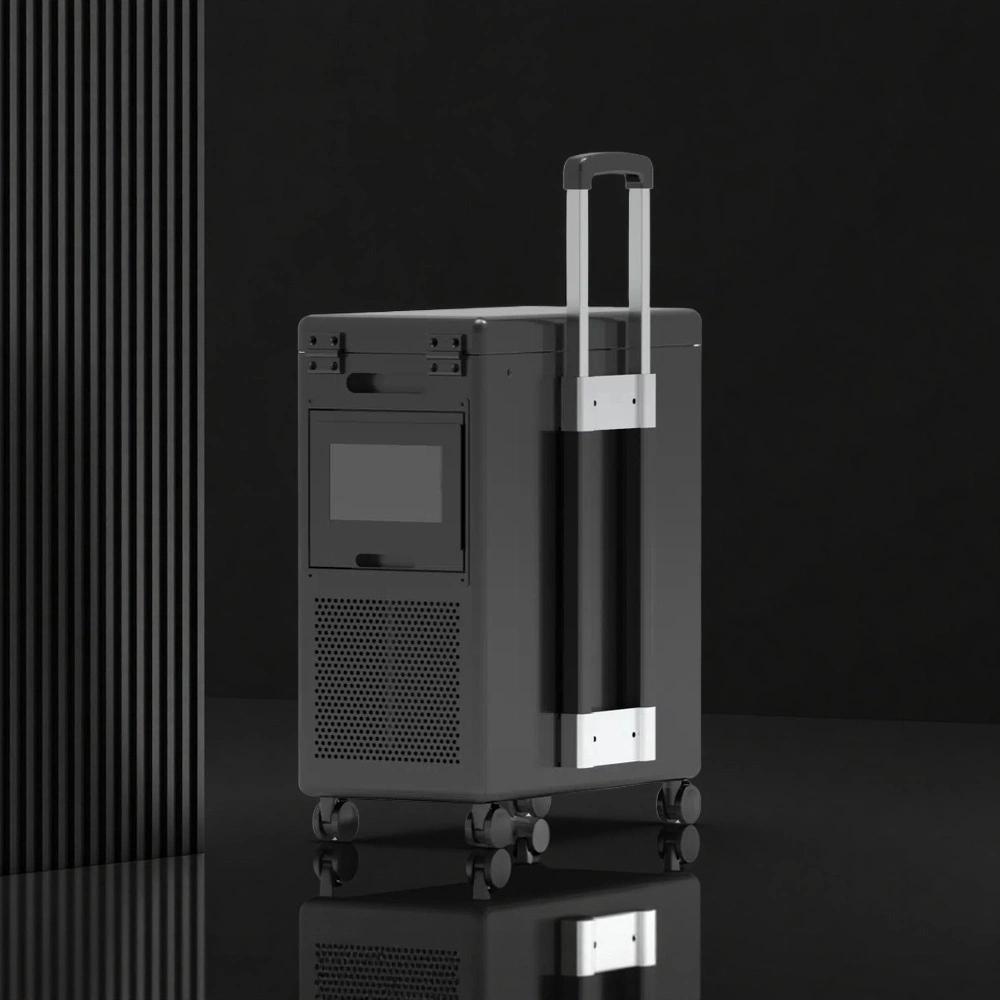
For decades, industries ranging from automotive restoration to heavy manufacturing have relied on abrasive methods to strip surfaces. Sandblasting, chemical baths, and mechanical grinding were once the only options for tackling deep-seated oxidation and stubborn coatings. However, these methods often come with a hidden cost: surface damage, toxic runoff, and hours of labor-intensive cleanup. Enter the new era of surface maintenance, powered by a high-efficiency laser paint and rust remover that is changing the game for professionals worldwide.
The Science of Laser Ablation
The magic behind this technology is a process known as laser ablation. Unlike traditional methods that rely on "brute force" to scrape away contaminants, a laser tool emits high-frequency pulses of light. When this concentrated energy hits a layer of rust or paint, the contaminants absorb the energy and are instantly vaporized or ejected from the surface.
The most impressive aspect of this process is its selectivity. Different materials absorb light at different rates. By tuning the laser to the specific threshold of the contaminant, the beam can dissolve rust, paint, or grease while reflecting harmlessly off the underlying metal substrate. This ensures that the structural integrity of the base material remains perfectly intact.
Portability Meets Performance
One of the most significant breakthroughs in recent years is the development of handheld, portable units. No longer confined to massive stationary industrial bays, these tools can now be brought directly to the job site. Whether you are working on a stationary bridge structure, a large maritime vessel, or a classic car chassis in a private garage, portability allows for unprecedented access to tight corners and complex geometries. This mobility significantly reduces downtime and eliminates the logistical headache of transporting heavy components.
A Sustainable and Safe Solution
In a world increasingly focused on environmental responsibility, laser cleaning offers a "green" alternative to chemical stripping. There are no hazardous solvents to dispose of and no massive clouds of silica dust to contain. Most modern systems are designed to be used in conjunction with a vacuum extraction unit that captures vaporized particles at the source. This creates a safer work environment for the operator and eliminates the need for expensive secondary waste management.
Versatility Across Industries
The applications for a laser stripper are nearly limitless. Beyond simple rust removal, it is an essential tool for:
-
Pre-Welding Preparation: Removing oxide layers to ensure high-quality, contaminate-free welds.
-
Selective Stripping: Removing a single layer of paint for structural inspections without damaging the primer.
-
Mold Cleaning: Clearing carbon buildup from industrial injection molds without causing wear.
-
Heritage Conservation: Safely cleaning historical artifacts and stone monuments where abrasive methods would be too destructive.
Conclusion
As we look toward more efficient and eco-friendly industrial practices, the move away from traditional abrasives is inevitable. Laser technology provides a level of precision, safety, and speed that manual methods simply cannot match. By investing in professional-grade laser equipment, you are not just cleaning a surface; you are preserving it for the future.

 English
 Arabic
 French
 Spanish
 Portuguese
 Deutsch
 Turkish
 Italiano
 Russian
 Romaian
 Portuguese (Brazil)
 Greek
Greek