


Revolutionizing Foundation Work: The Power of CNC Automation in Steel Cage Fabrication
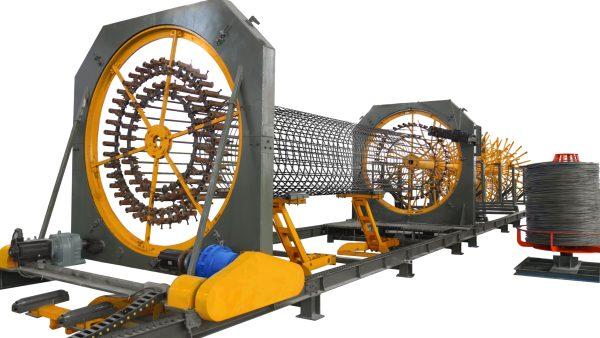
The backbone of modern infrastructure—from soaring skyscrapers to massive highway overpasses—rests upon the strength of reinforced concrete. At the heart of these structures are the intricate steel reinforcement skeletons that provide essential tension and stability. Historically, the process of cage building was a labor-intensive manual task, often requiring teams of workers to tie and weld bars by hand under grueling site conditions. However, the introduction of CNC-controlled welding technology has transformed this critical phase of construction into a high-precision, automated science.
Precision at the Core of Every Foundation
In structural engineering, the spacing of spirals and the alignment of longitudinal bars are not merely suggestions; they are vital calculations for load-bearing safety. Manual assembly is naturally prone to human error, which can lead to structural inconsistencies. CNC steel bar welding machines eliminate this risk. By using a computerized control system, these machines ensure that every weld is perfectly timed and every revolution is spaced with millimeter precision. This level of accuracy is essential for meeting the stringent building codes required for modern bridge piers and high-rise foundations.
Scaling Productivity with CNC Technology
The most immediate benefit of shifting to automated fabrication is the exponential increase in speed. A professional CNC welding system can complete a reinforcement cylinder in a fraction of the time it takes a manual crew. This allows construction firms to keep pace with the demanding schedules of large-scale projects. Furthermore, the HNYC-1500 series is designed to handle varying diameters and lengths, providing the flexibility to switch between different project specifications without lengthy downtime for reconfiguration.
Enhancing Site Safety and Reducing Waste
Manual welding and assembly in deep pits or crowded staging areas are inherently dangerous. By centralizing the fabrication process within a controlled machine environment, the risk of site injuries is significantly lowered. Additionally, automation reduces material waste. Precise cutting and winding mean that raw steel is used with maximum efficiency, which not only lowers project costs but also supports more sustainable building practices by minimizing scrap metal output.
Industrial Durability for Global Projects
Equipment used in foundation work must be exceptionally rugged. High-quality welding machines are built with heavy-duty frames and advanced hydraulic systems to ensure they can operate continuously in harsh environments. XYC Steel Machine focuses on providing industrial-grade solutions that offer long-term reliability. These machines are engineered to withstand the vibrations and dust of a busy construction yard while maintaining the sensitive calibration required for high-tech welding.
Conclusion
As urban landscapes become denser and infrastructure becomes more complex, the methods we use to build must evolve. Transitioning from traditional manual assembly to automated CNC solutions is a strategic move for any firm looking to increase competitive advantage. By optimizing the fabrication process, you ensure that every project starts on a foundation of absolute precision and unmatched strength.

 English
 Arabic
 Spanish
 Portuguese
 Deutsch
 Turkish
 Dutch
Dutch
 Italiano
 Russian
 Romaian
 Portuguese (Brazil)
 Greek
Greek