


Can a Guanfengmotor Vegetables & Fruits Grinding Machine Run for Hours Without Fiber Build Up Under the Cutting Head
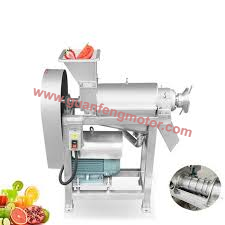
A commercial kitchen processes hundreds of kilograms of fibrous produce every week. Celery stalks leave long stringy threads behind. Ginger roots shed tough fibrous mats. Leafy greens wrap around any stationary object inside a grinding chamber. These fibers find their way under the blade assembly of a Vegetables & Fruits Grinding Machine. Once trapped, they pack tightly against the rotating shaft. The machine slows down. The motor draws high current. Production stops for cleaning. A well designed machine prevents this problem from the start. One specific feature makes the difference between smooth operation and constant jamming. What design feature on a Vegetables & Fruits Grinding Machine from guanfengmotor actually prevents fibrous vegetable matter from getting trapped under the blade assembly
The problem starts with the gap between the rotating blade and the stationary base. Most grinding machines use a flat blade that spins just above a flat bottom surface. This design creates a narrow crevice. Fibers enter this crevice during normal operation. The blade rotation pulls them deeper. They wrap around the shaft. Each revolution tightens the fiber bundle. Eventually the bundle locks the blade against the base. The motor stalls. The operator must disassemble the machine to cut away the tangled fibers. This cleaning process takes time and risks damage to the blade edges.
The solution requires eliminating the crevice or blocking fiber entry. A raised blade hub accomplishes both goals. The blade attaches to a conical or stepped hub that lifts the cutting edge away from the base surface. The gap between blade and base widens significantly. Fibers cannot reach the shaft because the raised hub blocks their path. Any fiber that passes under the blade falls into a wide open space below instead of getting trapped against the shaft. This simple geometric change transforms a machine from a fiber magnet into a free flowing grinder.
The raised hub works in combination with a curved scraper plate. The scraper sits just below the blade rotation path but above the base floor. Its edge follows the contour of the blade without contacting it. Fibers that escape the cutting zone hit the scraper plate. The scraper redirects them toward the discharge outlet instead of allowing them to settle under the blade. A machine with a scraper plate requires less frequent cleaning than one without this feature. The scraper plate also protects the base surface from wear caused by fiber friction over time.
Seal design matters equally for fiber prevention. A standard lip seal keeps liquid from leaking out of the grinding chamber. It does not stop fibers from entering the bearing housing. Fibers wrap around the shaft above the seal. They work past the seal lip as the shaft rotates. Once inside the bearing housing, fibers contaminate the grease and accelerate bearing failure. A machine with a multi lip seal or a purge port solves this problem. The purge port allows a small amount of clean water or food grade oil to flow outward through the seal. This outward flow carries fibers away from the seal entrance. The bearings stay clean for the life of the machine.
Blade geometry also affects fiber trapping. A straight blade edge pushes fibers toward the center of the grinding chamber. A curved or angled blade edge pushes fibers toward the outer wall and the discharge outlet. The direction of the curve determines where fibers accumulate. A forward curved blade pulls fibers inward toward the shaft. A backward curved blade pushes fibers outward away from the shaft. A machine designed for fibrous vegetables uses backward curved blades. This orientation keeps fibers moving toward the exit instead of toward the mechanical heart of the grinder.
The clearance between blade tips and the chamber wall creates another trapping point. A tight clearance of one millimeter or less catches fiber strands between the blade edge and the wall. Those fibers wrap around the blade tip. The bundle grows with each rotation. Eventually the blade cannot turn. A machine with increased tip clearance of three to five millimeters allows fibers to pass without catching. The wider clearance reduces grinding efficiency slightly but eliminates a major jamming source. For fibrous produce, the trade off favors reliability over absolute throughput.
Material selection for the blade and base influences how easily fibers release. Polished stainless steel with a mirror finish allows fibers to slide off surfaces. Rough cast surfaces grab fibers and hold them in place. A machine with electropolished grinding components sheds fibers during operation. The smooth surface provides nowhere for fiber residue to anchor. Cleaning between batches requires only a water rinse instead of scraping with a brush. The initial cost of electropolishing pays for itself through reduced labor hours over the machine lifetime.
Some modern machines add a reverse rotation function to clear fibers. The operator presses a button. The motor spins backward for two seconds. Backward rotation unwinds fibers that have started to wrap around the shaft. The fibers fall away from the blade assembly. The operator resumes forward grinding. This feature does not prevent initial fiber trapping but provides a quick recovery method. Machines without reverse rotation require physical disassembly to clear the same jam. The reverse function works well for stringy vegetables like celery and green beans.
The discharge outlet placement determines whether cleared fibers actually leave the machine. An outlet positioned above the blade level allows fibers to accumulate in the bottom of the chamber. An outlet positioned at the same level or below the blade uses gravity to assist fiber removal. Fibers fall directly from the blade area into the outlet stream. The machine clears itself continuously during operation. An operator watching the discharge stream sees fibers flowing out steadily without building up inside the grinding zone.
For leafy greens like spinach or kale, a separate pre cutting stage reduces fiber related problems. A whole leaf wraps around the blade shaft easily. Cutting leaves into strips before grinding shortens the fiber length. Short fibers flow through the machine without wrapping around any component. A machine with an integrated pre cutting section on the feed chute handles whole leaves without prior preparation. The pre cutter chops leaves into pieces before they reach the main grinding zone. This two stage design appears on high end machines for commercial scale vegetable processing.
The difference between a frustrating grinding session and a smooth one comes down to three design elements. A raised blade hub blocks fiber access to the shaft. A scraper plate redirects stray fibers toward the outlet. Backward curved blades push material outward. A machine containing all three features processes celery, ginger, and leafy greens without stopping for cleaning every few minutes. A machine missing any of these features creates constant jam related downtime.
To see how a Vegetables & Fruits Grinding Machine with anti trapping design handles fibrous produce, visit https://www.guanfengmotor.com/product/grain-grinding-machine/. That catalog shows machines built with raised hubs, scraper plates, and reverse rotation options. The right grinding machine turns fibrous waste into smooth puree without stopping. Choosing a machine without fiber protection turns grinding into a frustrating battle against tangled strings and wrapped shafts.

 English
 Arabic
 French
 Spanish
 Portuguese
 Deutsch
 Turkish
 Dutch
Dutch
 Italiano
 Russian
 Portuguese (Brazil)
 Greek
Greek