


Why Does a Tarun Non-Woven Fiber Wheel Work Better Than a Wire Brush for Post Heat Treat Knife Cleaning
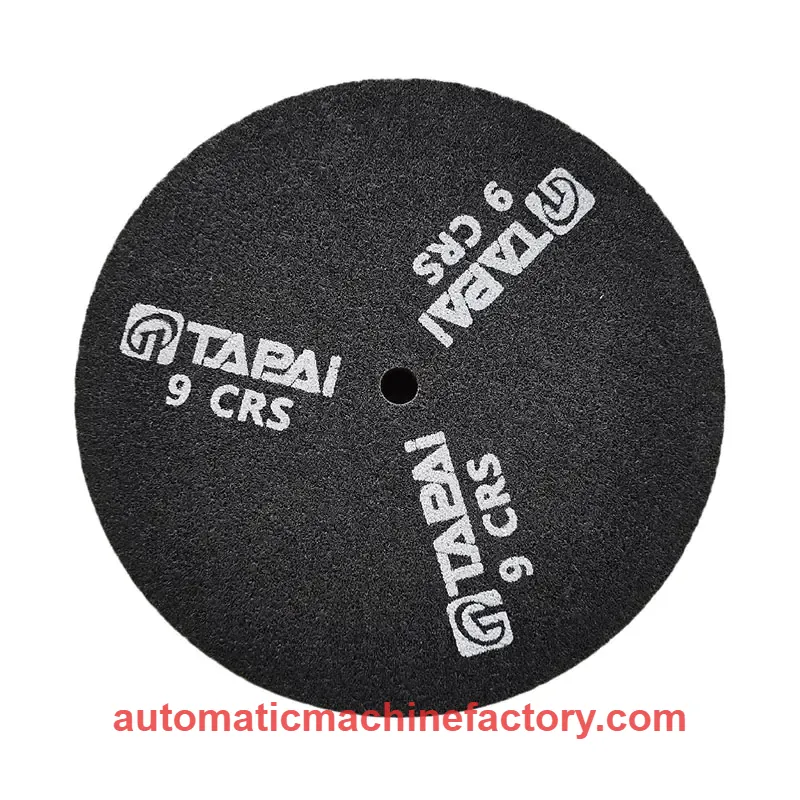
A knife maker pulls a high carbon steel blade from the heat treat oven. A dark layer of black oxide covers the entire surface. This scale must come off before final sharpening. The steel underneath shows a clean gray finish. Removing scale without touching the sharpened edge requires a careful tool choice. A wire brush removes scale but leaves deep scratches. Sandpaper removes scale but rounds the edge quickly. A Non-Woven Fiber Wheel from automaticmachinefactory offers a third path. The wheel consists of nylon fibers bonded with abrasive grain. The structure cuts scale while flexing away from the sharp edge. The wrong wheel damages hours of grinding work. Which non-woven fiber wheel specification do professional knife makers recommend for removing heat treat scale from a high carbon steel blade without rounding the sharpened edge
The fiber wheel density determines how aggressively the wheel cuts. A hard density wheel feels stiff and holds its shape under pressure. Hard wheels remove scale quickly but transfer more force to the blade edge. The edge rounds within seconds. A soft density wheel flexes easily. The fibers bend away from the thin edge. The abrasive grains touch the flat blade surface but slide past the sharp apex. Professional knife makers choose a medium to soft density wheel for scale removal. The wheel removes black oxide from the flats without changing the edge geometry.
The abrasive grit size affects both scale removal speed and edge safety. A coarse grit wheel with 60 to 80 grit cuts fast. Large abrasive particles dig into the scale layer. Those same particles strike the sharpened edge with high force. A fine grit wheel with 180 to 240 grit cuts slowly. The small particles remove scale gradually. The reduced impact force protects the edge. The trade off favors fine grit for expensive blades. A medium grit wheel of 120 grit sits between speed and safety. Most professional makers use a 180 grit non-woven wheel for post heat treat cleaning. The wheel removes scale in several passes without edge damage.
The wheel diameter changes the contact area with the blade. A large six inch wheel presents a flat surface to the blade. The wide contact area presses against the edge along its entire length. A small three inch wheel has a curved surface. The blade contacts a small point on the wheel circumference. The operator controls pressure more precisely with a small wheel. Knife makers mounting a non-woven wheel on a bench grinder often choose a four or six inch diameter. The larger wheel runs cooler and lasts longer. The trade off requires careful pressure control near the edge.
The wheel speed dramatically affects edge rounding. A high speed grinder running at 3450 RPM spins the wheel too fast. The abrasive grains strike the edge hundreds of times per second. Each strike removes a tiny amount of steel. The edge rounds before the scale comes off. A low speed grinder running at 1725 RPM cuts safer. The slower speed gives the fibers time to flex away from the edge. Some knife makers use a variable speed grinder set to 1200 RPM or lower. The reduced speed removes scale effectively while preserving the sharp edge geometry.
The pressure applied to the blade determines how much the wheel flexes. Heavy pressure presses the sharp edge into the wheel. The fibers cannot flex away fast enough. The abrasive grains grind the edge directly. Light pressure allows the wheel to skim across the scale layer. The fibers touch the high spots of black oxide. The sharp edge sits slightly recessed from the flat blade surface. A skilled operator holds the blade with fingertip pressure only. The wheel removes scale from the flats while skipping over the sharp apex.
The blade position relative to wheel rotation changes the cutting action. Holding the blade against the downward spinning side pulls the edge into the wheel. The rotation direction pushes the blade down. The operator must resist this force. Holding the blade on the upward spinning side pushes the blade away from the wheel. The rotation direction lifts the blade. The edge stays safer on the upward side. Professional knife makers place the blade on the wheel quadrant where the wheel moves away from the cutting edge. This orientation uses wheel rotation to protect the edge rather than attack it.
The number of passes through the wheel affects the final edge condition. A single heavy pass removes scale quickly but risks edge damage. Multiple light passes remove the same scale gradually. The operator stops after each pass to inspect the blade. The edge stays cool between passes. The wheel fibers relax to their original shape. A blade cleaned in ten light passes retains a sharper edge than a blade cleaned in two heavy passes. The extra time spent in multiple passes pays off in edge retention after final sharpening.
The wheel wear state changes the cutting behavior. A fresh wheel has sharp abrasive grains exposed on every fiber. The wheel cuts aggressively even with light pressure. A worn wheel has dull grains embedded in the fibers. The wheel removes scale slowly. The operator applies more pressure to maintain removal rate. The increased pressure rounds the edge. Knife makers replace non-woven wheels when the scale removal rate drops noticeably. A fresh wheel on a low speed grinder with light pressure produces the cleanest results.
The blade steel hardness after heat treat affects wheel choice. A blade hardened to 60 HRC resists edge rounding better than a blade at 55 HRC. The harder steel withstands light abrasive contact without deforming. The softer steel rolls under the same contact. Knife makers working with softer high carbon steels use finer grit wheels and lower speeds. The extra caution prevents the edge from rolling or folding. A blade that feels sharp off the wheel still needs final honing, but a rounded edge requires regrinding.
For a Non-Woven Fiber Wheel designed specifically for heat treat scale removal on knife blades, visit https://www.automaticmachinefactory.com/product/grinding-tools-and-abrasives-division/nonwoven-fiber-wheel/. That catalog shows wheels in medium density with 180 to 240 grit and speed ratings for bench grinder use. The right wheel removes black oxide from a high carbon blade in minutes. The wrong wheel destroys an hour of edge grinding. Professional knife makers know that a medium soft wheel at low speed with light pressure on the upward rotation side keeps the edge sharp while cleaning the flats. The specification difference is small in writing but huge on the finished blade.

 English
 Arabic
 French
 Spanish
 Portuguese
 Deutsch
 Turkish
 Dutch
Dutch
 Italiano
 Russian
 Portuguese (Brazil)
 Greek
Greek