


Penile Implant: Restoring Confidence and Sexual Function
Introduction
Erectile dysfunction (ED) is a condition that affects millions of men worldwide and can have a profound impact on physical intimacy, emotional well-being, and overall quality of life. While occasional difficulty achieving an erection is common, persistent erectile dysfunction may indicate an underlying medical problem that requires professional evaluation and treatment.
For many men, oral medications such as sildenafil or tadalafil successfully improve erectile function. However, some individuals do not respond to these treatments or may be unable to use them due to certain health conditions. In such cases, a penile implant offers a safe, effective, and long-lasting solution.
A penile implant, also known as a penile prosthesis, is a surgically implanted device that enables men with erectile dysfunction to achieve and maintain an erection suitable for sexual activity. Modern penile implants are highly advanced, discreet, and associated with excellent patient satisfaction rates.
This comprehensive guide explores everything you need to know about penile implants, including their purpose, types, benefits, surgical procedure, recovery process, risks, and long-term outcomes.
What Is a Penile Implant?
A penile implant is a medical device that is surgically placed inside the penis to help men achieve an erection when natural erectile function is no longer possible or reliable. Unlike medications that rely on blood flow to create an erection, penile implants provide a mechanical solution that allows a man to control when and how long he has an erection.
The implant is completely concealed inside the body and is not visible from the outside. Once healing is complete, most men can return to a normal and satisfying sex life without the need for pills, injections, or external devices.
Penile implants are typically considered when other treatments for erectile dysfunction have failed or are not suitable.
Understanding Erectile Dysfunction
Erectile dysfunction is the inability to achieve or maintain an erection firm enough for sexual intercourse. It can develop gradually or occur suddenly, depending on the underlying cause.
Common Causes of Erectile Dysfunction
Diabetes
Diabetes is one of the leading causes of erectile dysfunction. High blood sugar levels can damage blood vessels and nerves that are essential for normal erectile function.
Cardiovascular Disease
Conditions such as heart disease, high blood pressure, and atherosclerosis can restrict blood flow to the penis, making it difficult to achieve an erection.
Hormonal Disorders
Low testosterone levels and other hormonal imbalances may contribute to reduced sexual function.
Neurological Conditions
Diseases affecting the nervous system, including Parkinson’s disease, multiple sclerosis, and spinal cord injuries, can interfere with the signals necessary for erections.
Prostate Cancer Treatment
Surgery and radiation therapy for prostate cancer may damage the nerves and blood vessels involved in erectile function.
Psychological Factors
Stress, anxiety, depression, and relationship difficulties can also play a significant role in erectile dysfunction.
When these conditions result in severe or treatment-resistant erectile dysfunction, a penile implant may provide a reliable solution.
Who May Benefit from a Penile Implant?
Penile implants are generally recommended for men who:
-
Have chronic erectile dysfunction that does not improve with medication
-
Experience unsatisfactory results from injections or vacuum devices
-
Have undergone prostate cancer surgery
-
Have diabetes-related erectile dysfunction
-
Have Peyronie’s disease with significant penile curvature and erectile dysfunction
-
Desire a permanent and dependable treatment option
A thorough evaluation by a urologist is necessary to determine whether a penile implant is appropriate for an individual patient.
Types of Penile Implants
There are two primary categories of penile implants available today.
Inflatable Penile Implants
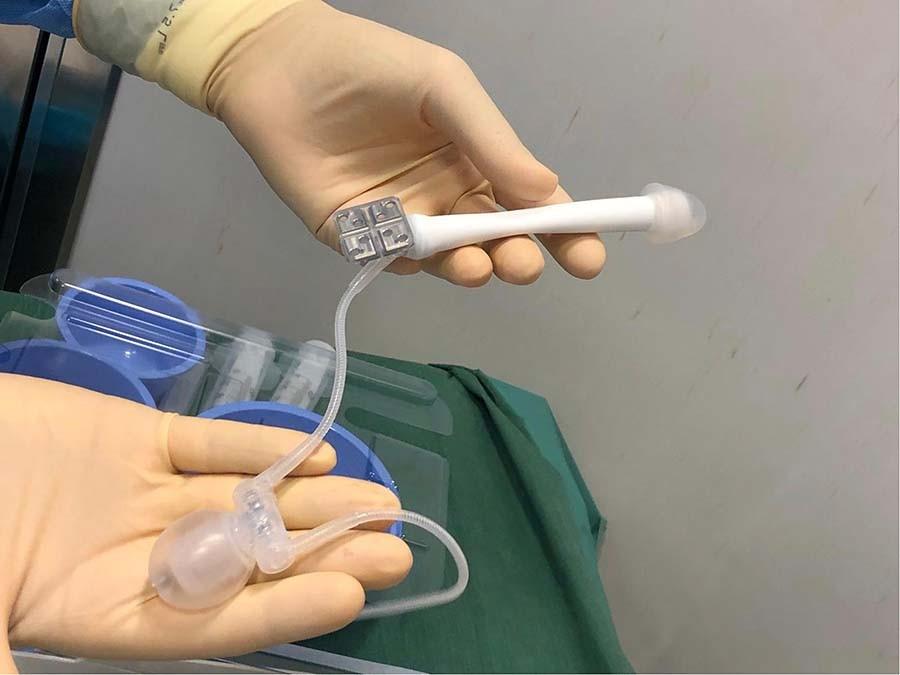
Inflatable implants are the most commonly used penile prostheses due to their natural appearance and functionality.
These implants consist of:
-
Two inflatable cylinders placed inside the penis
-
A fluid reservoir implanted in the lower abdomen
-
A small pump positioned within the scrotum
When an erection is desired, the patient squeezes the pump, transferring fluid into the cylinders. This creates a firm and natural-feeling erection. After sexual activity, a release valve allows the fluid to return to the reservoir, returning the penis to a flaccid state.
Benefits of Inflatable Implants
-
Natural appearance and feel
-
Greater control over erection firmness
-
Excellent concealment
-
High patient satisfaction rates
-
Improved spontaneity during intimacy
Malleable Penile Implants
Malleable implants consist of flexible rods surgically inserted into the penis.
The penis remains semi-rigid at all times but can be positioned upward for sexual activity and downward for concealment.
Benefits of Malleable Implants
-
Simpler surgical procedure
-
Easy to use
-
Lower cost
-
Minimal mechanical components
-
Reduced risk of device malfunction
Although less natural in appearance than inflatable implants, malleable implants remain a reliable option for many patients.
Advantages of Penile Implant Surgery
Penile implants provide several significant advantages compared to other erectile dysfunction treatments.
Consistent Results
Unlike medications that may work inconsistently, penile implants provide dependable erections whenever desired.
Long-Term Solution
Most modern penile implants remain functional for many years, making them a durable treatment option.
Increased Confidence
Restoring sexual function often improves self-esteem, emotional health, and relationship satisfaction.
Greater Spontaneity
Couples no longer need to plan intimacy around medications or injections.
High Satisfaction Rates
Penile implants consistently achieve some of the highest satisfaction rates among all erectile dysfunction treatments.
Discreet and Invisible
The implant remains entirely inside the body and cannot be detected externally.
The Penile Implant Procedure
Penile implant surgery is typically performed by a specialized urologist in a hospital or surgical center.
Preoperative Assessment
Before surgery, patients undergo:
-
Physical examination
-
Blood tests
-
Urine testing
-
Medical history review
-
Discussion of treatment expectations
The surgeon will explain the available implant options and recommend the most appropriate device.
During Surgery
The procedure is usually performed under general or spinal anesthesia and takes approximately one to two hours.
The surgeon:
-
Creates a small incision.
-
Places the implant cylinders within the erectile chambers.
-
Positions the pump and fluid reservoir if an inflatable implant is used.
-
Closes the incision carefully.
Most patients are discharged on the same day or after a brief hospital stay.
Recovery After Penile Implant Surgery
Recovery is generally smooth when postoperative instructions are followed carefully.
Immediate Recovery
Patients may experience:
-
Swelling
-
Bruising
-
Mild discomfort
-
Temporary tenderness
Pain medication and antibiotics are commonly prescribed.
First Few Weeks
During recovery, patients should:
-
Avoid heavy lifting
-
Refrain from strenuous exercise
-
Follow wound-care instructions
-
Attend scheduled follow-up appointments
Implant Activation
For inflatable implants, the device is usually activated approximately four to six weeks after surgery.
The surgeon teaches the patient how to operate the pump safely and effectively.
Resuming Sexual Activity
Most men can resume sexual intercourse within six to eight weeks following surgery.
Risks and Possible Complications
Although penile implant surgery is considered safe and effective, no surgical procedure is completely without risk.
Infection
Infection is the most serious potential complication, although it is uncommon with modern surgical techniques.
Mechanical Failure
Over time, device components may wear out and require replacement.
Bleeding and Swelling
Minor bleeding and bruising are common during the early recovery period.
Device Erosion
Rarely, the implant may erode through surrounding tissue.
Pain
Temporary discomfort is normal, but persistent pain should be evaluated by a physician.
Choosing an experienced urological surgeon significantly reduces the likelihood of complications.
Life After a Penile Implant
For many men, penile implant surgery is life-changing. After recovery, patients often report substantial improvements in their sexual health and overall quality of life.
Benefits commonly reported include:
-
Greater sexual confidence
-
Improved intimate relationships
-
Enhanced self-esteem
-
Reduced anxiety related to sexual performance
-
Reliable erectile function
Many men find that the implant allows them to enjoy a more spontaneous and satisfying sexual experience than they had with previous treatments.
Penile Implant and Sexual Function
One of the most frequently asked questions concerns how a penile implant affects sexual performance.
Sensation
A penile implant does not usually alter penile sensation.
Orgasm
Most men can continue to achieve orgasm normally.
Ejaculation
The implant does not directly affect ejaculation.
Fertility
Sperm production and fertility are generally unaffected.
Sexual Desire
The implant restores erectile function but does not increase libido. Sexual desire continues to depend on hormonal and psychological factors.
Penile Implant Versus Other Erectile Dysfunction Treatments
Oral Medications
Medications are often the first-line treatment but may not work for everyone.
Penile Injections
Injections can be effective but require self-administration before intercourse.
Vacuum Erection Devices
These devices create erections mechanically but may feel cumbersome for some patients.
Penile Implant
Penile implants provide the highest level of reliability and long-term satisfaction among available treatment options for severe erectile dysfunction.
Frequently Asked Questions
Will the implant be visible?
No. The device is completely hidden inside the body.
Can others tell I have a penile implant?
In most cases, no one can tell unless you choose to share that information.
How long do penile implants last?
Many implants remain functional for 10 to 15 years or longer.
Is the surgery painful?
Most patients experience manageable discomfort during recovery.
Can older men undergo penile implant surgery?
Yes. Healthy men of all ages may be candidates for the procedure.
Is a penile implant permanent?
Yes. It is considered a long-term solution for erectile dysfunction.
Conclusion
A penile implant is one of the most effective and reliable treatments available for men with severe erectile dysfunction. When medications, injections, and other therapies fail to produce satisfactory results, a penile prosthesis can restore erectile function, improve confidence, and significantly enhance quality of life.
Modern penile implants are discreet, durable, and associated with exceptionally high satisfaction rates among both patients and their partners. With proper evaluation, expert surgical care, and appropriate postoperative management, penile implant surgery can help men regain control of their sexual health and enjoy a fulfilling intimate life for years to come.
Men experiencing persistent erectile dysfunction should consult a qualified urologist to explore whether a penile implant may be the right solution for their individual needs.

 English
 Arabic
 French
 Spanish
 Portuguese
 Deutsch
 Turkish
 Dutch
Dutch
 Italiano
 Russian
 Romaian
 Portuguese (Brazil)