


How to Build a Profitable OnlyFans Clone App: Features, Tech Stack & Cost Breakdown
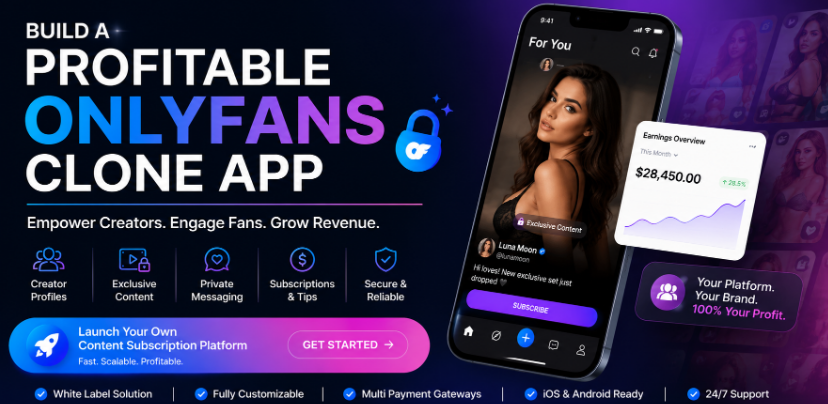
The rise of the creator economy has changed how digital platforms generate revenue. Instead of relying on ads alone, modern platforms are shifting toward subscription-driven ecosystems where creators earn directly from their audience. This shift has made the idea of building an OnlyFans clone app increasingly attractive for startups and product teams looking to enter the space.
An OnlyFans clone is not just a replica of a single platform but a broader concept: a subscription-based content-sharing app where creators can monetize exclusive content through paid memberships, tips, and direct interactions. While the idea sounds simple on the surface, building a scalable and profitable platform requires thoughtful planning around features, technology, and monetization strategy.
Understanding What An OnlyFans-like App Really Is
At its core, an app like OnlyFans is built around one primary idea—creators should be able to earn directly from their audience without relying on intermediaries. Users subscribe to creators, pay for exclusive content, or purchase special interactions.
Unlike traditional social media platforms, discovery is often secondary to monetization. The focus is on building a strong creator economy where content is gated, personalized, and recurring in nature. This is why many entrepreneurs explore an OnlyFans clone script or custom-built solution to enter this market quickly.
However, it’s important to understand that the success of such a platform depends less on copying features and more on how well the system supports creators in earning consistently while maintaining user engagement.
Features That Define a Successful Onlyfans Clone App
A strong OnlyFans clone app must balance simplicity for users with powerful monetization tools for creators. The onboarding experience should be frictionless, allowing both creators and subscribers to start interacting quickly.
User profiles play a central role. Creators need customizable profiles where they can showcase their niche, set subscription prices, and organize content. Subscribers, on the other hand, should have a clean interface that helps them discover and follow creators easily.
Monetization features are the backbone of the platform. Subscription tiers allow creators to offer different levels of access, while pay-per-view content enables one-time purchases for premium posts. Tips and private messages add an additional revenue layer, making the platform more engaging and profitable.
Content management must support multiple formats such as images, videos, and live streams. Scheduling tools help creators plan their content, while privacy controls ensure content remains secure and protected from unauthorized sharing.
Messaging features are equally important. Direct communication between creators and subscribers increases engagement and retention. Many successful platforms in this category rely heavily on chat-based monetization, where users pay for exclusive conversations or personalized content.
On the administrative side, a powerful dashboard is required to manage users, monitor transactions, handle disputes, and moderate content. Without this layer, scaling an app like OnlyFans to make money becomes difficult due to operational complexity.
Choosing the Right Tech Stack for Development
The technology behind an OnlyFans clone determines how scalable, secure, and fast the platform will be.
- Most modern platforms use a React-based frontend for web applications because of its flexibility and performance. For mobile apps, cross-platform frameworks like Flutter or React Native are commonly used since they allow faster development across iOS and Android.
- On the backend, Node.js is a popular choice due to its ability to handle real-time interactions, especially for chat and notifications. Some platforms prefer Python with Django for its security and scalability advantages. The choice often depends on the complexity of features and the long-term vision of the product.
- Databases typically include a combination of relational and NoSQL systems. PostgreSQL or MySQL is used for structured data like payments and user profiles, while MongoDB is often used for handling media metadata and scalable content storage.
- Since media is the core of an OnlyFans clone app, cloud storage solutions like AWS S3 or Google Cloud Storage are essential. A CDN layer is also required to ensure fast content delivery across regions.
- Payment integration is another critical part. Most platforms rely on Stripe or PayPal, depending on compliance and regional availability. Some also explore alternative payment systems depending on their target audience.
- Security cannot be overlooked. Two-factor authentication, encrypted messaging, and secure media storage are standard requirements. Without these, trust in the platform can quickly decline.
How Development Typically Progresses
Building an app like OnlyFans usually starts with understanding the market and defining the minimum viable product. Instead of launching with every possible feature, most startups begin with a simplified version that focuses on subscriptions, content posting, and payments.
Once the core product is defined, the design phase focuses on creating a smooth user experience. In platforms like this, design is not just about visuals but also about reducing friction in transactions and content discovery.
Development is then divided into frontend, backend, and integrations. Real-time features such as chat and notifications are added carefully because they require stable infrastructure. Testing plays a crucial role here, especially for payments and content security.
After launch, the focus shifts toward scaling. This includes optimizing performance, handling increased traffic, and improving creator retention through better monetization tools.
What It Costs to Build an Onlyfans Clone App
The cost of developing an OnlyFans clone app depends heavily on complexity, team location, and whether a custom build or OnlyFans clone script is used.
A basic MVP version typically includes user profiles, subscriptions, payments, and content uploads. This can range from tens of thousands of dollars depending on development quality and design standards.
As features expand to include live streaming, advanced analytics, recommendation systems, and enhanced security, the cost increases significantly. Platforms that aim for scale often invest in long-term infrastructure rather than just initial development.
Working with an experienced app development company can also influence cost. While agencies may charge more upfront, they often reduce risk by delivering stable architecture and faster time to market.
Using a pre-built script can reduce cost and development time, but it often comes with limitations in customization and scalability. Many businesses start with a script and later migrate to a custom solution once the platform gains traction.
Monetization Potential and Business Model
The success of an app like OnlyFans in making money depends on how well the monetization system is designed. Subscription revenue remains the core model, but additional income streams significantly increase profitability.
Creators can earn through tiered memberships, pay-per-view posts, and tips. Some platforms also introduce platform-level monetization, where the business takes a percentage of every transaction.
Over time, advanced monetization features such as promotions, featured creator listings, and exclusive content drops can further increase revenue.
However, the real challenge is not just monetization but retention. Platforms in this space succeed when creators consistently earn, and subscribers feel they are getting exclusive value.
Challenges in Building a Scalable Platform
While the opportunity is strong, building an OnlyFans clone comes with challenges that cannot be ignored.
Content moderation is one of the most critical issues, especially when user-generated content is involved. Platforms must comply with regional regulations and ensure safe usage.
Security and privacy are equally important since users share sensitive content. A single breach can severely damage trust.
Competition is another challenge. Many platforms are trying to replicate the same model, so differentiation becomes essential. This is usually achieved through niche targeting, better creator tools, or improved monetization features.
Final Thoughts
Building a profitable OnlyFans clone app is less about copying an existing platform and more about understanding the creator economy. Success depends on how effectively the platform enables creators to earn, engage, and grow their audience.
Whether you choose a custom build or an OnlyFans clone script, the focus should remain on scalability, security, and monetization flexibility. With the right strategy and execution, an app like OnlyFans can become a strong business opportunity in the growing digital content economy.

 English
 Arabic
 French
 Spanish
 Deutsch
 Turkish
 Dutch
Dutch
 Italiano
 Russian
 Romaian
 Portuguese (Brazil)
 Greek
Greek