


7 Essential Facts About Pre-Roll Packaging That Can Accelerate Your Business Growth
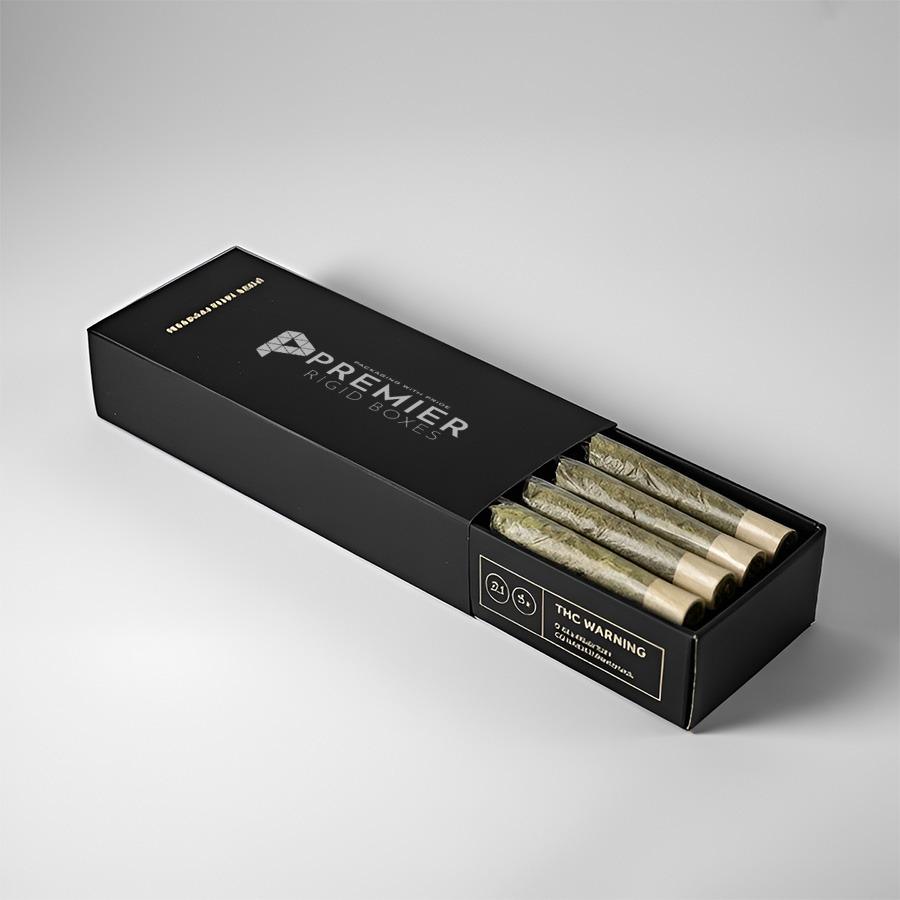
The pre-roll market has grown faster than almost anyone predicted. What started as a convenience product has become one of the most competitive categories in the cannabis industry, with brands fighting for shelf space, customer loyalty, and repeat purchases in a market that gets more crowded every single year.
Most brands focus their energy on the product itself the flower quality, the roll consistency, the burn. All of that matters. But walk into any dispensary and ask a budtender what separates the brands that move consistently from the ones that sit on the shelf, and packaging comes up almost every time. Not as the only factor. But as a factor that keeps showing up.
Here are seven facts about pre-roll packaging that are worth understanding if you're serious about building something in this space.
1. Compliance Is Not Optional and It Changes Constantly
If there's one area where pre roll packaging wholesale genuinely differs from almost every other consumer product category, it's regulation. Cannabis packaging laws vary by state, change frequently, and carry real consequences when violated. A packaging decision that was compliant last year may not be compliant today.
Most legal markets require child-resistant closures on pre-roll packaging. Many require opaque materials so the product isn't visible through the packaging. Warning labels, THC content disclosures, and net weight information aren't suggestions they're mandated, and the specific wording and placement requirements vary by jurisdiction.
The practical implication for brands is that your packaging cannot be designed purely around aesthetics. Compliance has to be built into the design from the beginning, not retrofitted after the fact. Working with a packaging supplier who understands cannabis-specific regulations in your target markets is not a luxury it's a basic requirement.
2. Protection Is the Primary Job of the Package
Pre-rolls are fragile. They break, they bend, they lose their shape when handled carelessly. Humidity is a constant threat too much and the paper gets soft and burns unevenly, too little and the flower dries out and the smoke becomes harsh. Temperature fluctuations affect both the paper and the contents.
Good pre-roll packaging solves all of these problems simultaneously. Rigid tubes whether plastic, glass, or metal protect the structural integrity of the roll during shipping and retail handling. Airtight seals maintain humidity at the right level. UV-resistant materials protect against light degradation.
A pre-roll that arrives at the customer in perfect condition, burns evenly, and tastes exactly as intended is a product that generates repeat purchases. A pre-roll that arrives bent, dried out, or damaged because the packaging failed is a product that generates complaints and lost customers. The protection function of packaging is not glamorous, but it is foundational.
3. First Impressions at the Dispensary Counter Are Made in Seconds
Dispensary customers make decisions fast. They're looking at a case full of options, often with a budtender waiting, and the window of time your packaging has to communicate something compelling is genuinely short.
What does your packaging say in three seconds? Does it communicate the strain category clearly? Does the visual design suggest the experience relaxing, energizing, social, focused? Does it look like it belongs in the premium tier or the value tier? Does it look like a brand with a point of view or like a generic product?
These aren't abstract questions. They're the actual mental process a customer runs through before they point at something and say that one. Your packaging needs to be designed with that three-second evaluation in mind, not with how it looks in a mood board presentation.
4. Multi-Pack Packaging Opens a Completely Different Revenue Channel
Single pre-rolls are where most brands start. But multi-pack pre-roll packaging three-packs, five-packs, ten-packs opens up a purchasing behavior that single units simply cannot access.
Customers who buy multi-packs are planning ahead. They're buying for the week, for a trip, for a social occasion. The average transaction value is higher, the repeat purchase cycle is longer, and the customer who buys a multi-pack is often a more engaged, more loyal customer than the one who picks up a single on impulse.
Multi-pack packaging also gives you more surface area for branding, more room for storytelling, and a format that photographs better for marketing purposes. A well-designed five-pack box looks like a considered product in a way that a single tube often cannot.
5. Sustainable Materials Are Becoming a Customer Expectation
The cannabis consumer skews younger and is generally more environmentally conscious than the average consumer across other categories. Plastic tubes that end up in landfill are increasingly a friction point not for every customer, but for enough of them that it's showing up in purchasing decisions and online reviews.
Brands that have moved toward recyclable cardboard packaging, biodegradable tubes, or glass containers with return programs are not just doing something ethically sound they're differentiating themselves in a market where most competitors haven't made that move yet. Being early to sustainable pre-roll packaging right now is a genuine competitive advantage, not just a values statement.
Hemp-based paper packaging is particularly worth noting in this category. Using hemp paper for pre-roll boxes in a cannabis brand is the kind of detail that customers notice and talk about. It connects the packaging material to the product in a way that feels completely intentional.
6. Child-Resistant Design Has Come a Long Way
Early child-resistant cannabis packaging was universally terrible. It was hard to open, looked clinical, felt cheap, and sent exactly the wrong signal about the brand inside. Complying with child-resistance requirements used to mean sacrificing every other packaging goal.
That's no longer true. Modern child-resistant pre-roll packaging is sophisticated, well-designed, and available in formats that don't compromise on aesthetics. Push-and-turn mechanisms built into premium tubes, slider boxes with hidden resistance features, magnetic closures with child-resistant secondary locks these solutions exist and they work.
There is no longer any reason to treat compliance and good design as competing priorities. The manufacturers who specialize in cannabis packaging have solved this problem. You just have to work with them.
7. Your Packaging Is a Marketing Asset, Not Just a Container
This is the fact that changes how brands think about packaging budgets. Every pre-roll that leaves your facility is a piece of marketing material that travels to a customer's home, sits on their shelf, gets seen by their friends, and potentially gets photographed and shared online.
The brands that treat packaging as a marketing asset investing in design, investing in materials, thinking about the unboxing experience, thinking about how the empty container lives in someone's space build brand recognition faster and more cheaply than brands that spend the same money on paid advertising.
A beautifully designed pre-roll packaging that a customer keeps on their desk because it looks good is doing continuous brand work for free. That kind of organic visibility has a value that's genuinely difficult to calculate but very easy to observe in how quickly certain brands build word-of-mouth in local markets.
Final Words
The pre-roll category is not getting less competitive. Every year more brands enter, margins tighten, and customer expectations rise. In that environment, the brands that treat packaging as a strategic investment not a cost to minimize are the ones that build lasting businesses.
Your packaging is often the only thing standing between your product and a customer who has never heard of you. Make it do its job properly, make it compliant, make it protective, and make it worth remembering. Everything else in your business becomes easier when the first impression is the right one.

 English
 Arabic
 French
 Spanish
 Portuguese
 Deutsch
 Turkish
 Italiano
 Russian
 Romaian
 Portuguese (Brazil)
 Greek
Greek