


Penguincup and YuNeng Explain What a Real Insulated Stainless Steel Water Bottle Manufacturer Invests In
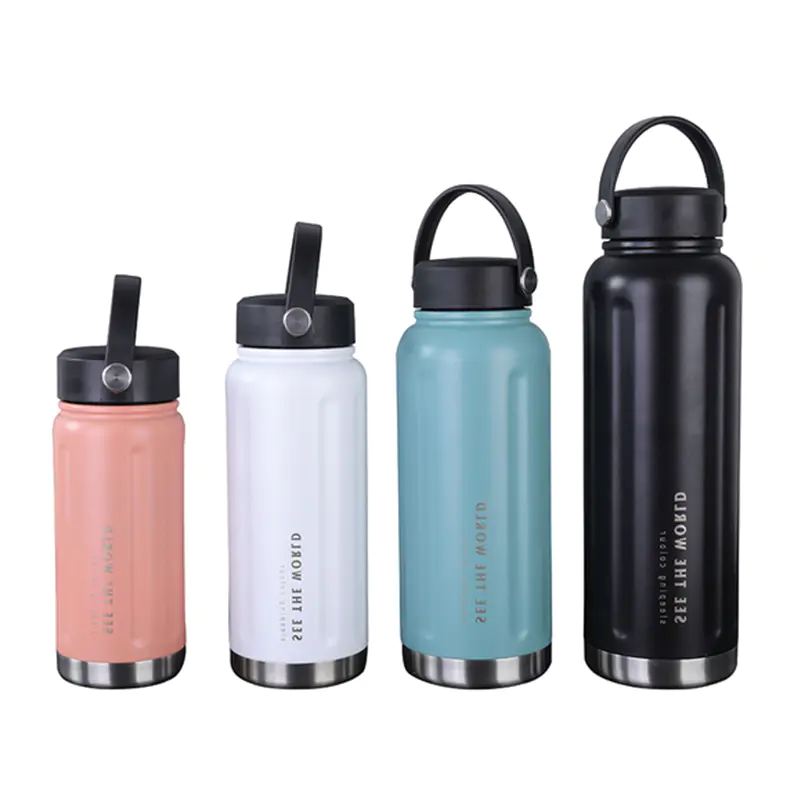
A customer once asked why two containers of identical appearance carried vastly different prices. The answer was not found in marketing claims but inside the factory walls. One production line used 304 stainless steel with consistent thickness. Another line substituted lower-grade alloy after the first sample approval. This single decision changes everything from rust resistance to structural integrity under daily use. Could a casual buyer truly distinguish these two outcomes before the third month of ownership?
The manufacturing process for any vacuum container begins with material selection. A professional Insulated Stainless Steel Water Bottle Manufacturer like Penguincup (produced by YuNeng) does not treat steel grade as negotiable. Food-grade 304 or 316L stainless steel forms the inner and outer walls. Lower-cost producers frequently request 201 stainless steel or mixed scrap material. These alternatives pass initial visual checks but fail under salt spray or extended contact with acidic beverages like coffee or juice. The price difference at the raw material stage already reaches twenty to thirty percent per ton. That gap only widens as production continues.
Tube drawing represents the next critical step. Quality-focused operations use seamless or laser-welded tubes with precise wall thickness control. A single millimeter of variation changes weight, insulation efficiency, and drop resistance. Factories pursuing minimal expenses accept wider thickness tolerances. Their containers feel lighter because the steel is thinner. That thinness accelerates heat transfer. The container may keep water warm for four hours instead of twelve. The user blames the product category rather than the manufacturing shortcut. Meanwhile, a properly drawn tube maintains consistent vacuum space across the entire body.
Vacuum extraction technology separates professional facilities from assembly workshops. True vacuum insulation requires removing air from the space between inner and outer walls. This process demands high-temperature baking followed by vacuum sealing. The equipment alone costs hundreds of thousands of dollars per unit. Some manufacturers skip the baking phase or reduce vacuum duration. Their containers reach ambient temperature within hours. A professional operation like YuNeng (owner of Penguincup) operates tailless vacuum equipment and performs laser welding to maintain seal integrity. These steps add production time and cost. They also produce containers that keep liquids hot or cold for an entire workday.
Lid assembly and sealing components represent another hidden cost layer. A functional vacuum container requires a lid that seals without leaking, opens with reasonable force, and withstands repeated washing. High-quality lids use food-grade polypropylene or Tritan with stainless steel internal parts. Rubber gaskets come from certified suppliers with consistent hardness and compression set values. Economy lids contain recycled plastics and generic gaskets that harden or crack after three months. The user experiences a leaky bag or a lid that refuses to close. The manufacturer's lower price suddenly seems less attractive.
Welding techniques affect both safety and longevity. Traditional welding leaves a visible tail at the bottom of the container. This tail creates a potential failure point for vacuum loss. Advanced operations use tailless welding equipment that removes this vulnerability. The machinery requires skilled operators and regular calibration. Factories without tailless capability produce containers that lose vacuum gradually. The user notices nothing until one morning the coffee is cold by lunch. By then, the warranty period has expired. The price difference between tailless and traditional welding represents real engineering value.
Surface finishing and coating add further cost distinctions. Powder coating costs more than simple painting but resists scratching and fading. Electrostatic application ensures uniform thickness without drips or thin spots. Low-cost producers apply single-layer paint that chips after contact with keys or table edges. The container looks worn within weeks. A professional finishing line includes pretreatment, base coat, color coat, and clear protective layer. Each stage requires separate drying ovens and quality checks. The result survives daily handling for years while maintaining its original appearance.
Testing protocols reveal the final separation between price tiers. A comprehensive quality system includes salt spray testing for corrosion resistance, thermal shock testing for sudden temperature changes, and drop testing from specified heights. Each test consumes product samples and laboratory hours. Some manufacturers perform no internal testing. They rely on customer complaints as their quality feedback loop. Others, including YuNeng's Penguincup line, operate on-site optical spectroscopy and salt spray equipment. Every production batch undergoes verification before packaging. The customer receives a container that performs as specified.
The user who pays a lower price essentially becomes the quality inspector. That role carries inconvenience at best and risk at worst. A vacuum seal failure creates no immediate danger. A lid leak onto electronic devices or important documents does. The price difference between entry-level and professional-grade containers rarely exceeds a few cups of coffee per month of use. Yet the performance gap spans years of reliable service versus seasonal replacement.
For those seeking transparent specifications and documented processes, https://www.penguincup.com/product/ displays current production lines with full material disclosure and test results. The site does not hide behind vague claims or unverifiable certifications. Every technical statement traces to a measurable factory practice. The price asked matches the cost of doing things correctly from tube drawing to final inspection. A customer may still choose a lower-priced alternative. That choice represents a personal calculation about acceptable risk and replacement frequency. Does paying less upfront truly cost less after twelve months of daily use?

 English
 French
 Spanish
 Portuguese
 Deutsch
 Turkish
 Dutch
Dutch
 Italiano
 Russian
 Romaian
 Portuguese (Brazil)
 Greek
Greek