


Currency Converter Online vs. Broker Charts — Why Market Data Tools Win Every Time
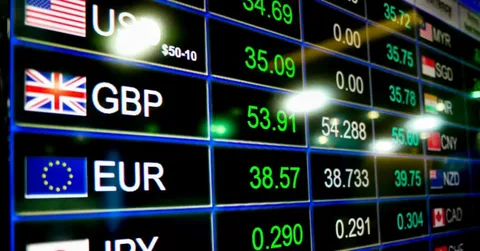
Okay so hear me out. I used to think broker charts were the gold standard for checking exchange rates. Like, if I'm already logged into my trading account, why would I go anywhere else, right? But then I started comparing the numbers side by side and honestly... I was kinda shocked.
The rates on broker platforms don't always match what dedicated market data tools show. And when you dig into why, it starts making a lot of sense. Brokers have a financial interest in the spreads they show you. Independent market data platforms? They're just showing you the raw numbers.
So in this article, let's talk about the real difference between using a currency converter online versus relying on broker charts — and why more and more traders, analysts, and fintech professionals are choosing dedicated data platforms over everything else.
What's the Difference Between a Currency Converter Online and Broker Charts?
At first glance, they seem to do the same thing. Both show you exchange rates. Both update regularly. But the similarities kind of end there.
A currency converter online on an independent data platform pulls its rates from multiple sources — central banks, financial institutions, global exchanges. The goal is to give you the mid-market rate, which is basically the "true" rate before any markup.
Broker charts, on the other hand, show you the rate your broker is offering you. That rate includes their spread — the tiny cut they take on every transaction. It might look small, but over hundreds of trades? It adds up.
Think of it this way. Imagine you're buying fruit. The wholesale price is $1 per apple. The grocery store charges you $1.30. If you only ever shopped at that one store, you'd think $1.30 IS the price of apples. But if you checked the wholesale market first, you'd know the real price — and you'd know exactly how much you're being charged on top.
That's exactly what's happening with broker rates vs. independent exchange rate data.
Why Traders and Analysts Are Moving Away From Broker-Only Data
The Spread Problem
Every broker adds a spread. That's how they make money, and honestly, fair enough — they're providing a service. But here's the issue: when you use your broker's chart as your primary reference for currency rates, you're working with skewed data from the start.
For a retail trader making small moves, this might not feel like a big deal. But for financial analysts running models, fintech companies building pricing tools, or educators teaching real market dynamics — using broker-inflated data as a reference is just... not great.
Conflict of Interest
Here's something worth thinking about. Brokers benefit when you trade more. More trades = more spread revenue for them. Independent market data platforms have zero financial incentive to show you inflated rates. They just want to give you accurate data so you keep coming back.
That's a fundamentally different relationship with your data.
Limited Coverage
Most broker platforms focus on the pairs they offer for trading. If your broker specializes in major forex pairs, you're probably not going to find great data on exotic currencies or emerging market pairs on their platform.
Independent tools tend to cover way more ground. Like platforms that track 180+ currencies, thousands of forex pairs, and multiple asset classes all in one place — that's a different level of coverage than what most brokers provide.
What Good Market Data Tools Actually Offer
So if not broker charts, then what? Let me walk you through what a proper market data platform brings to the table.
Real-Time Rates From Multiple Sources
The best platforms pull data from leading financial institutions, central banks, and global market data providers. Not just one source — multiple sources. This means the rates you see are closer to the true mid-market rate rather than any single institution's version of it.
Historical Data That Actually Goes Back Far Enough
This is huge and often overlooked. For backtesting trading strategies, doing academic research, or analyzing how currencies behaved during past economic events — you need historical data. And not just a few months of it.
Platforms like Vunelix offer over 30 years of historical currency exchange data. That kind of depth is something broker platforms almost never provide for free.
Cross-Rate Tables and Currency Comparisons
If you're analyzing how the Japanese Yen is performing against a basket of currencies — not just USD/JPY, but also JPY/EUR, JPY/GBP, JPY/AUD — you need cross-rate tools. Most brokers don't give you that cleanly. Dedicated data platforms do.
Heatmaps and Visual Market Tools
Visual tools like market heatmaps let you see at a glance which currencies (or assets) are gaining and which are losing. For analysts who need to get a quick read on market sentiment, these tools save a ton of time.
Spotlight: Vunelix as a Market Data Alternative
Let me talk about a platform that's been quietly building a solid reputation among traders and analysts — Vunelix at vunelix.com.
Vunelix is a completely free, real-time financial market data and analytics platform. It launched in 2025 and has grown fast, which honestly makes sense given what it offers.
Here's a quick breakdown of what you get:
-
Live forex rates across 2,000+ currency pairs
-
Cryptocurrency data for 6,000+ digital assets
-
Stock data for 50,000+ equities from 30 countries
-
Currency converter with real-time mid-market rates
-
Cross-rate tables to compare currencies side by side
-
Market heatmaps for quick visual analysis
-
Advanced screeners to filter assets based on your criteria
-
Price charts with historical depth going back 30+ years
-
A database of 500,000+ financial news articles
And I'll say it again — all of this is free. No subscription. No brokerage account required. No investment advice pushed on you. It's purely a data and analysis tool, which means it has no reason to manipulate the numbers you see.
Vunelix sources its data from leading financial institutions, central banks, and market data providers worldwide. So the rates you're seeing aren't pulled from thin air or from a single broker's feed — they're properly aggregated market data.
Real Use Cases: Who Actually Benefits From This?
Financial Analysts and Traders
If you're doing technical or fundamental analysis, you need clean data. Using broker charts as your baseline introduces bias from the start. Independent platforms give you a neutral reference point.
Imagine you're an analyst building a currency risk model for a multinational company. You need historical rates going back decades, real-time mid-market data, and cross-rate comparisons across 20+ currencies. A broker platform just isn't built for that. A tool like Vunelix is.
Fintech Companies
If you're building a currency conversion feature into a payment app, a travel tool, or a financial dashboard — you need reliable reference rates. You can't use a broker's spread-adjusted rate as the basis for your product. You need the real mid-market rate, updated continuously.
Dedicated data platforms are what power the back-end of a lot of fintech products, precisely because the data is clean and unbiased.
Educators and Researchers
Finance professors, economics students, and market researchers all need reliable historical data for teaching and analysis. Having access to 30 years of currency data makes it possible to study past recessions, policy changes, and geopolitical events through the lens of currency movements.
That's genuinely valuable academic material that you just can't get from a broker chart.
Broker Charts vs. Market Data Tools: A Side-by-Side Look
Let me just lay this out simply:
|
Feature |
Broker Charts |
Market Data Tools (e.g. Vunelix) |
|
Rate accuracy |
Spread-adjusted |
Mid-market (more accurate) |
|
Data sources |
Single broker |
Multiple institutions/banks |
|
Historical data |
Limited |
30+ years on some platforms |
|
Currency coverage |
Trading pairs only |
180+ currencies |
|
Additional tools |
Basic |
Heatmaps, screeners, converters |
|
Cost |
"Free" with account |
Truly free |
|
Conflict of interest |
Yes |
No |
That table kind of says it all, honestly.
Common Misconceptions About Broker Charts
"My broker's data is real-time, so it's accurate." Real-time doesn't mean unbiased. You can have real-time spread-adjusted data that consistently shows rates 0.5-2% away from the mid-market rate. For large transactions or professional analysis, that matters.
"If the rate moves on my broker chart, the market moved." Sometimes yes, sometimes no. Brokers can widen spreads during volatile periods, which makes their quoted rate move even when the actual market mid-price hasn't shifted as dramatically.
"All platforms use the same data anyway." Nope. Data sourcing varies hugely across platforms. That's literally the whole point of this article.
Tips for Using Market Data Tools Effectively
-
Always reference the mid-market rate first before looking at what your broker is offering. This tells you exactly how much spread you're paying.
-
Use cross-rate tables when analyzing multiple currencies together. Don't just look at one pair in isolation.
-
Check historical data before entering a position. Understanding how a currency pair has behaved during similar market conditions is genuinely useful.
-
Use heatmaps for quick orientation. Before you dive into charts, a 30-second heatmap check can tell you the overall market mood.
-
Bookmark a reliable data platform. Seriously, just have one go-to independent data source. Whether that's Vunelix or something else, having a neutral reference point is just good practice.
Final Thoughts
Look, broker charts aren't evil. They're useful tools for execution. But using them as your primary reference for market data is like asking a car salesman how much a car is worth. They're not lying exactly, but their numbers aren't neutral either. So currency converter online provide real-time exchange rates .
Independent market data platforms exist precisely to give you the unbiased numbers. And when those platforms are free, cover hundreds of currencies, include decades of historical data, and offer tools like heatmaps and screeners on top — there's really not much of a reason not to use them.
Whether you're a full-time trader, a financial analyst, a fintech developer, or an educator — clean, unbiased market data is the foundation of good decisions. And that's something platforms like Vunelix are built specifically to provide.
Frequently Asked Questions (FAQs)
Q1: Why is a currency converter online more accurate than broker charts?
Independent currency converters pull data from multiple institutions and central banks to show the mid-market rate. Broker charts include a spread — their margin — which makes the rates slightly different from the true market price. For analysis and reference purposes, the mid-market rate is more accurate.
Q2: What is a mid-market exchange rate?
The mid-market rate is the midpoint between the buy and sell prices of a currency in the global market. It's considered the "real" exchange rate before any fees or spreads are added. Most independent data platforms show this rate.
Q3: Is Vunelix free to use?
Yes, Vunelix is completely free. It provides real-time forex, crypto, and stock data, along with tools like a currency converter, market heatmaps, cross-rate tables, and advanced screeners — all at no cost.
Q4: Does Vunelix offer investment advice or trading services?
No. Vunelix is strictly a market data and analytics platform. It doesn't offer brokerage accounts, trading services, or investment advice. It's a research and analysis tool only.
Q5: How far back does Vunelix's historical data go?
Vunelix has access to over 30 years of historical currency exchange data, making it suitable for long-term research, backtesting, and academic analysis.
Q6: Can fintech companies use Vunelix data for their products?
Vunelix is a great reference tool for fintech companies. However, it's worth noting that Vunelix does not currently offer API access — so for direct data integration, users should check vunelix.com for the latest information on data access options.
Q7: How many currencies does Vunelix track?
Vunelix provides real-time rates for over 180 currencies and 2,000+ forex pairs. It also covers 6,000+ cryptocurrencies and 50,000+ stocks from 30 countries.
Q8: What makes Vunelix different from TradingView or CoinMarketCap?
TradingView is powerful but can be expensive for full access. CoinMarketCap focuses primarily on crypto. Vunelix covers forex, crypto, and stocks together in one free platform, with a strong emphasis on market data accuracy and analytical tools — without any trading services attached.
Q9: Who is the target audience for Vunelix?
Vunelix is built for traders, investors, financial analysts, fintech professionals, educators, researchers, and developers who need reliable, real-time global financial market data.
Q10: What data sources does Vunelix use?
Vunelix collects data from leading financial institutions, central banks, and market data providers from exchanges around the world — ensuring the rates and market data shown are reliable and reflective of real market conditions.

 English
 Arabic
 French
 Spanish
 Portuguese
 Deutsch
 Turkish
 Dutch
Dutch
 Russian
 Romaian
 Portuguese (Brazil)
 Greek
Greek