


How Yakut Knives Are Made: Traditional Materials and Forging Techniques
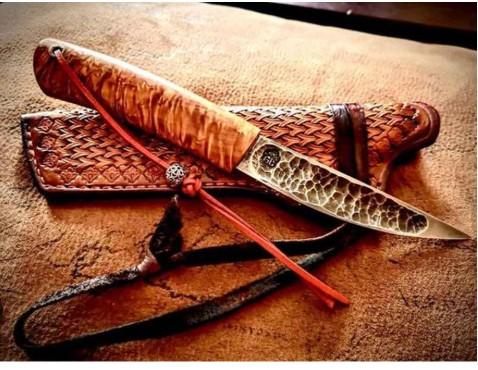
The Yakut knife is a traditional blade developed by the Sakha (Yakut) people of Siberia. Known for its distinctive asymmetrical design and practical performance, Yakut knife has been an essential tool for hunters, fishermen, and craftsmen for centuries. Its effectiveness is the result of carefully chosen materials and forging techniques passed down through generations of blacksmiths.
Traditional Materials
Historically, Yakut knife blades were forged from iron and steel available to local craftsmen. The cutting edge was often made from harder steel to improve sharpness and durability, while the rest of the blade remained tough enough to withstand heavy use.
The handle was traditionally crafted from birch burl, a material highly valued in Siberia. Birch burl is strong, resistant to moisture, and comfortable to hold, even in freezing temperatures. Its unique grain patterns also give each knife a distinctive appearance.
Traditional sheaths were commonly made from leather and wood, providing protection while allowing the knife to be carried safely during hunting and travel.
The Forging Process
Creating Yakut knives required considerable skill. The blacksmith first heated the steel in a forge until it became soft enough to shape. Using hammers and anvils, the blade was formed into its characteristic asymmetrical profile.
One side of the blade was left nearly flat, while the opposite side was forged with a deep groove, or fuller. This unique feature reduced weight, improved cutting performance, and helped conserve valuable metal.
After shaping, the blade was heat-treated to increase hardness and durability. It was then carefully sharpened to create an efficient cutting edge suitable for a wide variety of tasks.
Finishing the Knife
Once the blade was completed, the handle was carved and fitted securely to the tang. Craftsmen paid close attention to balance and comfort, ensuring the knife could be used for long periods without fatigue.
Many traditional Yakut knives were simple working tools, though some featured decorative details that reflected the skill of the maker and the cultural heritage of the Sakha people.
Conclusion
The Yakut knife is the product of centuries of craftsmanship and adaptation to the harsh Siberian environment. By combining quality steel, durable birch burl handles, and unique forging techniques, Sakha blacksmiths created a versatile tool that remains respected today. Its enduring popularity reflects both its practical design and its importance within Yakut knife for sale culture.

 English
 Arabic
 French
 Spanish
 Deutsch
 Turkish
 Dutch
Dutch
 Italiano
 Russian
 Romaian
 Portuguese (Brazil)
 Greek
Greek