


How to Identify Fake Government Job Notifications and Avoid Recruitment Scams
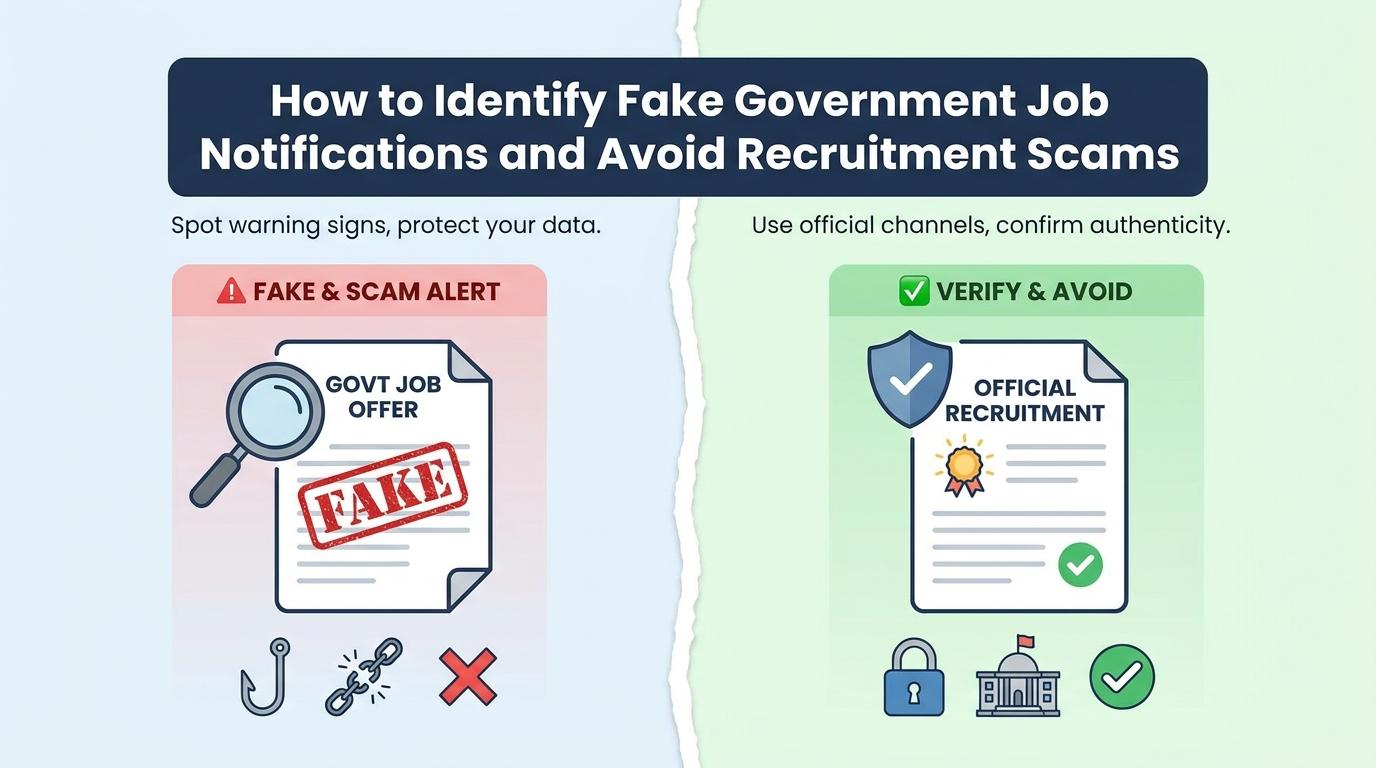
It is well known that Sarkari Naukri are still one of the most pursued career options among Indians because of job security, good salary, perks, and career growth. Thousands of vacancies in departments like UPSC, SSC, RRB, Banks, Defence Services and different state recruitment boards are published every year. Unfortunately, with the rise in the number of candidates, the incidence of fake job recruitment and fraud is also increasing.
Crooks often lure unemployed candidates using fake recruitment notifications, fake websites, fake appointment letters or through misleading social media messages. Many candidates lose money or share their sensitive personal data to unknown persons without verifying the credibility of advertisements. Hence, awareness regarding how to distinguish between a fake job advertisement and to avoid being conned is necessary for every job seeker.
Why Government Job Scams Are Increasing
In India, there is a cut-throat competition to bag Sarkari Naukri. For a few thousand posts advertised by popular recruitment examinations, lakhs of people apply. People with an aim to dupe unsuspecting candidates start luring them with the offer of selection or direct recruitment, examination paper leak or shortcut to obtain a government job.
As people largely communicate using the internet, fake advertisements can reach thousands of people instantly via WhatsApp groups, telegram channels, Facebook pages and unofficial websites. Candidates believing the information would make no further verification about the accuracy.
Common Types of Government Job Recruitment Scams
1. Fake Recruitment Notifications
Such fraudsters issue notifications or advertisements that look similar to genuine recruitment ads. These could include:
-
Wrong information of vacancies
-
Incorrect links to apply
-
Fake departments
-
Non-existent qualification requirements
-
Inflated salary package.
The applicants could unknowingly provide their personal information and/or application fee to these fake portals.
2. Fake Government Websites
These websites appear exactly like the Government portal. The logos, colours and general design are the same as in the government site so as to look genuine.
Candidates should carefully inspect the web address of the site before applying. The official government recruitment sites will usually end with the following addresses.
-
.gov.in
-
.nic.in
-
The website address of the official organizations.
All other variations are risky and should be avoided.
3. Payment for Guaranteed Jobs
One of the most frequently used scams where certain people state that they can assure government jobs if you pay them some money. They may state that:
They can provide jobs through:
-
Direct selection
-
Interview clearing
-
Exam exemptions
-
Internal selections
In fact no authentic recruitment department of any government is authorized to offer jobs in lieu of cash or influence.
4. Fake Exam Paper Leak Offer
Candidates receive fraudulent social media or messaging application messages with fake offers to leak examination papers. The fraudsters ask for monetary compensation in exchange for these materials. Besides the monetary loss incurred, it is also a criminal offense to be involved in such an activity.
5. Fake Call/Appointment letters
Some fraudster may send fake interview letter, joining letter or appointment order which often have errors in:
-
Spelling
-
Wrong name of department
-
Incorrect signatures
-
Unofficial e-mails
These should always be cross-checked with the official website.
Warning Signs of a Fake Government Job Notification
Red flags should alert the candidate against fraudulent opportunities.
Excessively High Salary Offer
Salary in government is decided by grade pay and recruitment regulations. Therefore, if there's a notification advertising an unrealistically high salary for a basic level post, one needs to examine it with caution.
No Official advertisement No
Every authentic government recruitment advertisement comes with a recruitment/advertisement No. In case the notification is absent from the list, consider it to be a fraud.
Requests for Advance Payments
Genuine placement agencies may ask for an application fee as set by their terms by accepting payment through official payment gateways. However, any government department does not charge any additional amount of money for:
-
Selection
-
Appointment
-
Interview scheduling
-
Verification of documents
Poor Language and Formatting
All official notifications pass through many levels of verification. Errors in grammar, spelling, badly formatted advertisements often signal scam.
False claims of urgency
Fake advertisements lure the potential candidates using terms such as:
-
Only a few vacancies
-
Joining on immediate basis
-
Appointment assured in a short period.
Government recruitment follows lengthy, multi-stage procedures.
How to Verify a Government Job Notification
Check the Official Website
The most secure way to check about any vacancy is to confirm it through the official website of the recruiting body.
Always ensure by cross checking all these:
-
Vacancy particulars
-
Eligibility criteria
-
Application deadlines
-
Selection procedure
-
Official notification in PDF format
Any notification not displayed on the official website must be treated as doubtfully valid.
Verify Through Employment News
A majority of large-scale government recruitments will be declared via employment bulletins or recruitments web-sites. It would be a sensible move for a candidate to cross check information through authoritative resources.
Verify the Contact Details
Official communication will be characterized by the following official contacts:
-
Address of department
-
Official e-mail IDs
-
Helpdesk numbers
Use a yellow flag when an communication is happening solely via personal mobile numbers or unofficial e-mail addresses
Check Social Media Carefully
Government departments are increasingly present on verified social media. Official websites should be relied upon instead of screenshots or forward messages.
Protection of personal information
Scammers target the victim's personal information. Never give details of:
-
Aadhaar numbers (if not required)
-
Bank details
-
ATM PINs
-
OTPs
-
Passwords
-
Credit/Debit card details
Legitimate recruitment agencies will never ask you to share your bank password or other banking details.
What to Do If You Suspect a Scam
If you get any fraudulent message:
-
Never send any payment to anyone.
-
Verify the vacancy from the legitimate website itself.
-
Never click on any suspicious link.
-
Report any such website or message.
-
Inform all the other candidates about it.
-
Take screenshots of any message or communication.
This will definitely help others avoid any kind of scam.
Safe Practices for Government Job Aspirants
To stay protected during the recruitment process, candidates should follow these practices:
-
Use only the official websites.
-
Read the whole notification before applying.
-
Check the website URLs thoroughly.
-
Stay away from unofficial agents or intermediaries.
-
Never pay for a guaranteed selection.
-
Check only authorized recruitment bodies.
-
Keep a copy of all the official notifications and receipts of application.
-
Set up an efficient password while creating a recruitment account.
If approached carefully, risk of cheating will be minimized.
Conclusion
Government recruitment frauds are very high these days. Forgers send out fake job announcements, appointment letters, offer false selection reports to tempt job seekers to fall into their trap. Vacancy status must always be confirmed from official government websites and no payments must be made in the name of recruitment. Sarkari Naukri are completely transparent with recruitment processes carried out on the basis of merit. Informed job seekers should always remain alert and not get duped.

 English
 Arabic
 French
 Spanish
 Portuguese
 Turkish
 Dutch
Dutch
 Italiano
 Russian
 Romaian
 Portuguese (Brazil)
 Greek
Greek