


Data Analytics Methods to Improve Taxi App Performance
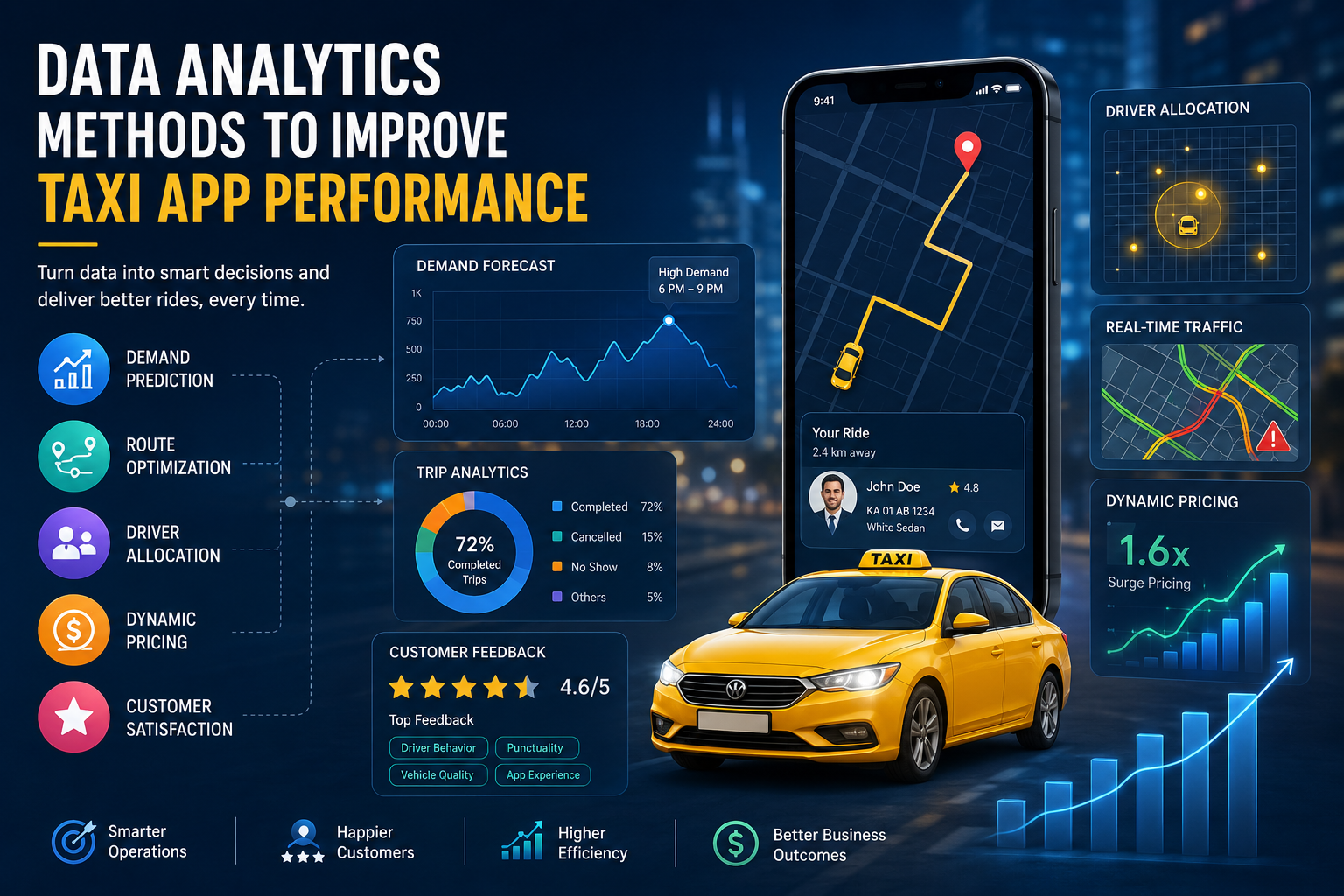
In the highly competitive ride-hailing industry, app performance plays a crucial role in determining customer satisfaction, operational efficiency, and business growth. Modern taxi platforms generate enormous amounts of data every day, including ride requests, driver activity, route information, payment records, and customer feedback. By analyzing this data effectively, businesses can identify patterns, predict demand, reduce inefficiencies, and improve user experiences. Data analytics has become a powerful tool that helps operators make informed decisions while continuously optimizing every aspect of their taxi app ecosystem.
Key Industry Statistics Showing Data-Driven Mobility Growth
Data analytics is rapidly transforming transportation and mobility services worldwide. Consider the following industry insights:
-
Studies indicate that predictive analytics can improve demand forecasting accuracy by more than 20%.
-
Real-time route optimization can reduce travel time by up to 15% in urban areas.
-
Customer retention rates often increase significantly when businesses use behavioral analytics for personalized experiences.
-
Dynamic pricing models powered by analytics help balance rider demand and driver availability during peak hours.
-
Fleet operators using advanced analytics report lower operational costs through improved resource allocation.
-
Data-driven decision-making allows transportation businesses to respond faster to market changes and customer expectations.
These figures demonstrate how analytics contributes directly to operational improvements and service quality enhancement.
Understanding Rider Behavior Through Advanced Data Insights
Understanding customer behavior is one of the most valuable applications of analytics in taxi services. Every interaction within the platform provides useful information about rider preferences, booking habits, travel frequency, and service expectations.
Businesses can analyze:
-
Frequently traveled routes
-
Peak booking times
-
Preferred payment methods
-
Ride cancellation patterns
-
Customer loyalty trends
By examining these data points, companies can create more personalized experiences for users. For example, riders who regularly travel during specific hours may receive tailored service recommendations. Similarly, identifying common cancellation reasons helps improve booking workflows and reduce friction in the customer journey.
Behavioral analytics also helps operators understand the factors influencing user satisfaction. Metrics such as ride completion rates, app engagement, and customer reviews provide valuable indicators of overall service quality.
Many organizations collaborate with a taxi booking app development company to integrate advanced analytics frameworks that capture and process customer behavior data efficiently.
Predicting Ride Demand with Machine Learning Techniques
One of the most important challenges in taxi operations is matching supply with demand. Demand fluctuations can create long wait times for passengers and idle periods for drivers.
Machine learning algorithms analyze historical booking patterns, weather conditions, local events, traffic trends, and seasonal factors to forecast future ride demand. These predictive models enable operators to position drivers strategically before demand spikes occur.
Benefits of demand prediction include:
-
Reduced passenger wait times
-
Better driver utilization
-
Improved service availability
-
Increased ride completion rates
-
Enhanced operational efficiency
For instance, analytics can identify areas likely to experience increased ride requests due to concerts, sporting events, or business conferences. Operators can then deploy additional drivers in those regions before demand rises.
Predictive analytics transforms reactive decision-making into proactive planning, resulting in a smoother experience for both riders and drivers.
Optimizing Driver Allocation and Fleet Management Systems
Efficient driver allocation is essential for maintaining service quality and profitability. Data analytics helps businesses determine where drivers should be positioned based on anticipated demand and historical ride patterns.
Advanced fleet management systems analyze:
-
Driver availability
-
Ride acceptance rates
-
Average trip durations
-
Location density
-
Driver performance metrics
Using these insights, platforms can improve driver distribution across service areas. Proper allocation minimizes empty trips, reduces fuel consumption, and improves earnings opportunities for drivers.
Analytics also helps identify underperforming regions where service coverage may be insufficient. Managers can use this information to adjust operational strategies and improve geographic coverage.
Organizations seeking scalable mobility solutions often explore a white label taxi app because it allows faster deployment while still supporting advanced analytics and fleet optimization capabilities.
Improving Route Efficiency Using Real-Time Traffic Analytics
Route optimization is another area where analytics delivers substantial value. Traffic congestion, road closures, accidents, and construction activities can significantly impact ride duration and customer satisfaction.
Real-time traffic analytics combines multiple data sources to identify the fastest and most efficient routes. These systems continuously update routing recommendations as traffic conditions change.
Key advantages include:
-
Shorter travel times
-
Reduced fuel expenses
-
Improved driver productivity
-
Better customer experiences
-
Increased ride completion efficiency
Analytics-driven routing systems evaluate thousands of variables simultaneously, enabling more accurate navigation decisions than traditional mapping approaches.
In addition to benefiting individual rides, route data contributes to broader operational planning. Companies can identify recurring congestion zones and develop long-term strategies to mitigate their impact on service performance.
A taxi booking app development company often incorporates real-time traffic intelligence features to help transportation platforms achieve greater operational efficiency.
Enhancing Pricing Models Through Dynamic Data Analysis Methods
Pricing significantly influences customer demand and driver participation. Static pricing models often fail to account for rapidly changing market conditions.
Dynamic pricing systems rely on analytics to evaluate factors such as:
-
Current demand levels
-
Driver availability
-
Traffic conditions
-
Local events
-
Time of day
-
Historical ride patterns
By analyzing these variables, platforms can adjust fares in real time to maintain equilibrium between supply and demand.
Effective pricing analytics offers several benefits:
-
Balanced marketplace conditions
-
Improved service availability
-
Increased operational sustainability
-
Better driver engagement
-
Reduced demand-supply mismatches
The goal is not simply to increase fares but to create a stable ecosystem where riders can access transportation when needed and drivers remain motivated to provide services.
Advanced analytical models continuously learn from new data, improving pricing accuracy over time and helping businesses adapt to evolving market dynamics.
Using Customer Feedback Analytics to Improve Satisfaction
Customer feedback provides direct insight into service performance. Reviews, ratings, complaints, and support interactions contain valuable information that can guide improvement efforts.
Natural language processing and sentiment analysis technologies help businesses evaluate large volumes of feedback efficiently. These tools identify recurring themes, emerging issues, and areas requiring attention.
Common categories analyzed include:
-
Driver behavior
-
App usability
-
Ride quality
-
Payment experiences
-
Customer support effectiveness
Instead of manually reviewing thousands of comments, analytics platforms automatically categorize feedback and highlight priority concerns.
For example, if users consistently report problems with booking confirmation delays, operators can investigate technical issues within the application. Similarly, recurring complaints about specific service areas may indicate operational challenges requiring targeted solutions.
Businesses that hire taxi app developers with expertise in analytics integration can create feedback systems that transform customer opinions into actionable insights.
Reducing Operational Costs Through Predictive Analytics Models
Cost optimization is a major objective for transportation businesses. Predictive analytics helps identify inefficiencies before they become expensive problems.
Several operational areas benefit from predictive analysis:
-
Vehicle maintenance scheduling
-
Driver utilization planning
-
Resource allocation
-
Fraud detection
-
Infrastructure management
Predictive maintenance models analyze vehicle performance data to identify signs of potential mechanical issues. Early detection reduces unexpected breakdowns and minimizes repair costs.
Fraud detection systems use analytics to identify unusual transaction patterns, suspicious ride activity, and payment anomalies. These systems help protect both businesses and customers from financial losses.
Organizations also use predictive models to forecast future resource requirements. Accurate forecasting prevents overinvestment while ensuring adequate capacity during periods of growth.
A taxi booking app development company can support these initiatives by implementing scalable analytics architectures capable of processing large operational datasets efficiently.
Measuring App Performance with Comprehensive Analytics Dashboards
Data collection alone is not enough. Businesses must convert information into meaningful insights through comprehensive reporting and visualization tools.
Analytics dashboards provide centralized visibility into key performance indicators, including:
-
Daily ride volume
-
Active users
-
Driver activity
-
Revenue trends
-
Customer retention
-
Average response times
-
Ride completion rates
These dashboards enable decision-makers to monitor performance in real time and respond quickly to emerging challenges.
Effective performance measurement should include both operational and customer-focused metrics. Combining these perspectives provides a complete view of platform health and service quality.
Analytics dashboards also support continuous improvement by tracking the impact of new features, policy changes, and operational adjustments. This evidence-based approach allows organizations to refine strategies using measurable outcomes rather than assumptions.
When evaluating the cost to build taxi app solutions, businesses increasingly prioritize robust analytics capabilities because they provide long-term operational advantages and measurable performance improvements.
Building Smarter Mobility Platforms Through Data-Driven Decisions
The future of taxi applications depends heavily on data-driven decision-making. As user expectations continue to evolve, transportation providers must leverage analytics to remain competitive and efficient. From demand forecasting and route optimization to customer satisfaction analysis and cost reduction, data analytics influences nearly every aspect of platform performance. Organizations that embrace analytical methodologies gain deeper operational visibility, improve service reliability, and create more responsive user experiences. By transforming raw data into actionable intelligence, taxi platforms can continuously adapt, innovate, and deliver higher levels of efficiency in an increasingly dynamic mobility landscape.

 English
 Arabic
 French
 Spanish
 Portuguese
 Deutsch
 Turkish
 Dutch
Dutch
 Italiano
 Russian
 Romaian
 Greek
Greek