


Laparoscopic Hernia Surgery Explained: Procedure, Benefits & Recovery
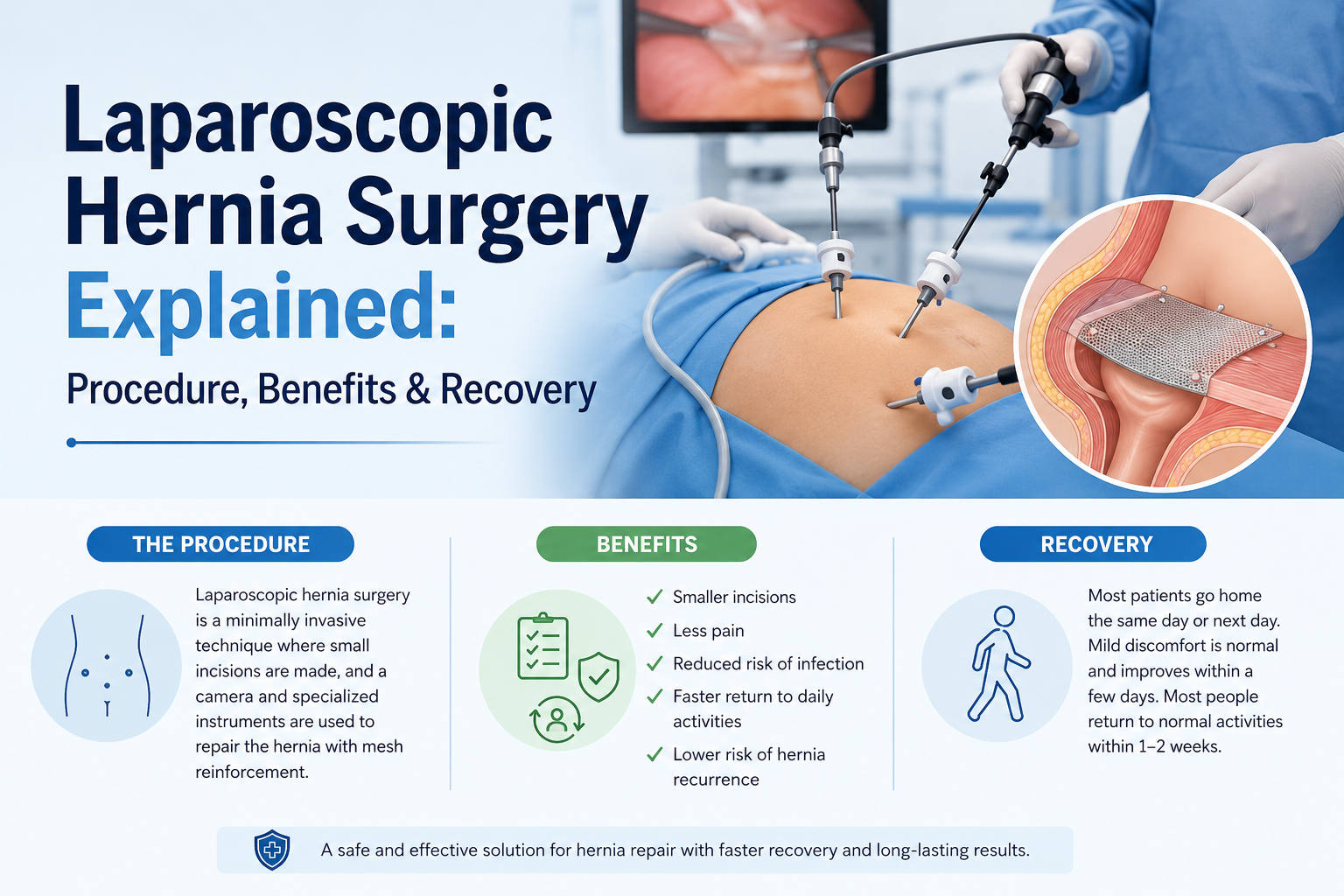
Hernia is a common medical condition that affects people of all ages. It develops when an internal organ or fatty tissue pushes through a weak area in the surrounding muscle or connective tissue. While some hernias remain painless for years, many gradually become larger and more uncomfortable, eventually requiring surgical treatment. Today, minimally invasive techniques have transformed hernia repair, offering patients faster recovery and reduced discomfort. If you are searching for Laproscopic Hernia Surgery in Jaipur, understanding the procedure, its benefits, and the recovery process can help you make an informed healthcare decision.
What Is a Hernia?
A hernia occurs when a portion of an internal organ or tissue protrudes through a weakened area in the abdominal wall or surrounding muscles. Hernias do not usually heal on their own and often become larger over time. Although lifestyle changes may help reduce symptoms temporarily, surgery remains the only permanent solution.
Several factors can contribute to the development of a hernia, including:
-
Weak abdominal muscles
-
Heavy lifting without proper support
-
Obesity
-
Chronic coughing
-
Persistent constipation
-
Pregnancy
-
Previous abdominal surgery
-
Aging
Recognizing the symptoms early can prevent complications and make treatment easier.
Common Types of Hernias
Different types of hernias affect different areas of the body. The most commonly diagnosed include:
Inguinal Hernia
This is the most common type, especially in men. It occurs when tissue pushes through a weak spot in the groin area.
Femoral Hernia
More frequently seen in women, femoral hernias develop just below the groin.
Umbilical Hernia
These occur near the belly button and are common in infants as well as adults with weakened abdominal muscles.
Incisional Hernia
An incisional hernia develops through the scar of a previous abdominal surgery where the muscles have weakened.
Hiatal Hernia
Unlike other hernias, a hiatal hernia occurs when part of the stomach moves upward through the diaphragm into the chest cavity.
Symptoms of a Hernia
Symptoms vary depending on the type and severity of the hernia. Some people may notice only a small lump, while others experience significant discomfort.
Common symptoms include:
-
A visible bulge under the skin
-
Pain while lifting heavy objects
-
Burning or aching sensation
-
Groin discomfort
-
Feeling of pressure or heaviness
-
Swelling around the affected area
-
Pain that worsens while coughing or standing
If the hernia becomes trapped or loses its blood supply, it becomes a medical emergency requiring immediate surgery.
When Is Surgery Necessary?
Doctors usually recommend surgery when:
-
The hernia causes persistent pain.
-
The bulge becomes larger.
-
Daily activities become uncomfortable.
-
There is a risk of strangulation.
-
The hernia cannot be pushed back inside.
Delaying surgery may increase the chances of complications and make treatment more complex.
What Is Laparoscopic Hernia Surgery?
Laparoscopic hernia surgery is a minimally invasive surgical procedure used to repair hernias through very small incisions instead of one large cut.
During the procedure, the surgeon inserts a tiny camera called a laparoscope through a small incision. This camera displays high-definition images on a monitor, allowing the surgeon to repair the hernia using specialized surgical instruments.
A surgical mesh is generally placed over the weak area to strengthen the abdominal wall and reduce the chances of recurrence.
Because the incisions are much smaller than traditional surgery, patients usually experience less pain and recover more quickly.
Step-by-Step Procedure
Understanding each stage of the surgery helps reduce anxiety before the operation.
1. Preoperative Evaluation
Before surgery, your doctor performs:
-
Physical examination
-
Blood tests
-
ECG if required
-
Chest X-ray
-
Medical history review
-
Medication assessment
Patients receive instructions regarding fasting and temporary discontinuation of certain medications.
2. Administration of Anesthesia
Laparoscopic hernia surgery is generally performed under general anesthesia, ensuring the patient remains asleep throughout the procedure.
3. Small Incisions
The surgeon creates two to four tiny incisions in the abdomen.
4. Carbon Dioxide Inflation
The abdominal cavity is gently inflated using carbon dioxide gas. This creates sufficient working space for the surgical instruments.
5. Camera Insertion
A laparoscope equipped with a miniature camera provides a clear view of the hernia and surrounding tissues.
6. Hernia Repair
The protruding tissue is carefully returned to its normal position.
7. Mesh Placement
A synthetic mesh is positioned over the weakened muscle to reinforce the abdominal wall.
8. Closing the Incisions
The instruments are removed, and the small incisions are closed with stitches or surgical glue.
The entire procedure generally takes between 30 minutes and two hours, depending on the complexity of the hernia.
Benefits of Laparoscopic Hernia Surgery
One of the biggest reasons laparoscopic surgery has become increasingly popular is its numerous advantages over conventional open surgery.
Smaller Incisions
Tiny cuts leave minimal scarring compared to traditional surgical methods.
Less Pain
Patients usually experience significantly less postoperative discomfort because of reduced tissue damage.
Faster Recovery
Most individuals return to normal daily activities much sooner.
Lower Risk of Infection
Smaller wounds reduce exposure to bacteria and promote faster healing.
Shorter Hospital Stay
Many patients are discharged on the same day or within 24 hours.
Reduced Blood Loss
The minimally invasive approach minimizes bleeding during surgery.
Better Cosmetic Results
Tiny scars are often barely noticeable after complete healing.
Lower Risk of Hernia Recurrence
When performed correctly using surgical mesh, recurrence rates are generally low.
Who Is an Ideal Candidate?
Laparoscopic hernia surgery is suitable for many patients, particularly those with:
-
Bilateral hernias
-
Recurrent hernias
-
Small to medium-sized hernias
-
Good overall health
-
Desire for quicker recovery
However, some individuals with very large or complicated hernias may benefit more from open surgery. Your surgeon will recommend the most appropriate option after evaluation.
Possible Risks
Although laparoscopic surgery is considered very safe, every surgical procedure carries some risks.
Potential complications include:
-
Infection
-
Bleeding
-
Temporary swelling
-
Fluid collection
-
Mesh-related issues
-
Injury to nearby organs
-
Recurrence of the hernia
-
Anesthesia-related complications
Fortunately, serious complications are uncommon when surgery is performed by an experienced surgeon.
Recovery After Surgery
Recovery following laparoscopic hernia repair is generally quicker than traditional surgery.
First 24 Hours
Patients may experience:
-
Mild pain
-
Slight abdominal bloating
-
Fatigue
-
Shoulder discomfort caused by residual gas
Walking is encouraged within a few hours after surgery to improve circulation and reduce the risk of blood clots.
First Week
During the first week:
-
Pain gradually decreases.
-
Light walking is encouraged.
-
Driving should be avoided until approved by the surgeon.
-
Heavy lifting must be avoided.
Two to Four Weeks
Most patients:
-
Return to office work
-
Resume light exercise
-
Feel significantly more comfortable
Four to Six Weeks
With medical approval, patients can usually resume:
-
Gym workouts
-
Running
-
Sports
-
Heavy lifting
Recovery speed varies depending on age, overall health, and the size of the hernia.
Diet After Hernia Surgery
Proper nutrition supports faster healing.
Recommended foods include:
-
Fresh fruits
-
Green vegetables
-
Whole grains
-
Lean protein
-
Eggs
-
Fish
-
Yogurt
-
Plenty of water
Avoid:
-
Fried foods
-
Excessively spicy meals
-
Alcohol
-
Smoking
-
Foods causing constipation
A fiber-rich diet reduces strain during bowel movements, helping protect the surgical repair.
Tips for Faster Recovery
Following your surgeon's advice plays an important role in successful healing.
Helpful recovery tips include:
-
Walk several times daily.
-
Take medications exactly as prescribed.
-
Keep surgical wounds clean and dry.
-
Avoid lifting heavy objects.
-
Drink enough water.
-
Eat balanced meals.
-
Attend all follow-up appointments.
-
Stop smoking if possible.
These habits promote healing and lower the risk of complications.
Can a Hernia Return After Surgery?
Although modern repair techniques significantly reduce recurrence, no surgery can guarantee a lifetime prevention.
Recurrence may occur due to:
-
Heavy lifting too early
-
Obesity
-
Smoking
-
Persistent coughing
-
Chronic constipation
-
Poor tissue healing
Maintaining a healthy lifestyle and following postoperative instructions greatly reduces this risk.
When Should You Contact Your Doctor?
Seek immediate medical attention if you notice:
-
High fever
-
Severe abdominal pain
-
Persistent vomiting
-
Increasing redness around the incision
-
Excessive swelling
-
Continuous bleeding
-
Difficulty urinating
-
Sudden enlargement of the surgical area
Prompt treatment can prevent serious complications.
Final Thoughts
Laparoscopic hernia surgery has revolutionized the treatment of hernias by offering smaller incisions, reduced pain, quicker recovery, and excellent long-term outcomes. For most patients, it provides a safe and effective solution that allows them to return to normal life with minimal disruption. Choosing an experienced surgeon, following postoperative instructions, and maintaining healthy habits all contribute to successful healing and long-lasting results. If you are considering Multispecialty Hospital in Jaipur, understanding the procedure and recovery process can help you approach treatment with greater confidence and peace of mind.

 English
 Arabic
 French
 Portuguese
 Deutsch
 Turkish
 Dutch
Dutch
 Italiano
 Russian
 Romaian
 Portuguese (Brazil)
 Greek
Greek