


Signs Your Building Needs Column Jacketing Services
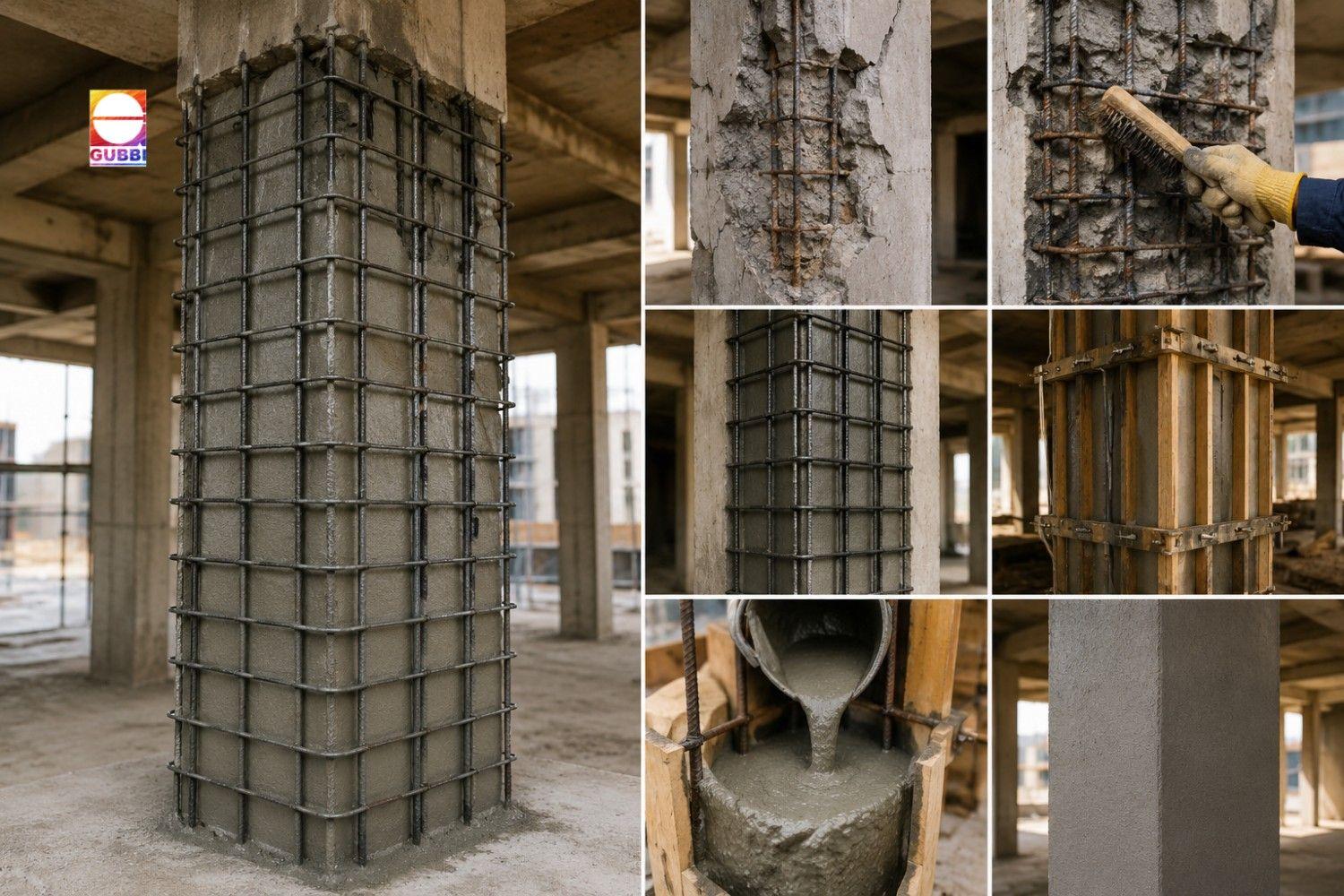
Buildings, industrial facilities, bridges, and commercial structures experience deterioration over time due to environmental exposure, increased loading requirements, aging materials, and construction defects. Building rehabilitation has become an essential requirement for maintaining safety, extending service life, and improving performance without complete reconstruction. Among the most effective strengthening techniques used worldwide, Column Jacketing, Concrete Jacketing, and Steel Jacketing have proven highly reliable for restoring structural integrity and increasing load-carrying capacity.
Property owners, facility managers, and engineers frequently seek practical strengthening methods that minimize operational disruptions while delivering long-term durability. Structural strengthening techniques provide a cost-effective alternative to demolition and reconstruction, making them increasingly popular across industrial, commercial, residential, and infrastructure projects. Understanding how these rehabilitation methods work can help stakeholders make informed decisions when addressing structural deficiencies and deterioration.
Understanding Structural Jacketing Techniques
Structural jacketing refers to the process of adding supplementary materials around existing structural members to improve their strength, stiffness, durability, and resistance to external forces. The technique is commonly applied when buildings exhibit signs of distress, cracking, corrosion damage, reduced load capacity, or seismic vulnerability.
The primary objective of structural rehabilitation is to restore or enhance the performance of critical structural elements without replacing the entire structure. Depending on project requirements, engineers may choose Structural Strengthening, Column Strengthening, Concrete Repair, or Building Rehabilitation solutions that address specific structural challenges. Proper assessment and design are essential to ensure the selected strengthening method delivers the desired results while maintaining overall structural stability.
What Is Column Jacketing?
Column Jacketing is a widely adopted strengthening method used to enhance the load-bearing capacity and performance of existing columns. The technique involves increasing the cross-sectional area of a column by surrounding it with additional reinforcing materials such as reinforced concrete, steel sections, or advanced composite systems.
Many buildings require column strengthening due to increased floor loads, design modifications, structural deterioration, or seismic upgrading requirements. By enlarging and strengthening existing columns, engineers can significantly improve compressive strength, flexural capacity, and overall structural resilience. This method is especially useful for aging buildings where replacing columns would be technically challenging and economically impractical.
Benefits of Column Jacketing
One of the major advantages of column jacketing is its ability to restore structural safety without causing extensive disruption to building operations. The process allows existing structures to continue functioning while rehabilitation work progresses in designated areas.
Column jacketing improves load distribution, reduces stress concentrations, and increases structural stability. It also enhances resistance against lateral forces generated during earthquakes or wind events. Additionally, properly designed strengthening systems can extend the service life of structures by several decades, making them a preferred solution for asset owners seeking long-term reliability and performance.
Concrete Jacketing: A Proven Rehabilitation Method
Concrete Jacketing is among the most commonly used techniques for strengthening reinforced concrete members. The process involves adding a new layer of reinforced concrete around existing columns, beams, or structural elements. Additional reinforcement bars are installed before placing the new concrete, creating a stronger composite section.
This method is frequently recommended for structures experiencing inadequate reinforcement, reduced load capacity, concrete deterioration, or design deficiencies. Engineers often utilize concrete jacketing in residential towers, industrial facilities, parking structures, and commercial buildings where enhanced strength and durability are required. The technique effectively improves both axial and flexural performance while increasing structural stiffness.
Advantages of Concrete Jacketing
Concrete jacketing offers excellent compatibility with existing reinforced concrete structures, making it a practical rehabilitation option. The added concrete layer provides increased protection against environmental exposure, moisture penetration, and reinforcement corrosion.
Another significant advantage is its ability to substantially increase load-carrying capacity. Buildings undergoing expansion or change of occupancy often require structural upgrades to accommodate higher loads. Concrete jacketing enables engineers to meet these demands without extensive reconstruction. The technique also contributes to improved fire resistance and long-term durability, making it suitable for a wide range of applications.
Steel Jacketing for High-Performance Strengthening
Steel Jacketing is a strengthening technique that involves enclosing structural elements with steel plates, steel angles, or fabricated steel sections. The steel components are securely connected to the existing structure, creating a composite system capable of resisting higher loads and improving structural performance.
Steel jacketing is particularly beneficial when rapid strengthening is required or when space constraints limit the use of concrete enlargement methods. Industrial plants, bridges, warehouses, and high-rise buildings often utilize steel jacketing because of its ability to provide substantial strength enhancement while maintaining relatively compact dimensions.
Key Benefits of Steel Jacketing
One of the primary advantages of steel jacketing is its high strength-to-weight ratio. The technique delivers significant structural improvement without adding excessive dead load to the building. This characteristic makes it highly effective for structures with foundation limitations.
Steel jacketing also enables faster installation compared to some conventional strengthening methods. Fabricated steel components can be manufactured off-site and installed efficiently during planned shutdowns or maintenance periods. Furthermore, the technique offers excellent confinement to existing columns, improving ductility and enhancing seismic performance in earthquake-prone regions.
Common Reasons Structures Require Jacketing
Structural deterioration can occur due to several factors that gradually compromise safety and performance. Aging infrastructure, environmental exposure, poor maintenance practices, and increased operational demands are among the most common causes requiring rehabilitation intervention.
Exposure to moisture, chlorides, industrial chemicals, and temperature fluctuations can accelerate concrete deterioration and reinforcement corrosion. Similarly, buildings designed under older construction standards may not meet modern safety requirements. In such situations, Structural Retrofitting, Concrete Rehabilitation, and Column Repair solutions become necessary to restore structural integrity and ensure continued serviceability.
Applications Across Different Industries
Column jacketing, concrete jacketing, and steel jacketing are utilized across numerous sectors due to their versatility and effectiveness. Industrial facilities frequently employ these methods to strengthen structures supporting heavy machinery, storage systems, and process equipment.
Commercial buildings use structural strengthening techniques during renovation projects, occupancy changes, and vertical expansions. Residential complexes benefit from rehabilitation programs that address aging infrastructure and safety concerns. Infrastructure assets such as bridges, flyovers, water treatment facilities, and transportation structures also rely on jacketing solutions to maintain operational reliability and public safety over extended service periods.
Importance of Structural Assessment Before Strengthening
Successful rehabilitation projects begin with a detailed engineering assessment. Structural investigations help identify deterioration mechanisms, evaluate existing capacity, and determine the most suitable strengthening strategy for specific project requirements.
Engineers typically perform visual inspections, non-destructive testing, material evaluations, and structural analysis before recommending rehabilitation measures. These assessments provide valuable information regarding structural deficiencies, reinforcement conditions, load requirements, and environmental exposure. A comprehensive evaluation ensures that strengthening solutions deliver optimal performance while avoiding unnecessary interventions and project costs.
Factors Influencing Method Selection
The choice between column jacketing, concrete jacketing, and steel jacketing depends on several project-specific considerations. Structural condition, available space, loading requirements, environmental conditions, and construction timelines all influence the selection process.
Concrete jacketing may be preferred when substantial increases in section size are acceptable and enhanced durability is required. Steel jacketing is often selected when rapid installation and minimal dimensional changes are important. Column jacketing strategies may incorporate multiple strengthening materials depending on performance objectives. Each project requires a customized approach to achieve the most efficient and economical rehabilitation outcome.
Long-Term Benefits of Structural Strengthening
Investing in structural strengthening provides significant long-term advantages beyond immediate safety improvements. Rehabilitation extends the useful life of valuable assets, postponing costly replacement projects and reducing operational disruptions associated with major reconstruction.
Strengthened structures typically exhibit improved load capacity, enhanced durability, better resistance to environmental deterioration, and greater resilience during extreme events. These benefits contribute to reduced maintenance expenses and increased asset value over time. For organizations managing critical infrastructure, proactive strengthening strategies represent an effective approach to preserving operational continuity and protecting long-term investments.
Engineering Expertise Matters
The success of any strengthening project depends heavily on proper engineering design, material selection, and execution quality. Structural rehabilitation requires specialized knowledge of load transfer mechanisms, material behavior, construction sequencing, and performance verification.
Organizations seeking reliable strengthening solutions should work with experienced professionals capable of conducting detailed assessments and developing customized rehabilitation programs. For complex industrial, commercial, and infrastructure projects, consulting experienced specialists such as Gubbi Civil Engineers Limited can help ensure that strengthening strategies align with structural requirements, safety standards, and long-term performance objectives.
Column jacketing, concrete jacketing, and steel jacketing remain among the most effective methods available for strengthening deteriorated or underperforming structures. These techniques provide practical solutions for increasing load capacity, improving durability, enhancing seismic resistance, and extending service life without complete reconstruction. As infrastructure continues to age and operational demands evolve, structural rehabilitation will play an increasingly important role in asset management strategies. Through proper assessment, engineering design, and quality execution, jacketing solutions can restore structural reliability and deliver long-lasting performance. Whether addressing aging buildings, industrial facilities, or critical infrastructure assets, these strengthening methods offer a proven pathway toward safer, stronger, and more sustainable structures.

 English
 Arabic
 Spanish
 Portuguese
 Deutsch
 Turkish
 Dutch
Dutch
 Italiano
 Russian
 Romaian
 Portuguese (Brazil)
 Greek
Greek