


Substance Abuse Insurance Billing in the USA: Strategies for Improving Reimbursements and Financial Stability
Introduction
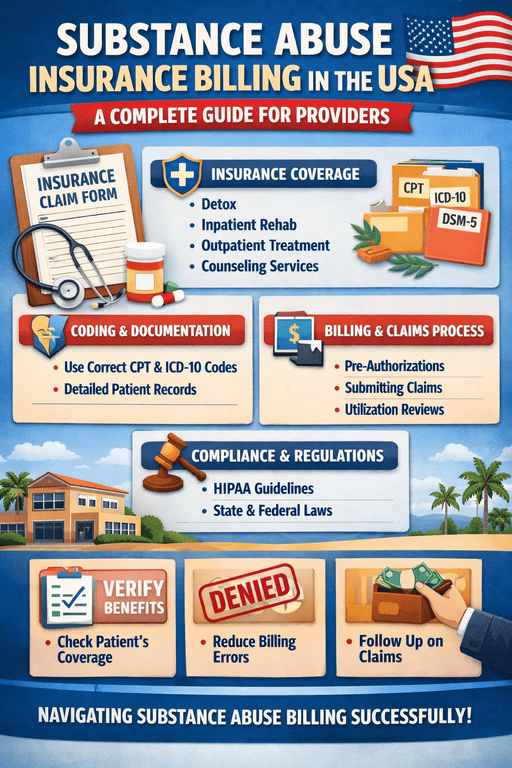
Behavioral health and addiction treatment providers across the USA face a unique challenge: delivering high-quality patient care while managing increasingly complex reimbursement requirements. As demand for substance abuse treatment continues to grow, providers must navigate a maze of insurance regulations, coding standards, prior authorizations, and claim submission guidelines.
This is where effective substance abuse insurance billing becomes essential. A well-structured billing process not only helps treatment centers receive accurate reimbursements but also reduces claim denials, improves cash flow, and supports long-term financial sustainability.
Whether you operate an outpatient counseling practice, inpatient rehabilitation facility, detox center, or behavioral health clinic, understanding the fundamentals of substance abuse billing can significantly impact your organization's revenue and operational efficiency.
Understanding Substance Abuse Insurance Billing
Substance abuse insurance billing involves submitting and managing insurance claims for addiction treatment services provided to patients struggling with alcohol, drug, or other substance use disorders.
Unlike traditional medical billing, substance abuse treatment billing often requires additional documentation, treatment plans, utilization reviews, and compliance with behavioral health regulations.
Common services billed include:
- Initial assessments and evaluations
- Individual therapy sessions
- Group counseling
- Intensive outpatient programs (IOP)
- Partial hospitalization programs (PHP)
- Medication-assisted treatment (MAT)
- Residential treatment services
- Detoxification services
- Telehealth addiction counseling
Accurate billing ensures providers are compensated appropriately while maintaining compliance with payer requirements.
Why Substance Abuse Billing Is More Complex Than Traditional Medical Billing
Healthcare providers often discover that addiction treatment billing requires a deeper understanding of payer-specific guidelines.
Several factors contribute to this complexity:
Prior Authorization Requirements
Many insurance companies require authorization before treatment begins. Failure to obtain approval can result in claim denials even when services were medically necessary.
Medical Necessity Documentation
Payers expect providers to demonstrate why treatment is clinically necessary. Detailed assessments, progress notes, and treatment plans play a critical role in supporting reimbursement.
Frequent Policy Changes
Behavioral health coverage regulations continue to evolve, requiring providers to stay updated on reimbursement rules and compliance standards.
Multiple Levels of Care
Patients may move between detox, residential treatment, outpatient therapy, and aftercare programs. Each level of care has different billing requirements and reimbursement structures.
Key Components of Successful Substance Abuse Medical Billing
An effective substance abuse medical billing process begins long before a claim is submitted.
Insurance Verification
Before treatment starts, providers should verify:
- Active insurance coverage
- Behavioral health benefits
- Deductibles and copays
- Authorization requirements
- Coverage limitations
Early verification prevents billing surprises and reduces reimbursement delays.
Accurate Clinical Documentation
Documentation serves as the foundation of every claim.
Providers should ensure records include:
- Comprehensive assessments
- Treatment goals
- Progress notes
- Physician orders
- Discharge summaries
Strong documentation helps justify medical necessity and supports successful claim approval.
Correct Coding Practices
Proper coding is essential for reimbursement accuracy.
Common coding categories may include:
- Evaluation and management services
- Psychotherapy services
- Substance use disorder treatment programs
- Medication-assisted treatment procedures
- Telehealth behavioral health services
Coding errors remain one of the leading causes of claim denials within addiction treatment facilities.
The Financial Impact of Effective Medical Billing for Substance Abuse Treatment
Revenue cycle performance directly affects a treatment center's ability to provide quality care.
When medical billing for substance abuse services is managed efficiently, organizations often experience:
- Faster reimbursements
- Reduced accounts receivable days
- Lower denial rates
- Improved cash flow
- Better financial forecasting
- Increased operational stability
For growing treatment organizations, billing efficiency can become a significant competitive advantage.
Common Challenges in Substance Abuse Billing
Even experienced providers encounter obstacles that affect reimbursement.
Claim Denials
Denials frequently occur due to:
- Missing documentation
- Incorrect coding
- Authorization issues
- Eligibility problems
- Timely filing violations
A proactive denial management strategy can recover substantial revenue that might otherwise be lost.
Underpayments
Insurance carriers occasionally reimburse less than contracted amounts. Regular payment audits help identify discrepancies and ensure providers receive appropriate compensation.
Regulatory Compliance
Behavioral health organizations must comply with various federal and state regulations, including privacy requirements and payer-specific billing policies.
Maintaining compliance reduces financial risk and protects organizational reputation.
How Substance Abuse Billing Services Improve Revenue Performance
Many providers choose specialized substance abuse billing services to address administrative challenges and optimize collections.
Professional billing teams typically provide:
Dedicated Insurance Follow-Up
Claims are monitored from submission through payment, ensuring unresolved issues are addressed quickly.
Denial Management
Specialists identify denial patterns, submit appeals, and implement corrective actions to reduce future claim rejections.
Revenue Analysis
Detailed reporting helps organizations identify revenue leakage and uncover opportunities for improvement.
Compliance Monitoring
Billing professionals stay informed about changing payer requirements, helping organizations maintain regulatory compliance.
These services allow clinicians to focus more on patient care and less on administrative burdens.
Choosing the Right Substance Abuse Billing Company
Selecting a reliable substance abuse billing company is a critical decision for treatment providers.
When evaluating potential partners, consider the following factors:
Industry Experience
Behavioral health billing differs significantly from other medical specialties. Choose a company with proven addiction treatment expertise.
Technology Capabilities
Advanced billing platforms improve claim tracking, reporting, and revenue transparency.
Denial Resolution Processes
Ask about denial management strategies and historical success rates.
Compliance Knowledge
The billing partner should understand behavioral health regulations, insurance policies, and coding requirements.
Performance Metrics
Review key indicators such as:
- Clean claim rates
- Collection percentages
- Average reimbursement turnaround times
- Denial reduction statistics
A qualified substance abuse billing company should demonstrate measurable results.
The Role of Revenue Cycle Management Services
Successful reimbursement extends beyond claim submission.
Comprehensive revenue cycle management services encompass every stage of the patient financial journey, including:
- Patient registration
- Eligibility verification
- Authorization management
- Charge capture
- Claim submission
- Payment posting
- Denial management
- Accounts receivable follow-up
By optimizing the entire revenue cycle, treatment organizations can maximize collections while improving operational efficiency.
Why Medical Coding Services Matter in Behavioral Health
Coding accuracy remains one of the most important factors in successful reimbursement.
Professional medical coding services help ensure:
- Accurate procedure reporting
- Compliance with payer guidelines
- Reduced audit risk
- Lower denial rates
- Proper reimbursement levels
Given the complexity of addiction treatment programs, coding expertise can significantly impact financial outcomes.
The Value of Integrated Medical Billing and Coding Services
Many treatment providers benefit from combining billing and coding operations under a unified strategy.
Integrated medical billing and coding services create a more streamlined workflow by:
- Reducing communication gaps
- Improving claim accuracy
- Accelerating reimbursement cycles
- Enhancing compliance oversight
- Increasing revenue capture opportunities
This collaborative approach often produces stronger financial performance compared to managing these functions separately.
Credentialing Services: Building the Foundation for Reimbursement
Before providers can bill insurance companies, proper enrollment and credentialing must be completed.
Professional credentialing services assist organizations with:
- Provider enrollment applications
- Insurance network participation
- Recredentialing requirements
- Documentation management
- Credential maintenance
Incomplete or delayed credentialing can result in significant revenue loss, making this process a vital component of practice operations.
Real-World Example: Improving Billing Outcomes at an Addiction Treatment Center
Consider an outpatient substance abuse treatment facility experiencing high denial rates and delayed reimbursements.
After implementing specialized billing workflows, the organization focused on:
- Enhanced insurance verification
- Improved documentation standards
- Better coding accuracy
- Consistent authorization tracking
- Structured denial management
Within several months, claim acceptance rates increased, accounts receivable decreased, and overall collections improved substantially.
This example demonstrates how strategic billing improvements can strengthen both financial performance and patient care delivery.
Supporting Growth Through Specialized Billing Expertise
As addiction treatment demand continues to rise across the USA, providers need efficient administrative systems to support sustainable growth.
Organizations that invest in specialized substance abuse billing companies often gain access to experienced professionals who understand payer requirements, compliance standards, and reimbursement strategies specific to behavioral health.
This expertise helps providers reduce administrative burdens while maintaining a stronger financial foundation.
Conclusion
Effective substance abuse insurance billing is essential for addiction treatment providers seeking financial stability and long-term success. From insurance verification and documentation to coding accuracy and denial management, every step of the billing process directly impacts reimbursement outcomes.
Many healthcare organizations partner with experienced teams such as 247 Medical Billing Services to strengthen operational efficiency through specialized medical billing services, medical coding services, medical billing and coding services, revenue cycle management services, and credentialing services. By implementing proven billing strategies, providers can focus more on delivering life-changing treatment while maintaining a healthy revenue cycle.
Frequently Asked Questions (FAQs)
1. What is substance abuse insurance billing?
Substance abuse insurance billing is the process of submitting claims to insurance companies for addiction treatment services such as counseling, detoxification, residential care, and medication-assisted treatment.
2. Why do substance abuse claims get denied?
Common reasons include missing documentation, coding errors, authorization issues, eligibility problems, and failure to meet medical necessity requirements.
3. What are substance abuse billing services?
Substance abuse billing services are specialized solutions that manage claim submission, insurance follow-up, denial management, payment posting, and reimbursement optimization for addiction treatment providers.
4. How can a substance abuse billing company improve revenue?
A specialized billing company can reduce denials, improve claim accuracy, accelerate reimbursements, strengthen compliance, and increase overall collections.
5. Why are medical coding services important for addiction treatment providers?
Accurate coding helps ensure claims meet payer requirements, minimizes audit risks, reduces denials, and supports appropriate reimbursement levels.
6. What role do credentialing services play in reimbursement?
Credentialing services help providers enroll with insurance networks and maintain active participation status, allowing claims to be submitted and reimbursed correctly.

 English
 French
 Spanish
 Portuguese
 Deutsch
 Turkish
 Dutch
Dutch
 Italiano
 Russian
 Romaian
 Portuguese (Brazil)
 Greek
Greek