


How Benchmark Comparison Enhances an IFA Back Office System
Key Takeaways
● Portfolio returns alone do not tell the full story. Investors need market context to understand whether performance is truly good or poor.
● Benchmark comparison brings that context by showing how a portfolio or fund performs against a relevant market index over time.
● With software for financial advisors in India like Wealth Elite, benchmark data becomes part of everyday reporting, making reviews simpler and more meaningful.
● When investors can clearly see how their portfolio compares to the market, conversations become more transparent, trust grows, and decisions become more informed.
Managing client portfolios is one thing. Helping clients understand how those portfolios are actually performing is another.
For most investors, raw returns mean very little without context. Is 12% good? It depends entirely on what the market was doing at the same time.
This is where benchmark comparison becomes one of the most valuable features inside an IFA back office system.
What Benchmark Comparison Actually Does
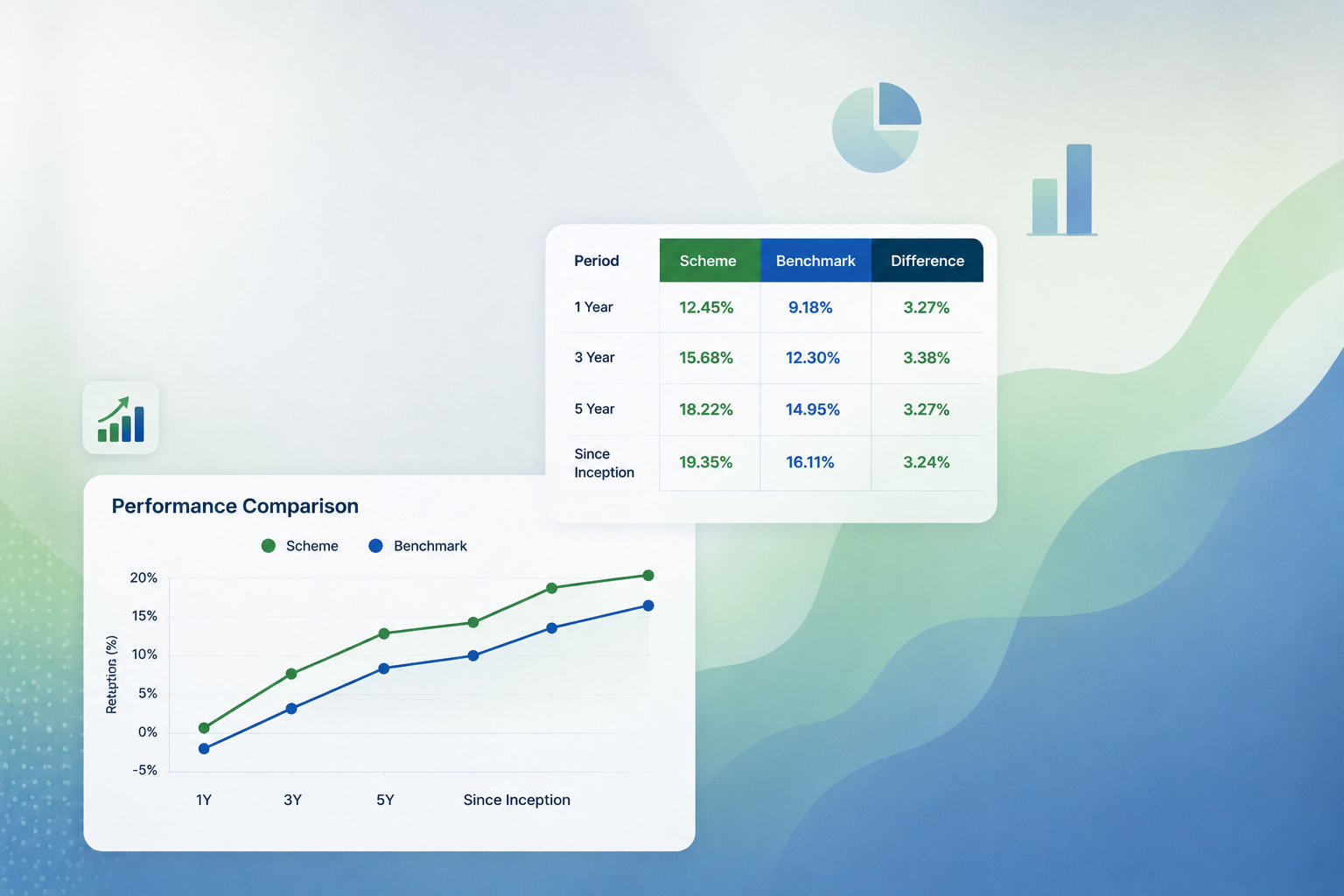
At its core, benchmark comparison measures a portfolio or fund's performance against a relevant market index.
The Nifty 50, the Sensex, or a category-specific index like the Nifty Midcap 150, depending on what is being evaluated.
Without a benchmark, performance numbers exist in a vacuum. With one, they tell a story.
An investor whose portfolio returned 10% in a year might feel satisfied. But if the benchmark returned 18% in the same period, that satisfaction is misplaced.
Conversely, a portfolio that returned 6% during a period when markets fell 15% is actually a strong result. Benchmark comparison makes that visible in a highly efficient software for financial advisors in India, such as Wealth Elite.
Why This Matters Inside a Back Office System
A back office system handles the operational backbone of an IFA's practice. Transactions, client records, reporting, compliance, all of it runs through this infrastructure.
An MF software is built with exactly this in mind. When benchmark comparison is integrated into a platform like this, it stops being a manual exercise.
IFAs do not need to pull data from separate sources, run their own calculations, or build custom spreadsheets for every client review.
Everything sits in one place. Portfolio performance alongside the relevant benchmark, ready to present without additional preparation.
For an IFA managing a large client base, that kind of integration saves a significant amount of time every single month.
How It Strengthens Client Conversations
The real value of benchmark comparison shows up in client meetings.
Most investors do not have a strong frame of reference for evaluating their portfolio. They react to absolute numbers, which often leads to poor decisions.
A dip feels alarming even when it is well within normal market behaviour. A decent return feels underwhelming if they heard a friend made more.
Benchmark data changes that dynamic entirely. When an IFA shows a client how their investments did compared to the market, the talk is based on facts, not feelings.
This does the following:
● Reduces anxiety during market downturns by showing relative resilience
● Sets realistic expectations about what good performance actually looks like
● Builds confidence in the IFA's approach and decision-making
● Makes it easier to have honest conversations about underperforming funds
Clients who understand their performance in context are far less likely to make impulsive decisions.
How You Get Visibility Beyond Basic Reporting
Basic reporting tells a client what happened. Benchmark-integrated reporting tells them what it means.
There is a big difference between giving someone a report and sitting down to explain if their investments did what they were meant to do.
Comparing to benchmarks makes these talks easier for every client during each review.
The Operational Side of Benchmark Integration
Beyond client communication, benchmark comparison has operational value too.
IFAs can use it to:
● Find funds in a client's portfolio that have not done well compared to their benchmark over time.
● Make a stronger, data-backed case for fund switches when they are warranted
● Track performance trends across their entire book rather than reviewing clients one at a time
● Demonstrate the value of active fund selection versus simply tracking an index
This kind of insight is difficult to generate manually at scale. A well-integrated back office system makes it routine.
What to Look for in a Back Office Software
Not every platform handles benchmark comparison with the same depth. A few things worth evaluating:
● Index coverage: Does it support the benchmarks relevant to the fund categories you work with?
● Report customisation: Can you present benchmark data in a way that is easy for clients to read?
● Automation: Are benchmark comparisons generated automatically, or do they require manual input?
● Integration: Does it connect seamlessly with transaction and portfolio data already in the system?
These details separate a platform that checks a box from a wealth management software that genuinely improves how an IFA operates day to day.
Conclusion
Benchmark comparison is not just a reporting feature.
It helps improve communication with clients, supports better investment choices, and makes the service clearer and more responsible.
When it is part of the main system instead of an extra feature, it becomes a regular part of good service.
FAQs
1. How does an IFA Back Office System help during client reviews?
It brings portfolio and benchmark data together, making performance reviews faster, clearer, and easier to explain.
2. Why is benchmark comparison important for investors?
It helps investors understand whether their portfolio performed better, worse, or in line with the market.
3. Can comparing benchmarks help reduce emotional investment decisions?
Yes. It gives investors context, helping them focus on facts instead of reacting to short-term market movements.
4. Which platform offers benchmark comparison as part of portfolio reporting?
A portfolio management software like Wealth Elite includes benchmark comparison tools that help advisors review and explain portfolio performance.

 English
 Arabic
 French
 Spanish
 Portuguese
 Deutsch
 Dutch
Dutch
 Italiano
 Russian
 Romaian
 Portuguese (Brazil)
 Greek
Greek