


BIS Certification Cost in India: Complete Guide for Businesses
Introduction
When manufacturers and importers plan to sell products in the Indian market, obtaining a BIS certification becomes an important compliance requirement. One of the most common questions businesses ask is about the BIS certificate cost and the overall expenses involved in the certification process. The BIS certification cost varies depending on several factors such as product category, testing requirements, certification scheme, and government fees. Understanding these costs in advance helps businesses plan their budgets and avoid unexpected expenses during the certification journey.
What is BIS Certification?
The Bureau of Indian Standards (BIS) is the national standards body of India responsible for ensuring product quality, safety, and reliability. BIS certification is mandatory for various products including electronics, electrical appliances, steel products, chemicals, toys, and many other consumer goods.
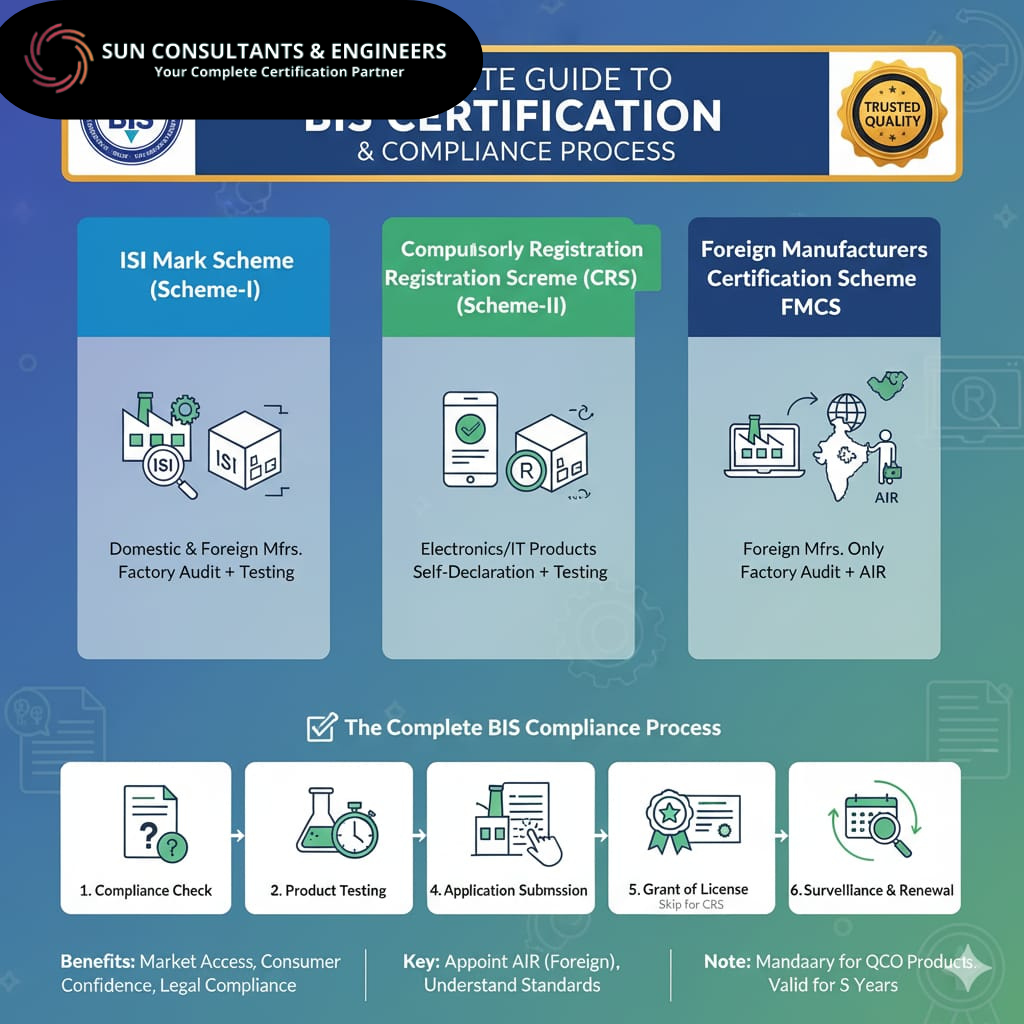
Depending on the product type, manufacturers may need certification under schemes such as:
-
ISI Certification Scheme
-
CRS (Compulsory Registration Scheme)
-
FMCS (Foreign Manufacturers Certification Scheme)
Each certification scheme has its own fee structure, which directly impacts the overall BIS certification cost.
Factors Affecting BIS Certificate Cost
There is no fixed amount applicable to every product because certification expenses vary based on multiple factors.
1. Product Category
Different products require different testing procedures and documentation. Products with complex testing requirements usually involve higher certification costs.
For example:
-
Electronic products may require specialized laboratory testing.
-
Industrial products may involve factory inspections and audits.
-
Imported products may require additional compliance verification.
As a result, the BIS certificate cost differs from one product category to another.
2. Product Testing Charges
Testing is one of the most significant components of the cost of BIS certification.
Products must be tested in BIS-recognized laboratories to verify compliance with applicable Indian Standards. Testing charges depend on:
-
Product type
-
Number of parameters to be tested
-
Laboratory selected
-
Sample quantity required
In some cases, testing costs can represent a major portion of the total certification expense.
3. Government Fees
BIS charges various official fees during the certification process. These may include:
-
Application fees
-
Processing fees
-
Annual license fees
-
Marking fees
-
Renewal fees
These government charges contribute to the overall BIS license cost and vary depending on the certification scheme.
4. Factory Inspection Expenses
For certifications such as ISI and FMCS, BIS officials may conduct factory inspections before granting approval.
Inspection-related costs may include:
-
Auditor fees
-
Travel expenses
-
Inspection charges
-
Sample collection costs
These expenses can significantly influence the final BIS certification cost.
5. Number of Products Covered
Businesses often apply for certification for multiple products. Since each product may require separate testing and documentation, the total BIS certificate cost increases with the number of products being certified.
Estimated BIS Certification Cost
Although exact costs vary, businesses can generally expect expenses under the following categories:
|
Cost Component |
Estimated Impact |
|
Application Fees |
Moderate |
|
Product Testing |
Moderate to High |
|
Inspection Charges |
Moderate |
|
Annual License Fees |
Moderate |
|
Renewal Charges |
Low to Moderate |
|
Consultant Fees |
Optional |
The total cost of BIS certification depends on the specific product and certification route selected.
Why Understanding BIS License Cost is Important
Many businesses focus only on government fees and overlook other expenses associated with certification. However, planning for the complete BIS license cost provides several benefits:
-
Better budget management
-
Faster project execution
-
Reduced risk of delays
-
Improved compliance planning
-
Accurate product launch timelines
A clear understanding of certification expenses helps manufacturers avoid disruptions during market entry.
How to Reduce BIS Certification Cost
While certification is a mandatory investment, businesses can take several steps to optimize costs.
Prepare Documentation Properly
Incomplete documentation often leads to delays and repeated submissions. Proper preparation can reduce administrative expenses and processing time.
Conduct Internal Quality Checks
Ensuring products meet Indian Standards before testing can prevent test failures and retesting costs.
Choose the Right Testing Laboratory
Selecting a recognized laboratory with relevant experience can improve efficiency and help avoid unnecessary delays.
Plan Product Certifications Strategically
If multiple products require certification, businesses should create a phased certification plan to manage costs effectively.
Work with Experienced Professionals
Expert guidance can help businesses avoid procedural mistakes that may increase the overall BIS certification cost.
Common Mistakes That Increase Certification Costs
Many manufacturers unintentionally increase their certification expenses due to avoidable errors.
Some common mistakes include:
-
Submitting incomplete applications
-
Providing incorrect technical documents
-
Sending non-compliant product samples
-
Missing important deadlines
-
Failing factory audits
-
Choosing the wrong certification scheme
Avoiding these mistakes can help control the overall BIS certificate cost and speed up approval.
Benefits of BIS Certification Despite the Cost
Although businesses often focus on the cost of BIS certification, the long-term benefits generally outweigh the investment.
Key advantages include:
-
Legal market access in India
-
Enhanced customer trust
-
Improved product credibility
-
Compliance with Indian regulations
-
Competitive market advantage
-
Increased business opportunities
For manufacturers and importers, BIS certification is not just a regulatory requirement but also a valuable business asset.
Conclusion
The BIS certificate cost, BIS certification cost, BIS license cost, and overall cost of BIS certification depend on several factors including product category, testing requirements, inspection procedures, and applicable government fees. Since every certification project is unique, businesses should evaluate all associated expenses before starting the application process. Proper planning, complete documentation, and expert guidance can help reduce delays and optimize certification expenses. By understanding the complete cost structure, manufacturers and importers can achieve compliance efficiently and successfully enter the Indian market.

 English
 Arabic
 French
 Spanish
 Portuguese
 Deutsch
 Turkish
 Dutch
Dutch
 Italiano
 Russian
 Romaian
 Greek
Greek