


Hospital Doors for Medical Buildings
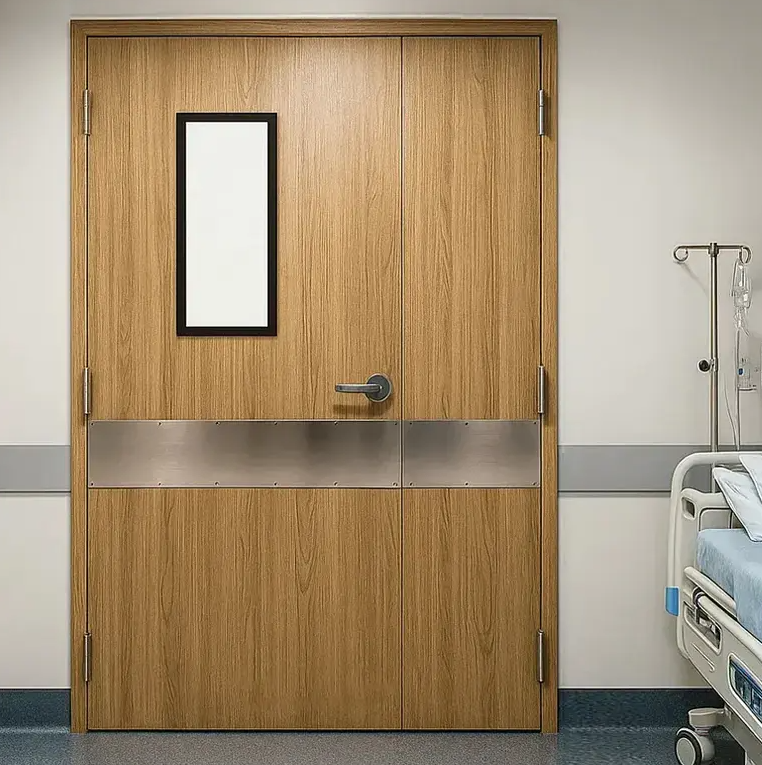
Hospital Doors are more than simple entrances between rooms. They help organize movement throughout medical buildings while supporting the daily activities of doctors, nurses, patients, and visitors. Every department has different requirements, so door designs often vary depending on where they are installed. Patient rooms, operating areas, laboratories, imaging centers, pharmacies, emergency departments, and administrative offices all use Hospital Doors designed for specific functions.
The construction of Hospital Doors focuses on durability and practical use. Steel, aluminum, stainless steel, and specialized composite materials are commonly selected because they provide structural strength and an attractive appearance. Some doors include laminated surfaces that create a clean finish, while others feature solid metal panels suitable for high-traffic environments. Transparent vision panels made from safety glass allow staff to observe activity on the opposite side without opening the door, helping improve workflow in busy medical settings.
Different opening styles allow Hospital Doors to match various building layouts. Hinged doors remain a familiar solution for consultation rooms and offices. Sliding doors help save space in corridors where equipment and medical carts frequently pass. Double swing doors allow beds, stretchers, and wheelchairs to move comfortably between departments. Automatic doors simplify access in entrances where people enter and exit continuously throughout the day.
Design details make everyday use more convenient. Rounded edges create a clean visual appearance while reducing sharp corners. Wide door openings allow patient beds and large medical equipment to pass without difficulty. Flush surfaces complement modern interior architecture and create a professional atmosphere inside healthcare facilities. Some Hospital Doors include integrated viewing windows positioned at different heights to accommodate both standing staff and seated patients.
Customization is frequently requested for healthcare construction. Architects and contractors often require specific door dimensions, panel finishes, hardware styles, window shapes, and opening directions that correspond with building layouts. Customized colors, identification markings, and decorative surface treatments also help distinguish different hospital departments while maintaining a coordinated interior design.

 English
 Arabic
 French
 Spanish
 Portuguese
 Deutsch
 Turkish
 Dutch
Dutch
 Italiano
 Romaian
 Portuguese (Brazil)
 Greek
Greek