


DTCP vs CMDA Approved Plots: A Complete Comparison
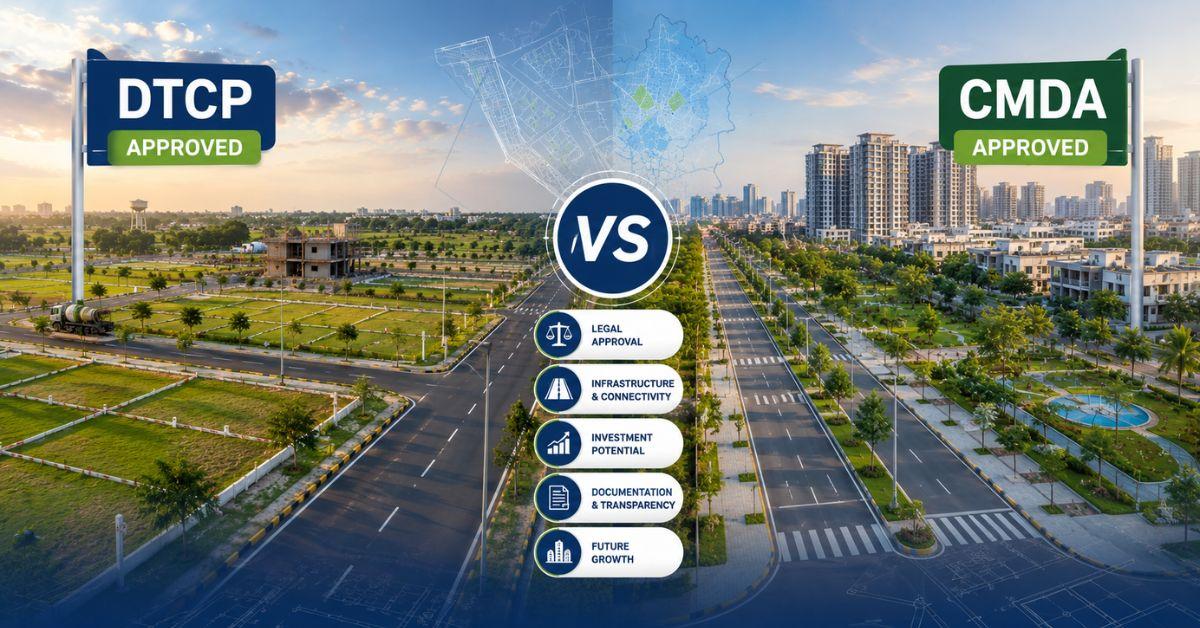
When exploring investment opportunities such as Ecr Land for Sale, many buyers come across terms like DTCP and CMDA approval without fully understanding what they mean. While both approvals indicate that a layout has received permission from the relevant authorities, they serve different regions and follow different planning frameworks. Knowing the distinction can help you make a confident purchase, avoid legal complications, and ensure your investment remains secure for years to come.
Understanding DTCP and CMDA Approvals
DTCP stands for the Directorate of Town and Country Planning. It is responsible for regulating land development across most parts of Tamil Nadu outside the Chennai Metropolitan Area. Residential layouts, commercial developments, and plotted communities in districts beyond metropolitan limits generally require DTCP approval before they can be legally marketed.
CMDA, or the Chennai Metropolitan Development Authority, oversees planning and development within the Chennai Metropolitan Area. It ensures that urban growth follows a structured plan by regulating land use, infrastructure, transportation, and residential developments. Any plot located within the jurisdiction of the metropolitan region usually falls under CMDA regulations.
Although both authorities approve layouts, the location of the property determines which approval is applicable.
Geographic Coverage
One of the biggest differences between DTCP and CMDA lies in their jurisdiction.
DTCP approvals apply to towns, villages, and expanding suburban regions outside the metropolitan boundary. As infrastructure continues to improve across Tamil Nadu, many emerging residential corridors fall under DTCP governance.
CMDA approval, on the other hand, is required for developments located within the Chennai Metropolitan Area. Since these locations are part of an organized urban planning system, they often benefit from established roads, public transportation, drainage systems, and civic amenities.
Understanding where a property is located is the first step in determining the type of approval it should possess.
Approval Process
Both authorities follow detailed procedures before granting approval, but their evaluation criteria vary according to regional planning requirements.
For DTCP-approved layouts, developers must submit land ownership documents, survey details, road plans, and other statutory records. The authority reviews these documents to ensure the layout complies with planning regulations and provides adequate infrastructure.
CMDA approval involves a more comprehensive review due to the complexities of metropolitan development. Besides verifying legal ownership, the authority evaluates zoning regulations, environmental considerations, traffic impact, open spaces, and future urban planning objectives.
Although the documentation process may appear more extensive under CMDA, both approvals aim to promote organized and legal development.
Infrastructure Considerations
Infrastructure often differs depending on the approval authority and the location of the property.
CMDA-approved layouts are generally situated in areas with better-developed civic infrastructure. Buyers may find wider roads, improved drainage systems, public transportation access, sewage facilities, and closer proximity to schools, hospitals, and commercial centers.
DTCP-approved layouts are frequently located in rapidly developing regions where infrastructure continues to improve over time. While some areas already offer excellent connectivity and essential services, others may still be undergoing development.
Rather than assuming one approval is better than the other, buyers should evaluate the actual infrastructure surrounding the property.
Investment Potential
Both DTCP and CMDA approved plots can offer excellent investment opportunities depending on the buyer's goals.
CMDA-approved properties often attract buyers looking for immediate residential construction or properties within established neighborhoods. Their location inside the metropolitan area generally supports consistent demand.
DTCP-approved plots appeal to long-term investors seeking growth potential in developing locations. As infrastructure expands and urban boundaries continue to grow, these areas may experience significant appreciation over time.
Investment decisions should always consider factors such as accessibility, future infrastructure projects, employment hubs, and neighborhood development instead of focusing solely on the approving authority.
Loan Eligibility
Financial institutions generally prefer lending for approved layouts because they meet regulatory standards.
Both DTCP and CMDA approved plots are typically eligible for home loans, subject to the lender's verification process. Banks usually examine ownership records, layout approvals, encumbrance certificates, and legal documentation before sanctioning a loan.
Having the appropriate approval can simplify financing and provide additional confidence to both buyers and lenders.
Legal Security
Legal clarity remains one of the most important reasons to purchase approved plots.
An approved layout demonstrates that the development has received permission from the competent planning authority after meeting applicable regulations. This reduces the risk of purchasing land involved in planning violations or unauthorized development.
Regardless of whether the approval comes from DTCP or CMDA, buyers should still verify title deeds, parent documents, encumbrance certificates, and registration records with qualified legal professionals before completing a transaction.
Which Approval Is Better?
There is no universal answer because the right choice depends on your priorities.
If you want to build a home within the metropolitan region and prefer established urban infrastructure, a CMDA-approved plot may align with your needs.
If your objective is long-term investment in developing areas with future appreciation potential, a DTCP-approved plot can also be an excellent option.
Instead of comparing approvals alone, evaluate the property's location, legal documentation, road connectivity, surrounding developments, and future growth prospects.
Final Thoughts
DTCP and CMDA approvals both play an essential role in ensuring planned and regulated development across Tamil Nadu. Understanding how they differ helps buyers make informed decisions based on location, investment goals, and future requirements. Rather than choosing one approval over the other, focus on selecting a legally approved property that matches your financial plans, lifestyle preferences, and long-term objectives, whether you are exploring opportunities around Plots in Mahindra City for future residential or investment purposes.

 English
 Arabic
 French
 Spanish
 Portuguese
 Deutsch
 Turkish
 Dutch
Dutch
 Italiano
 Russian
 Romaian
 Portuguese (Brazil)