


Advanced Membrane Technologies Are Strengthening India's Water Security Infrastructure
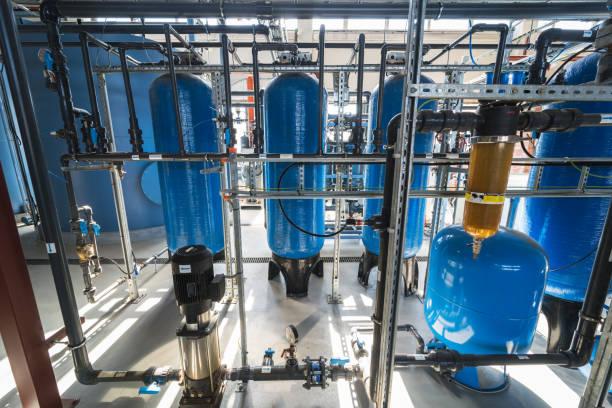
India's water infrastructure is evolving rapidly as rising urbanization, industrial expansion, and increasing water stress accelerate investments in advanced treatment technologies. Membrane-based water and wastewater treatment systems have become an essential part of modern water management by enabling efficient purification, wastewater recycling, desalination, and industrial process water treatment. As governments and industries prioritize sustainable water utilization, membrane technologies are playing a greater role in improving water quality while supporting long-term resource conservation.
According to a study published by Vyansa Intelligence, the India Membrane Water and Wastewater Treatment Market size was valued at USD 520 Million in 2025 and is projected to reach USD 891.2 Million by 2032, registering a CAGR of 8% during 2026–2032. The India Membrane Water and Wastewater Treatment Market is benefiting from growing investments in municipal water infrastructure, industrial wastewater management, and advanced water reuse technologies.
Public Water Infrastructure Is Accelerating Technology Adoption
Government investment in water treatment and sanitation infrastructure continues to strengthen demand for membrane-based systems across municipal utilities. Large-scale programs supporting drinking water access, sewage treatment, and urban water management are increasing the deployment of reverse osmosis, ultrafiltration, nanofiltration, and microfiltration technologies.
India's infrastructure initiatives, including expanding treatment capacity under urban development programs, are encouraging utilities to adopt advanced membrane systems capable of delivering high-quality treated water while improving operational efficiency. The Jal Jeevan Mission and the Atal Mission for Rejuvenation and Urban Transformation (AMRUT) continue to support improvements in water supply and urban water infrastructure.
Industrial Water Reuse Is Becoming a Strategic Priority
Industries including pharmaceuticals, chemicals, food and beverage, power generation, and manufacturing are increasingly adopting membrane technologies to improve water recovery and reduce freshwater consumption. Water reuse has become an important operational objective as companies seek greater resource efficiency and compliance with environmental regulations.
The India Membrane Water and Wastewater Treatment Market trends indicate growing investment in wastewater recycling systems that support circular water management. Recent initiatives promoting treated wastewater reuse for industrial and non-potable applications further reinforce the importance of advanced membrane treatment technologies in addressing long-term water availability challenges. The Central Pollution Control Board (CPCB) continues to promote wastewater management and pollution control through regulatory guidelines.
Reverse Osmosis Continues to Lead Product Adoption
Reverse osmosis remains the most widely deployed membrane technology because of its ability to remove dissolved contaminants and produce high-quality treated water across municipal and industrial applications. According to the report, reverse osmosis accounted for 40% of the market, reflecting its broad acceptance across India's water treatment ecosystem.
Continuous improvements in membrane materials, energy efficiency, and system design are helping operators reduce operating costs while improving treatment performance across diverse water quality conditions.
Smart Water Management Is Transforming Treatment Facilities
Digital technologies are becoming increasingly integrated into membrane treatment plants. Supervisory Control and Data Acquisition (SCADA) systems, remote monitoring platforms, automated process controls, and predictive maintenance solutions allow operators to optimize treatment efficiency while reducing downtime.
The growing adoption of smart monitoring systems is improving plant performance by enabling real-time operational visibility and faster decision-making. These technologies also support better resource utilization and improved lifecycle management for membrane treatment assets.
Municipal Utilities Remain the Largest End Users
Urban water supply and sewage treatment projects continue to represent the largest source of demand for membrane technologies. According to the report, the municipal segment held 40% of the market, supported by expanding investments in drinking water treatment plants, sewage treatment facilities, and water reuse infrastructure.
Municipal authorities are increasingly incorporating membrane systems into new infrastructure projects to improve treatment efficiency while meeting stricter environmental and water quality standards.
Innovation Is Strengthening Industry Competition
Manufacturers continue investing in membrane material science, fouling resistance, energy-efficient filtration systems, and modular treatment solutions. Companies are also expanding service capabilities that include system integration, maintenance, digital monitoring, and performance optimization.
The India Membrane Water and Wastewater Treatment Market growth is supported by continuous technological innovation that improves operational reliability while reducing lifecycle costs for municipal and industrial customers. Increasing adoption of intelligent treatment systems is expected to strengthen competitive differentiation across the industry.
Future Outlook
India's focus on water conservation, wastewater recycling, and infrastructure modernization is expected to sustain long-term investment in membrane treatment technologies. Growing industrial demand, expanding municipal projects, and increasing emphasis on water reuse will continue to support adoption across multiple sectors.
The India Membrane Water and Wastewater Treatment Market forecast reflects an industry where advanced filtration technologies, digital monitoring, and sustainable water management continue to shape future development. As water security becomes an increasingly important national priority, membrane treatment systems are expected to remain central to improving water quality, supporting industrial productivity, and enabling efficient resource management.

 English
 Arabic
 French
 Spanish
 Portuguese
 Deutsch
 Turkish
 Dutch
Dutch
 Italiano
 Russian
 Romaian
 Greek
Greek